





Goldman Sachs interview experience Real time questions & tips from candidates to crack your interview

Python Developer
Goldman Sachs


3 rounds | 9 Coding
problems

Rejected
Interview preparation journey

Journey
The interview experience was such a great process of gaining knowledge and learning. Take good care of your resume, as questions will arise based on that.
Application story
It was during campus placements, and we had different rounds. All the final-year students had a chance to attend the first round. They tested all our basics on data structures and OOP concepts.
Why selected/rejected for the role?
I did not get selected for this role because of some flaws on my side. For instance, I got a bit scared during the coding round and messed up. I did not provide solutions with less time complexity; instead, I explained them the harder way.
Preparation
Duration: 5-6 months
Topics: Data Structures, Aptitude, OOPS, Machine Learning, Statistics, Competitive Programming

Tip 1: Go through the questions on coding platforms for coding.
Tip 2: Be patient and calm. This process is time and energy-consuming, but I am sure you can get through it.
Application process
Where: Campus
Eligibility: No criteria
Tip 1: Your projects should be related to the current emerging topics.
Tip 2: Be prepared with the areas of interest that you included in your resume.

Interview rounds
01
Round
Medium
Online Coding Interview
Duration120 minutes
Interview date18 Jan 2022
Coding problem2
Online test
1. Fastest Horse
Moderate
25m average time
75% success

0/80
Asked in companies


There are ‘N’ horses running in ‘N’ different lanes numbered from 1 to ‘N’. You are given an array “FINISHTIME” containing ‘N’ integers where “FINISHTIME[i]” represents the time taken by the ith horse to complete the race.
You are now given ‘Q’ queries, each containing two integers each, ‘L’ and ‘R’. For each query, return the time taken by the fastest horse amongst the horses with numbers {L, L + 1, L + 2, …., R - 1, R} to complete the race.
Note:
The fastest horse is the one that takes the minimum time to finish the race.
2. Count Triplets
Easy
15m average time
85% success
0/40
Asked in companies



You have been given an integer ‘X’ and a non-decreasing sorted doubly linked list with distinct nodes.
Your task is to return the number of triplets in the list that sum up to the value ‘X’.
02
Round
Medium
Face to Face
Duration75 minutes
Interview date20 Jan 2022
Coding problem4
Face to Face interview
1. Rearrange Linked List
Moderate
22m average time
80% success
0/80
Asked in companies


You have been given a singly Linked List in the form of 'L1' -> 'L2' -> 'L3' -> ... 'Ln'. Your task is to rearrange the nodes of this list to make it in the form of 'L1' -> 'Ln' -> 'L2' -> 'Ln-1' and so on. You are not allowed to alter the data of the nodes of the given linked list.
For example:
If the given linked list is 1 -> 2 -> 3 -> 4 -> 5 -> NULL.

Then rearrange it into 1 -> 5 -> 2 -> 4 -> 3 -> NULL.
2. Implement Trie
Hard
41m average time
0/120
Asked in companies


Implement Trie Data Structure to support these operations:
insert(word) - To insert a string "word" in Trie
search(word) - To check if string "word" is present in Trie or not.
startsWith(word) - To check if there is any string in the Trie that starts with the given prefix string "word".
Three type of queries denote these operations:
Type 1: To insert a string "word" in Trie.
1 word

Type 2: To check if the string "word" is present in Trie or not.
2 word

Type 3: To check if there is any string in the Trie that starts with the given prefix string "word".
3 word
3. Add Two Numbers As Linked Lists ll
Moderate
10m average time
80% success
0/80
Asked in companies



You have been given two singly Linked Lists, where each of them represents a positive number without any leading zeros.
Your task is to add these two numbers and print the summation in the form of a linked list.
Example:
If the first linked list is 1 -> 2 -> 3 -> 4 -> 5 -> NULL and the second linked list is 4 -> 5 -> NULL.

The two numbers represented by these two lists are 12345 and 45, respectively. So, adding these two numbers gives 12390.

So, the linked list representation of this number is 1 -> 2 -> 3 -> 9 -> 0 -> NULL.
Problem approach
Following are the steps:
1) Calculate the sizes of the given two linked lists.
2) If the sizes are the same, then calculate the sum using recursion. Hold all nodes in the recursion call stack until the rightmost node, calculate the sum of the rightmost nodes, and forward the carry to the left side.
3) If the sizes are not the same, then follow the below steps:
....a) Calculate the difference in sizes of the two linked lists. Let the difference be 'diff'.
....b) Move 'diff' nodes ahead in the bigger linked list. Now use step 2 to calculate the sum of the smaller list and the right sub-list (of the same size) of the larger list. Also, store the carry of this sum.
....c) Calculate the sum of the carry (calculated in the previous step) with the remaining left sub-list of the larger list. Nodes of this sum are added at the beginning of the sum list obtained in the previous step.
4. Count vowels, consonants, and spaces
Easy
10m average time
90% success
0/40
Asked in companies


Given a string, write a program to count the number of vowels, consonants, and spaces in that string.
EXAMPLE :
Input: ‘N’= 25, ‘s’ =”Take u forward is Awesome”
Output: 10 11 4
03
Round
Hard
Face to Face
Duration90 minutes
Interview date22 Jan 2022
Coding problem3
1. Insertion in AVL Tree
Moderate
20m average time
80% success
0/80
Asked in companies

Ninja has to implement an ‘AVL_TREE’ from scratch.
He is given ‘N’ values, representing the values of nodes to be inserted. Ninja has to insert these values into the ‘AVL_TREE’ and return its root after inserting all the nodes.
Note: An ‘AVL_TREE’ is a self-balancing Binary Search Tree (BST) where the difference between heights of left and right subtrees cannot be more than one for all nodes.
For example:
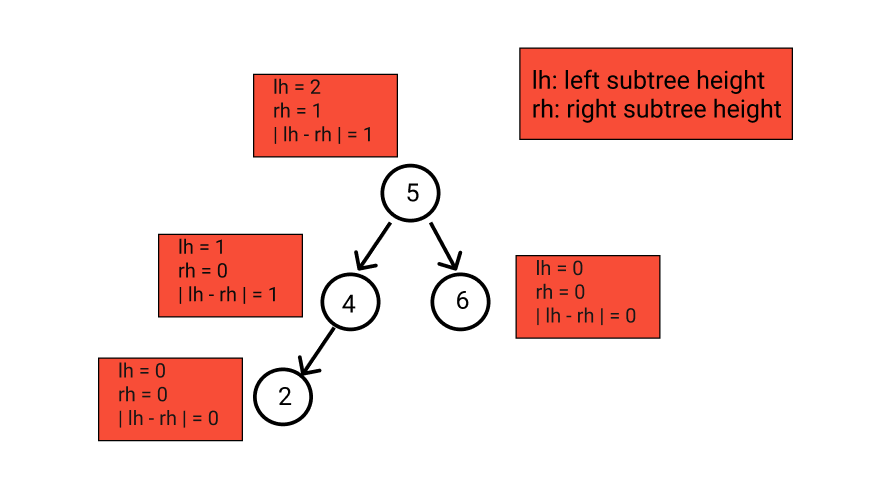
2. Longest Consecutive Sequence
Moderate
40m average time
70% success
0/80
Asked in companies
You are given an unsorted array/list 'ARR' of 'N' integers. Your task is to return the length of the longest consecutive sequence.
The consecutive sequence is in the form ['NUM', 'NUM' + 1, 'NUM' + 2, ..., 'NUM' + L] where 'NUM' is the starting integer of the sequence and 'L' + 1 is the length of the sequence.
Note:
If there are any duplicates in the given array we will count only one of them in the consecutive sequence.
For example-
For the given 'ARR' [9,5,4,9,10,10,6].

Output = 3
The longest consecutive sequence is [4,5,6].
Follow Up:
Can you solve this in O(N) time and O(N) space complexity?
3. Puzzle Question
There are 4 persons - say A, B, C, and D. Each can hold either 6, 7, or 8 balls in hand. If one has 6 or 8, the person speaks the truth. Otherwise, if a person holds 7 balls, he/she lies. When asked about the total number of balls, the replies from A, B, C, and D are: A - 25, B - 26, C - 27, D - 28. Only one is telling the truth. Who is telling the truth? What is the actual number of balls?


Here's your problem of the day 
Solving this problem will increase your chance to get selected in this company
Skill covered: Programming
How do you remove whitespace from the start of a string?
Choose another skill to practice
Similar interview experiences
Software Engineer Intern
2 rounds | 3 problems
Interviewed by Goldman Sachs

Rejected

1202 views

0 comments

0 upvotes
New Analyst
5 rounds | 6 problems
Interviewed by Goldman Sachs

 Selected
 1907 views
1 comments
0 upvotes
SDE - 1
1 rounds | 3 problems
Interviewed by Goldman Sachs
Rejected
1374 views
0 comments
0 upvotes
Software Engineer
2 rounds | 4 problems
Interviewed by Goldman Sachs
Rejected
906 views
0 comments
0 upvotes