





Google inc interview experience Real time questions & tips from candidates to crack your interview

Software Engineer
Google inc


3 rounds | 4 Coding
problems

 Selected
 Interview preparation journey

Journey
In my second year, I took a competitive programming course from Coding Ninjas, which helped me deep dive into DSA, and then I started practicing problems on online coding platforms.
Application story
I got this opportunity through campus placements. Google visited our campus for internships and placements. I applied with my resume on their portal.
Why selected/rejected for the role?
They gave me two DSA questions, which I solved, and I answered all the C fundamental questions they asked. They also check your OOP skills.
Preparation
Duration: 6 Months
Topics: Data Structures - Trie, HashMap, Sets, Priority Queue, Stack, Advanced Topics

Tip 1: Do mock interviews with your friends, mentors, or even in front of the mirror. Questions you are sure of may suddenly leave you at a loss during the actual interview.
Tip 2: Practice all the basic programming algorithms and repeated questions. Coding Ninjas' courses are a good place to start.
Tip 3: Practice solving programs in a limited timeframe. You get only 45 minutes in the interview!
Application process
Where: Campus
Eligibility: No
Tip 1: Make your resume short, try to limit it to one page, and mention all the skills in which you are confident.

Interview rounds
01
Round
Hard
Online Coding Test
Duration90 Minutes
Interview date20 Nov 2020
Coding problem2
1. Count distinct Bitwise OR of all subarrays
Easy
10m average time
90% success

0/40
Asked in companies



You are given an array consisting of N positive integers, your task is to count the number of distinct possible values that can be obtained by taking the bitwise OR of the elements of all possible subarrays of the given array
Note:
1) A subarray is a part of the array which is contiguous (i.e. elements in the original array occupy consecutive positions) and inherently maintains the order of elements. For example, the subarrays of the array {1, 2, 3} are {1}, {1, 2}, {1, 2, 3}, {2}, {2, 3}, and {3}.
2) Bitwise OR operation takes two numbers and performs OR operation on every bit of those two numbers. For example, consider two numbers 2 and 3 their bitwise OR will be 3. Because the binary representation of 2 is 10 and the binary representation of 3 is 11. And OR of 10 and 11 will be 11 which evaluates to 3.
3) The array may contain duplicate elements.
Problem approach
I maintained two arrays: one with the normal addition of elements (0 query) and the other with XOR elements (1 query). When the query is 0, I iterate the index pointers of both arrays and add the element to the normal array. When it is 1, I only update the XOR array with the XOR of the query element and the number already present in the XOR array. At the end, I compute the suffix of the XOR array and XOR the suffixes with the normal array. Then, I sort and return the normal array.
2. Delete Kth node From End
Moderate
15m average time
95% success
0/80
Asked in companies



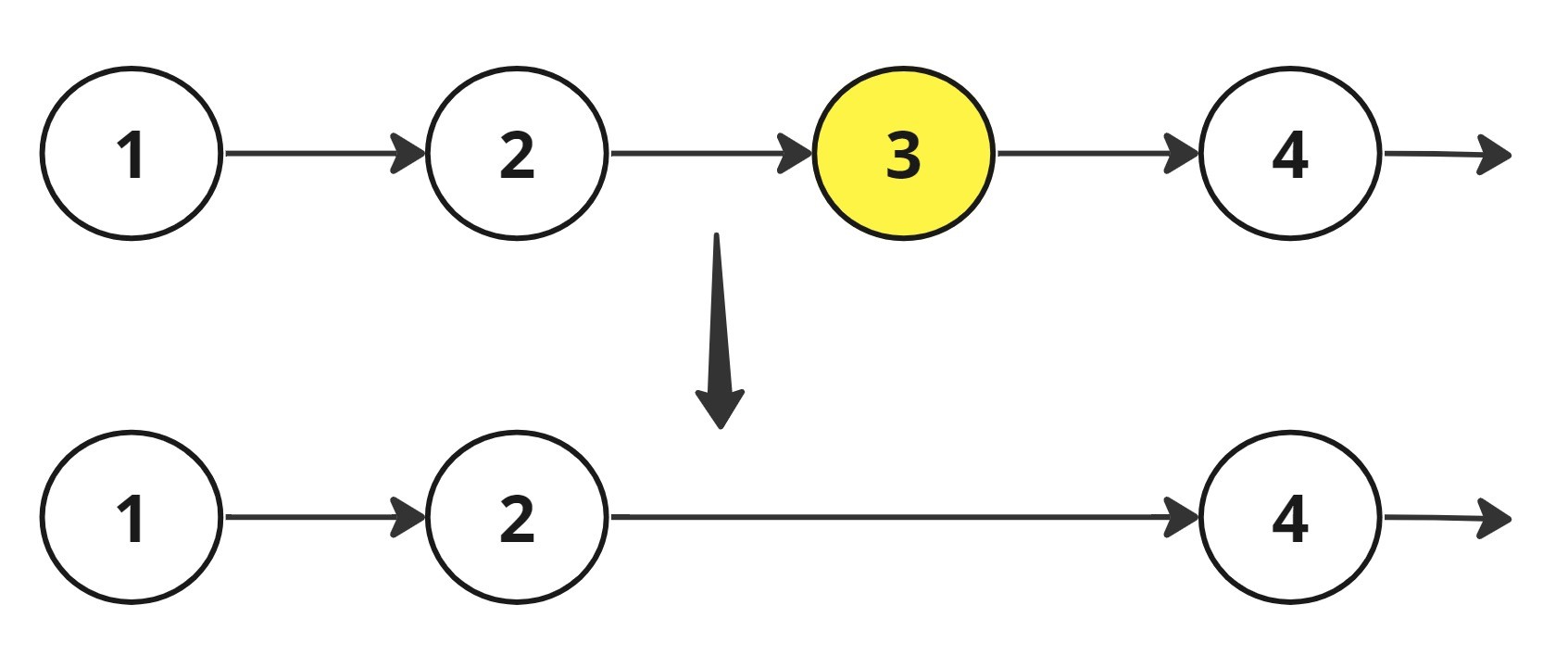
You have been given a singly Linked List of 'N' nodes with integer data and an integer 'K'.
Your task is to remove the 'K'th node from the end of the given Linked List and return the head of the modified linked list.
Example:
Input : 1 -> 2 -> 3 -> 4 -> 'NULL'  and  'K' = 2
Output: 1 -> 2 -> 4 -> 'NULL'
Explanation:
After removing the second node from the end, the linked list become 1 -> 2 -> 4 -> 'NULL'.
Problem approach
This was actually a pretty easy question.
Step 1: I provided an intuition of the question and how to approach it.
Step 2: I presented a basic two-pass algorithm, then moved to an efficient one-pass algorithm.
02
Round
Medium
Video Call
Duration60 Minutes
Interview date5 Dec 2020
Coding problem1
1. System Design Questions
- Build a self-checkout solution for a retailer.
- Build a conversational solution that enables customers to discover and order products.
- Build a solution to help customers find products in the store and navigate to the corresponding aisle/shelf. If there is a shopping list, provide the best shopping route to complete the purchases.
- Build a smart store replenishment system.
Problem approach
Tip 1: Choose a problem statement that has not been extensively implemented already or that needs significant improvements.
Tip 2: Create a complete pipeline for the problem statement you have selected, starting with why you chose that particular statement and detailing how you will approach the solution and the need for improvement.
Tip 3: Develop a prototype or something that can demonstrate your progress. It will show how confident you are in your approach.
03
Round
Easy
HR Round
Duration45 minutes
Interview date9 Dec 2020
Coding problem1
1. Basic HR Questions
He greeted me first and asked how I was doing. He inquired about my previous round and whether I faced any technical difficulties. Then, he asked me to introduce myself and followed up with some HR-related questions.
Problem approach
Tip 1: I would suggest going through some questions beforehand.
Tip 2: Never say anything that shows your incompetence, e.g., "unable to reallocate" or "I don't know." Never use such words!
Tip 3: Have some instances to support your stance on certain decision questions, e.g., when you have shown a leadership role or led your team, etc.


Here's your problem of the day 
Solving this problem will increase your chance to get selected in this company
Skill covered: Programming
How do you remove whitespace from the start of a string?
Choose another skill to practice
Similar interview experiences
Software Engineer
4 rounds | 4 problems
Interviewed by Google inc
 Selected
0 views

0 comments

0 upvotes
Software Engineer
4 rounds | 4 problems
Interviewed by Google inc
Selected 5111 views
2 comments
0 upvotes
Software Engineer
3 rounds | 6 problems
Interviewed by Google inc
Rejected
2438 views
0 comments
0 upvotes
Software Engineer
2 rounds | 4 problems
Interviewed by Google inc
Rejected
2292 views
0 comments
0 upvotes
Companies with similar interview experiences

Software Engineer
3 rounds | 7 problems
Interviewed by Optum
 Selected
 7976 views
1 comments
0 upvotes

Software Engineer
5 rounds | 5 problems
Interviewed by Microsoft
 Selected
 10148 views
1 comments
0 upvotes
Software Engineer
2 rounds | 4 problems
Interviewed by Amazon
Selected 4448 views
1 comments
0 upvotes