





Grab interview experience Real time questions & tips from candidates to crack your interview

SDE - 1
Grab


2 rounds | 4 Coding
problems

Rejected
Interview preparation journey

Journey
As a fresher, I have solved around 300 questions. I had an offer from TCS. I studied mechanical engineering, and I learned most of the coding in the last semester or after graduation.
Application story
This company visited my campus for placement, and I applied. They first conducted the coding round, followed by coding questions.
Why selected/rejected for the role?
I was rejected for this role because I was not able to perform well in the interview and provide effective solutions.
Preparation
Duration: 6 months
Topics: Java, DSA , OOPs , Advanced DSA like Graphs

Tip 1: Solve problems to gain hands-on confidence.
Tip 2: Solve high-quality questions.
Tip 3: Try solving questions yourself instead of relying on YouTube videos.
Application process
Where: Campus
Eligibility: Above 7 CGPA
Tip 1: Include projects on your resume.
Tip 2: Avoid including false information on your resume.

Interview rounds
01
Round
Easy
Video Call
Duration60 minutes
Interview date28 Jan 2023
Coding problem2
1. Longest Palindromic Substring
Moderate
35m average time
78% success

0/80
Asked in companies



You are given a string ‘S’ of length ‘N’.
You must return the longest palindromic substring in ‘S’.
Note: Return any of them in case of multiple substrings with the same length.
Example:
Input: ‘S’ =’badam’

Output: ‘ada’

‘ada’ is the longest palindromic substring, and it can be proved that it is the longest possible palindromic substring.
Problem approach
Your task is to return the longest palindromic substring. If there are multiple strings, return any.
2. Min Steps to one
Easy
15m average time
90% success
0/40
Asked in companies


You are given a positive integer 'N’. Your task is to find and return the minimum number of steps that 'N' has to take to get reduced to 1.
You can perform any one of the following 3 steps:
1) Subtract 1 from it. (n = n - 1) ,
2) If n is divisible by 2, divide by 2.( if n % 2 == 0, then n = n / 2 ) ,
3) If n is divisible by 3, divide by 3. (if n % 3 == 0, then n = n / 3 ).
For example:
Given:
‘N’ = 4, it will take 2 steps to reduce it to 1, i.e., first divide it by 2 giving 2 and then subtract 1, giving 1.
Problem approach
You are given a positive integer 'N’. Your task is to find and return the minimum number of steps that 'N' has to take to get reduced to 1.
You can perform any one of the following 3 steps:
1) Subtract 1 from it. (n = n - 1) ,
2) If n is divisible by 2, divide by 2.( if n % 2 == 0, then n = n / 2 ) ,
3) If n is divisible by 3, divide by 3. (if n % 3 == 0, then n = n / 3 ).
02
Round
Easy
Video Call
Duration60 minutes
Interview date29 Jan 2023
Coding problem2
1. Shortest alternate colored path
Moderate
20m average time
80% success
0/80
Asked in companies

Consider a directed graph of ‘N’ nodes where each node is labeled from ‘0’ to ‘N - 1’. Each edge of the graph is either ‘red’ or ‘blue’ colored. The graph may contain self-edges or parallel edges. You are given two arrays, ‘redEdges’ and ‘blueEdges’, whose each element is of the form [i, j], denoting an edge from node ‘i’ to node ‘j’ of the respective color.
Your task is to compute an array ‘answer’ of size ‘N’, where ‘answer[i]’ stores the length of the shortest path from node ‘0’ to node ‘i’ such that the edges along the path have alternate colors. If there is no such path from node ‘0’ to ‘i’, then ‘answer[i] = -1’.
Example:
N = 4, redEdges = [[0, 1], [2, 3]], blueEdges = [[1, 2], [1, 3]]
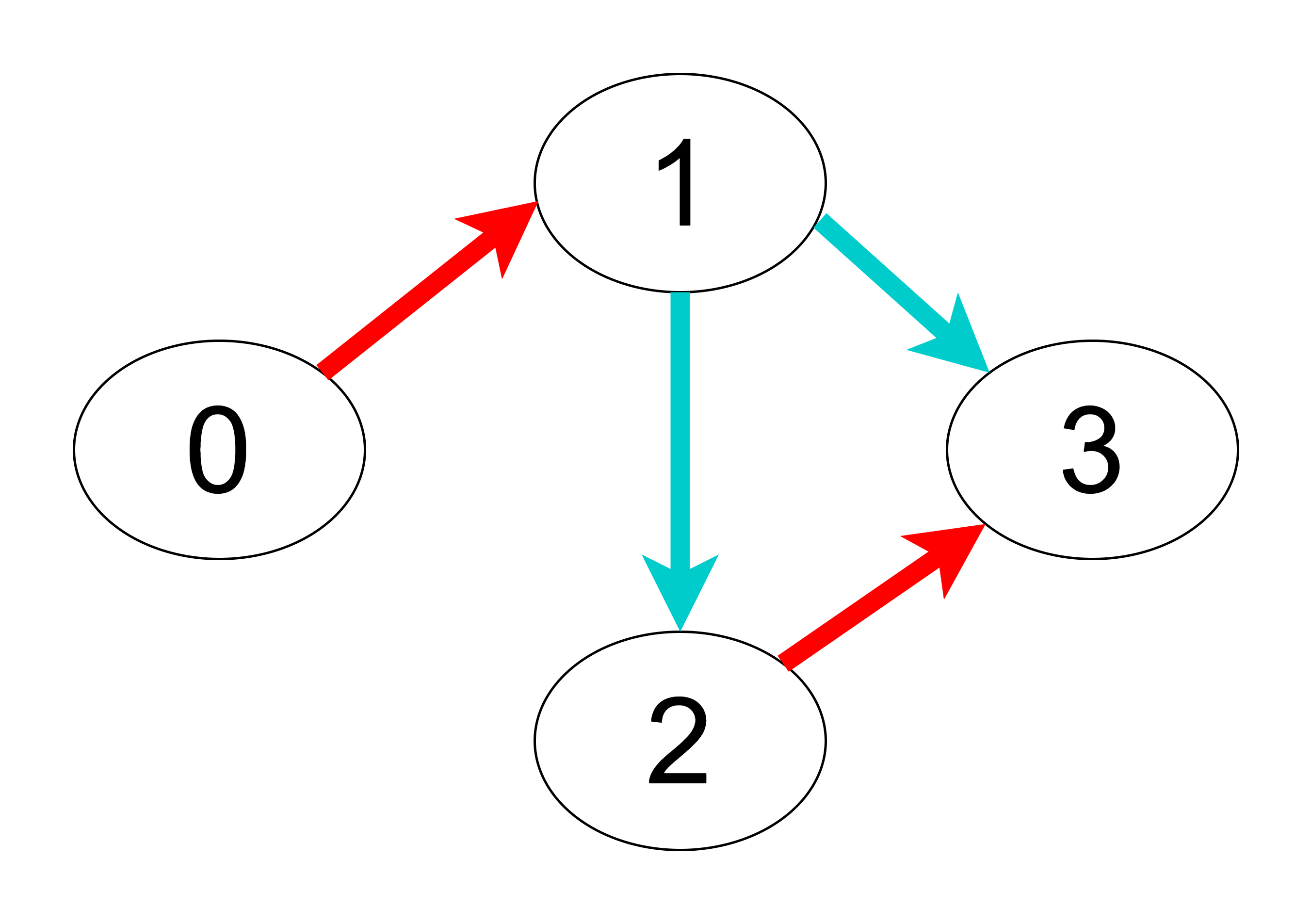
The shortest paths for each node from node ‘0’ are:
1: 0->1         Length: 1
2: 0->1->2      Length: 2
3: 0->1->3      Length: 2
So, the ‘answer’ array will be: [0, 1, 2, 2].
Note:
1. The given graph could be a disconnected graph.

2. Any two nodes ‘i’ and ‘j’ can have at most one red edge from ‘i’ to ‘j’ and at most one blue edge from ‘i’ to ‘j’.
Problem approach
Consider a directed graph of ‘N’ nodes where each node is labeled from ‘0’ to ‘N - 1’. Each edge of the graph is either ‘red’ or ‘blue’ colored. The graph may contain self-edges or parallel edges. You are given two arrays, ‘redEdges’ and ‘blueEdges’, whose each element is of the form [i, j], denoting an edge from node ‘i’ to node ‘j’ of the respective color.
Your task is to compute an array ‘answer’ of size ‘N’, where ‘answer[i]’ stores the length of the shortest path from node ‘0’ to node ‘i’ such that the edges along the path have alternate colors. If there is no such path from node ‘0’ to ‘i’, then ‘answer[i] = -1’.
2. Search an Element in an Array
Easy
15m average time
80% success
0/40
Asked in companies


You have given a sorted array 'A' of 'N' integers.
Now, you are given 'Q' queries, and each query consists of a single integer 'X'. Your task is to check whether 'X' is present in array 'A' or not for each query. If 'X' exists in array 'A', you need to print 1 else print 0.
Note :
The given array is sorted in non-decreasing order.
Problem approach
You have given a sorted array 'A' of 'N' integers.
Now, you are given 'Q' queries, and each query consists of a single integer 'X'. Your task is to check whether 'X' is present in array 'A' or not for each query. If 'X' exists in array 'A', you need to print 1 else print 0.


Here's your problem of the day 
Solving this problem will increase your chance to get selected in this company
Skill covered: Programming
How do you remove whitespace from the start of a string?
Choose another skill to practice
Similar interview experiences
SDE - 1
2 rounds | 4 problems
Interviewed by Grab
Rejected

976 views

0 comments

0 upvotes
SDE - 1
3 rounds | 5 problems
Interviewed by Grab
Rejected
1281 views
0 comments
0 upvotes
SDE - 1
3 rounds | 5 problems
Interviewed by Grab
Rejected
737 views
0 comments
0 upvotes
SDE - 1
3 rounds | 6 problems
Interviewed by Grab
Rejected
725 views
0 comments
0 upvotes
Companies with similar interview experiences
SDE - 1
5 rounds | 12 problems
Interviewed by Amazon

 Selected
 117552 views
24 comments
0 upvotes
SDE - 1
4 rounds | 5 problems
Interviewed by Microsoft
Selected 60143 views
5 comments
0 upvotes
SDE - 1
3 rounds | 7 problems
Interviewed by Amazon
 Selected
 36138 views
7 comments
0 upvotes