





HashedIn interview experience Real time questions & tips from candidates to crack your interview

SDE - 1
HashedIn


4 rounds | 6 Coding
problems

 Selected
 Interview preparation journey

Preparation
Duration: 6 Months
Topics: Data Structures, Algorithms, DBMS, High Level Design, Low Level Design

Tip 1 : Practice questions everyday
Tip 2 : Learn OOPS concepts properly
Tip 3 : Also, try to learn the design principles
Application process
Where: Referral
Eligibility: 60% above overall
Tip 1 : Your resume should be clean and crisp. Mention your projects well
Tip 2 : Don't Lie on your resume

Interview rounds
01
Round
Medium
Online Coding Test
Duration60 Minutes
Interview date8 Jun 2021
Coding problem2
It was an online round
1. Spiral Order Traversal of a Binary Tree
Easy
20m average time
75% success

0/40
Asked in companies



You have been given a binary tree of 'N' nodes. Print the Spiral Order traversal of this binary tree.
For example
For the given binary tree [1, 2, 3, -1, -1, 4, 5, -1, -1, -1, -1]
    1
   / \
  2   3
     / \
    4   5

Output: 1 3 2 4 5
Problem approach
I solved the problem using two stacks, one stack used to iterate from left to right and another one to iterate from right to left
2. Validate BST
Moderate
25m average time
0/80
Asked in companies


You have been given a binary tree of integers with N number of nodes. Your task is to check if that input tree is a BST (Binary Search Tree) or not.
A binary search tree (BST) is a binary tree data structure which has the following properties.
• The left subtree of a node contains only nodes with data less than the node’s data.
• The right subtree of a node contains only nodes with data greater than the node’s data.
• Both the left and right subtrees must also be binary search trees.
Example :
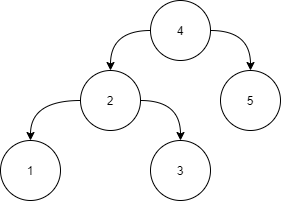
Answer :
Level 1:

All the nodes in the left subtree of 4 (2, 1, 3) are smaller
than 4, all the nodes in the right subtree of the 4 (5) are
larger than 4.

Level 2 :

For node 2:
All the nodes in the left subtree of 2 (1) are smaller than
2, all the nodes in the right subtree of the 2 (3) are larger than 2.
For node 5:
The left and right subtrees for node 5 are empty.

Level 3:

For node 1:
The left and right subtrees for node 1 are empty.
For node 3:
The left and right subtrees for node 3 are empty.

Because all the nodes follow the property of a binary search tree, the above tree is a binary search tree.
Problem approach
if the inorder traversal of the binary tree is in increasing order, then it's a binary search tree else not. So, just do a inorder traversal and store it in a temporary array, if it's in increasing order then it's a binary search tree else not
02
Round
Medium
Face to Face
Duration60 Minutes
Interview date12 Jun 2021
Coding problem2
1. Search In A Row Wise And Column Wise Sorted Matrix
Moderate
15m average time
80% success
0/80
Asked in companies



You are given an 'N * N' matrix of integers where each row and each column is sorted in increasing order. You are given a target integer 'X'.
Find the position of 'X' in the matrix. If it exists then return the pair {i, j} where 'i' represents the row and 'j' represents the column of the array, otherwise return {-1,-1}
For example:
If the given matrix is:
[ [1, 2, 5],
  [3, 4, 9],
  [6, 7, 10]]
We have to find the position of 4. We will return {1,1} since A[1][1] = 4.
Problem approach
Naive approach : I told i will be traversing the entire matrix and if i get that element i will return else not
Efficient approach : Since this is sorted in row wise and column wise, I will start from the top right and compare, if the element is greater i will move downwards, if the element is smaller, i will move to the left. if we find the element we will return, if not then the element is not present
2. Left View Of Binary Tree
Moderate
30m average time
60% success
0/80
Asked in companies



You have been given a Binary Tree of 'n' nodes, where the nodes have integer values
Print the left view of the binary tree.
Example :
If the input tree is as depicted in the picture:
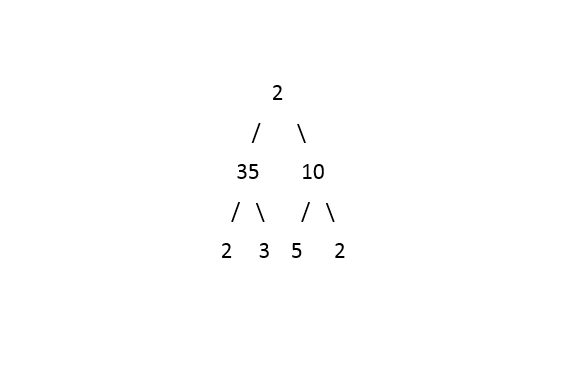
The Left View of the tree will be: 2 35 2
Problem approach
Since, i had very less time left so, I jumped directly into the efficient approach. To solve this problem i used the queue data structure, did a level order traversal and and always run a loop till the size of the queue and then printed the first element only where (i =1)
03
Round
Hard
Face to Face
Duration60 Minutes
Interview date15 Jun 2021
Coding problem1
1. System Design Question
Design a parking lot. Where there is space for different kind of vehicles and for each vehicle the charges are different. If a parking is available the parking should be allotted, if not available then it should show a message saying the parking is full.
Problem approach
Tip 1: Try to understand the problem properly. Don't assume anything, Ask the requirements clearly.
Tip 2: then start designing the components one by one properly.
Tip 3: Learn the basic components of object oriented design
04
Round
Easy
HR Round
Duration30 Minutes
Interview date17 Jun 2021
Coding problem1
1. Project based questions
Some questions related to the project. Then what is Agile Methodologies, Do you know Software development life cycle. Areas of interest
Problem approach
Tip 1: Study some of the software engineering principles and methodologies


Here's your problem of the day 
Solving this problem will increase your chance to get selected in this company
Skill covered: Programming
How do you remove whitespace from the start of a string?
Choose another skill to practice
Similar interview experiences
SDE - 1
4 rounds | 8 problems
Interviewed by HashedIn
 Selected
1267 views

0 comments

0 upvotes
SDE - 1
3 rounds | 3 problems
Interviewed by HashedIn
 Selected
 1026 views
0 comments
0 upvotes
SDE - 1
3 rounds | 5 problems
Interviewed by HashedIn
Selected 924 views
0 comments
0 upvotes
SDE - 1
3 rounds | 3 problems
Interviewed by HashedIn
Rejected
718 views
0 comments
0 upvotes
Companies with similar interview experiences

SDE - 1
2 rounds | 3 problems
Interviewed by BNY Mellon
 Selected
 6365 views
3 comments
0 upvotes
SDE - 1
3 rounds | 6 problems
Interviewed by BNY Mellon
 Selected
 0 views
0 comments
0 upvotes

SDE - 1
3 rounds | 5 problems
Interviewed by CIS - Cyber Infrastructure
Selected 2198 views
0 comments
0 upvotes