





HashedIn interview experience Real time questions & tips from candidates to crack your interview

Software Engineer
HashedIn


3 rounds | 5 Coding
problems

 Selected
 Interview preparation journey

Journey
I was very new to coding when I joined college, but the seniors at our college helped me a lot in learning it. I was fortunate to receive some good offers but also faced my fair share of rejections. My parents supported me a lot during that time.
Application story
There was an off-campus drive conducted by the HashedIn Recruitment Team. I reached out to one of the employees of this company for a referral. After that, I received the test link, followed by interviews.
Why selected/rejected for the role?
Selected interview questions were pretty standard, and I was well prepared for these questions as I had studied all the previously asked questions by this company.
Preparation
Duration: 5 months
Topics: OOPS, System Design, Algorithms, Data Structures, DBMS

Tip 1: Prepare for System Design.
Tip 2: Practice DSA questions thoroughly.
Tip 3: Review OOP and DBMS concepts.
Application process
Where: Referral
Eligibility: 7 & above CGPA
Tip 1: Have at least four projects on your resume.
Tip 2: Do not include false information; you will always get caught. Be genuine.

Interview rounds
01
Round
Easy
Video Call
Duration60 mins
Interview date25 Mar 2022
Coding problem2
The interview started with a formal introduction. He asked a lot of questions about the projects I have worked on, then shifted the focus to my past experience. In the end, he just asked two simple DSA questions.
1. 0 1 Knapsack
Moderate

0/80
Asked in companies



A thief is robbing a store and can carry a maximum weight of ‘W’ into his knapsack. There are 'N' items available in the store and the weight and value of each item is known to the thief. Considering the constraints of the maximum weight that a knapsack can carry, you have to find the maximum profit that a thief can generate by stealing items.
Note: The thief is not allowed to break the items.
For example, N = 4, W = 10 and the weights and values of items are weights = [6, 1, 5, 3] and values = [3, 6, 1, 4]. Then the best way to fill the knapsack is to choose items with weight 6, 1 and 3. The total value of knapsack = 3 + 6 + 4 = 13.
Problem approach
Create a matrix min_cost[n+1][W+1], where n is the number of distinct weighted packets of oranges, and W is the maximum capacity of the bag.
Initialize the 0th row with INF (infinity) and the 0th column with 0.
Now, fill the matrix:
- If wt[i-1] > j, then min_cost[i][j] = min_cost[i-1][j].
- If wt[i-1] ≤ j, then min_cost[i][j] = min(min_cost[i-1][j], val[i-1] + min_cost[i][j - wt[i-1]]).
If min_cost[n][W] == INF, then the output will be -1, because this means that we cannot form weight W using these weights. Otherwise, the output will be min_cost[n][W].
2. Search In A Grid
Moderate
15m average time
85% success
0/80
Asked in companies


You are given a grid ‘MAT’ of ‘N’ rows and ‘M’ columns with positive integers written in each cell.
The grid has the following properties-
• Integers in each row are sorted in ascending order from left to right.
• Integers in each column are sorted in ascending order from top to bottom.
You are also given a positive integer ‘target’. Your task is to find whether ‘target’ is present inside the grid or not.
Problem approach
The code implements a solution class that takes a board of characters and a list of words as input. It then performs a depth-first search to find if the words are present on the board. If a word is found, it is added to the output along with its position on the board. The code uses a visited array to keep track of the cells that have been visited during the search. Finally, the function returns a vector of strings, where each string is a word followed by its position on the board.
02
Round
Easy
Video Call
Duration60 mins
Interview date29 Mar 2022
Coding problem2
This round was a technical round combined with a hiring manager round. He started by asking questions about the tech stack used in my past projects, then asked one simple puzzle, and ended the round with one DSA question.
1. Puzzle
You have a birthday cake and need to cut it into 8 equal pieces using only 3 cuts. How do you do it?
Problem approach
Tip 1: Practice previously asked puzzles.
Tip 2: Explain your thought process to the interviewer.
2. k-th node from the end of the linked list
Easy
15m average time
85% success
0/40
Asked in companies



Given the head node of the singly linked list and an integer ‘k’, , find the value at the kth node from the end of the linked list.
For example:
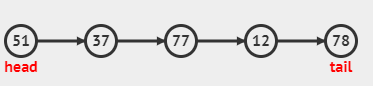
For the above-linked list, if k=2, then the value at the kth i.e second node from the end is ‘12’.
Note :
1.You don’t need to take any input. It has already been taken care of. Just implement the given function and return a pointer pointing to the k-th element from the last of the linked list.
2.It is guaranteed that k<=size of the linked list.
Problem approach
Take two nodes, slowPtr and fastPtr, such that next points to the head.
Take one node to store the head; initially, it’s a dummy node (start), and the next of this node will point to the head. The dummy node is used to handle the edge case where B = N (size of the linked list).
Start traversing until the fast pointer reaches the nth node.
Then, traverse both pointers one step at a time until the fast pointer reaches the end.
Once the traversal is complete, delete the node next to slowPtr.
Finally, return the next of start.
03
Round
Easy
HR Round
Duration15 mins
Interview date30 Mar 2022
Coding problem1
This was a non-eliminatory round that covered basic formalities, a description of the job role, and some basic HR questions.
1. Basic HR Questions
- Why do you want to join HashedIn?
- Where do you see yourself in five years?
- Are you comfortable relocating to Bangalore?
Problem approach
Tip 1: Ask your doubts about your role.
Tip 2: Prepare for basic HR questions.
Tip 3: Show willingness to learn.


Here's your problem of the day 
Solving this problem will increase your chance to get selected in this company
Skill covered: Programming
How do you remove whitespace from the start of a string?
Choose another skill to practice
Similar interview experiences
Software Engineer
4 rounds | 6 problems
Interviewed by HashedIn
 Selected
950 views

0 comments

0 upvotes
Software Engineer
3 rounds | 5 problems
Interviewed by HashedIn
 Selected
 2592 views
0 comments
0 upvotes
Software Engineer
3 rounds | 3 problems
Interviewed by HashedIn
Selected 2146 views
0 comments
0 upvotes
Software Engineer
3 rounds | 5 problems
Interviewed by HashedIn
Selected 1208 views
0 comments
0 upvotes
Companies with similar interview experiences

Software Engineer
4 rounds | 1 problems
Interviewed by Newgen Software
 Selected
 3266 views
2 comments
0 upvotes

Software Engineer
2 rounds | 2 problems
Interviewed by Ernst & Young (EY)
Selected 0 views
0 comments
0 upvotes
Software Engineer
3 rounds | 3 problems
Interviewed by Newgen Software
Selected 1480 views
0 comments
0 upvotes