





HCL Technologies interview experience Real time questions & tips from candidates to crack your interview

Software Engineer
HCL Technologies


5 rounds | 6 Coding
problems

 Selected
 Interview preparation journey

Journey
There were a total of five rounds in the entire process. The first two were online technical rounds, while the remaining three were offline rounds. The offline rounds were conducted in a single day.
Application story
The application opened around August, and after shortlisting, the first two technical rounds were conducted on the ACE platform. The results were shared after 15 days. Later, the company visited the campus at the end of November and conducted three offline rounds as part of a one-day drive.
Why selected/rejected for the role?
I was selected because of my strong knowledge of DSA, my confidence in answering questions, and my practical understanding of OOPs implementation in real-life scenarios.
Preparation
Duration: 3 Months
Topics: Data Structures and Algorithms (DSA), Object-Oriented Programming (OOPS), System Design, Graphs, Operating Systems

Tip 1: Practice at least 400+ questions covering easy and medium difficulty levels.
Tip 2: Have a strong grasp of OOPS implementation.
Application process
Where: Campus
Eligibility: Must have at least 70% in both 10th and 12th, and an overall CGPA above 7. (Salary Package: 4.5 LPA)
Tip 1: Be truthful on your resume and mention only the skills and technologies you have a strong grasp of.
Tip 2: Have at least three good projects, clearly highlighting your individual contributions.

Interview rounds
01
Round
Medium
Online Coding Interview
Duration120 minutes
Interview date12 Aug 2024
Coding problem2
The rounds consisted of two coding questions and 20 MCQs from General Aptitude, OOPs, and Operating Systems.
1. Trapping Rain Water
Moderate
15m average time
80% success

0/80
Asked in companies



You have been given a long type array/list 'arr’ of size 'n’.
It represents an elevation map wherein 'arr[i]’ denotes the elevation of the 'ith' bar.
Print the total amount of rainwater that can be trapped in these elevations.
Note :
The width of each bar is the same and is equal to 1.
Example:
Input: ‘n’ = 6, ‘arr’ = [3, 0, 0, 2, 0, 4].

Output: 10

Explanation: Refer to the image for better comprehension:

Note :
You don't need to print anything. It has already been taken care of. Just implement the given function.
Problem approach
Tip 1: Use the two-pointer approach for an optimized solution.
Tip 2: Read the problem statement carefully to understand which technique to apply for the optimal solution.
2. Longest Substring Without Repeating Characters
Moderate
30m average time
65% success
0/80
Asked in companies



Given a string input of length n, find the length of the longest substring without repeating characters i.e return a substring that does not have any repeating characters.
Substring is the continuous sub-part of the string formed by removing zero or more characters from both ends.
Problem approach
Tip 1: Read the question carefully.
Tip 2: Apply the sliding window approach to achieve O(n) time complexity.
Tip 3: Avoid using the brute-force method, as hidden test cases may fail in that case.
02
Round
Medium
Online Coding Interview
Duration120 minutes
Interview date13 Aug 2024
Coding problem2
It consisted of 2 coding questions and 15 MCQs from OOPS, DBMS, and OS.
1. Shortest Path
Moderate
25m average time
70% success
0/80
Asked in companies


You are given a connected, undirected graph with ‘V’ vertices and ‘E’ edges.
You are provided with two vertices, ‘src’ and ‘dest’. Your task is to return the shortest distance between the given vertices ‘src’ and ‘dest’.
For Example:
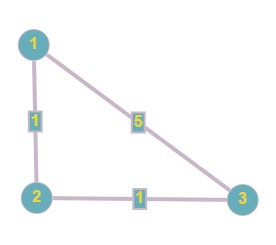
For the given graph,
The shortest distance between 1 and 3 is 2 (via 1 <-> 2 <-> 3). Hence, the answer is 2.
Problem approach
Tip 1: Go through the problem statement carefully to identify the optimal solution.
Tip 2: If you have knowledge of sets and priority queues, use them to achieve an optimal solution with a min heap.
2. Minimum Arrow Shots
Moderate
0/80
Asked in company
You are given a 2D integer array points where points[i] = [xstart, xend] represents the horizontal diameter of a spherical balloon. You are shooting arrows vertically upwards from the x-axis.
An arrow shot at position x on the x-axis will burst any balloon whose xstart <= x <= xend. A single arrow can burst multiple balloons if their horizontal diameters overlap with the arrow's path.
Your task is to find the minimum number of arrows that must be shot to burst all the balloons.
Problem approach
Tip 1: Read the question carefully and apply a greedy algorithm, as the problem asks for the minimum number of arrows.
Tip 2: The core idea is to burst as many overlapping bottles as possible with a single arrow. First, sort the bottles based on their end points, then iterate and count.
03
Round
Medium
Assignment
Duration60 minutes
Interview date9 Dec 2024
Coding problem1
1. Assignment Round
In the assignment, I was asked to attend a pen-and-paper round that included easy to medium-level questions such as BFS and DFS, along with other easy-level problems and five aptitude questions, including train and clock problems.
04
Round
Easy
Group Discussion
Duration25-30 Minutes
Interview date9 Dec 2024
Coding problem0
This round was a face-to-face technical interview in which I was asked about my projects and my in-depth knowledge of OOPS and its real-life implementation.
I initiated the round by introducing myself and my projects, explaining my role and contributions, and describing how my project helps solve real-world problems and how it is better than other solutions in the market.
05
Round
Medium
HR Round
Duration20 minutes
Interview date9 Dec 2024
Coding problem1
At the start of the round, I was asked to introduce myself. This was followed by questions about how I differ from other participants and how I manage tight deadlines.
1. HR Questions
I was asked how I manage deadlines, handle work pressure, and how I am different from other applicants in the room.
Problem approach
Tip 1: Be confident while answering questions.
Tip 2: Always be professional and fluent in your responses.


Here's your problem of the day 
Solving this problem will increase your chance to get selected in this company
Skill covered: Programming
How do you remove whitespace from the start of a string?
Choose another skill to practice
Similar interview experiences
Software Engineer
2 rounds | 3 problems
Interviewed by HCL Technologies
Selected 
0 views

2 comments

0 upvotes
Software Engineer
3 rounds | 3 problems
Interviewed by HCL Technologies
Selected 2449 views
0 comments
0 upvotes
Software Engineer
3 rounds | 10 problems
Interviewed by HCL Technologies
Selected 1572 views
0 comments
0 upvotes
Software Engineer
2 rounds | 6 problems
Interviewed by HCL Technologies
 Selected
 1559 views
0 comments
0 upvotes
Companies with similar interview experiences

Software Engineer
4 rounds | 1 problems
Interviewed by Newgen Software
 Selected
 3571 views
2 comments
0 upvotes

Software Engineer
3 rounds | 6 problems
Interviewed by HashedIn
 Selected
 2837 views
0 comments
0 upvotes

Software Engineer
2 rounds | 2 problems
Interviewed by Ernst & Young (EY)
 Selected
 0 views
0 comments
0 upvotes