





Hexaware Technologies interview experience Real time questions & tips from candidates to crack your interview

Software Engineer Trainee
Hexaware Technologies


4 rounds | 19 Coding
problems

 Selected
 Interview preparation journey

Journey
Hexaware is the fastest-growing next-generation provider of IT, BPO, and consulting services. The company visited our college, where four rounds were conducted: an online aptitude test, a coding test, a technical interview, and an HR interview. All the rounds were elimination rounds. More than 300 students participated in the on-campus drive, out of which only 10 were selected after all four rounds.
Application story
I applied through an on-campus drive. The company conducted four rounds, including an online aptitude test, a coding test, a technical interview, and an HR interview. All the rounds were elimination rounds. More than 300 students participated in the on-campus drive, out of which only 10 were selected after all four rounds.
Why selected/rejected for the role?
I was selected for this role because I had in-depth knowledge of each topic they asked about during the interview, allowing me to answer the interviewer's cross-questions with ease. Additionally, the coding question given to me during the interview was of medium difficulty, which I solved within a few minutes.
Preparation
Duration: 1 month
Topics: Data Structures, Java, MySQL, Operating System, Frontend

Tip 1: Practice basic coding questions.
Tip 2: Whatever you study, study it in detail.
Tip 3: You should have knowledge of databases.
Application process
Where: Campus
Eligibility: 7 CGPA
Tip 1: It's better to have a Java project on your resume.
Tip 2: You should have knowledge of everything mentioned in your resume.
Interview rounds
01
Round
Easy
Online Coding Interview
Duration60 mins
Interview date20 Aug 2021
Coding problem8
This round was conducted at 10 a.m. in the morning on the Aon platform. The test included questions on OOPS, DSA, and aptitude. The top 100 students were shortlisted for the next round.
1. OS Question
What is the number of characters contained in the primary name of a file in MS-DOS?
Problem approach
Tip 1: Read the question carefully.
Tip 2: Practice OOPS concepts.
2. OS Question
Which of these page replacement algorithms suffers from Belady’s anomaly?
Problem approach
Tip 1: Read the question carefully.
Tip 2: Practice OOP concepts regularly.
3. Puzzle
A deck of 5 cards is thoroughly shuffled. Two cards are then drawn one at a time. What is the probability that the number on the first card is one higher than the number on the second card?
Problem approach
Tip 1: Read the question carefully.
Tip 2: Solve aptitude questions using a pen and paper.
4. Puzzle
AZ, GT, MN, ?, YB
Problem approach
Tip 1: Read the question carefully.
Tip 2: Solve the aptitude questions using a pen and paper.
5. OS Question
When does the page fault occur?
Problem approach
Tip 1: Read the question carefully
Tip 2: Have deep knowledge of OOPS
6. DBMS Question
How many primary keys can a table have? (Learn)
Problem approach
Tip 1: Read the question carefully.
Tip 2: Write SQL queries.
Tip 3: Practice database MCQs.
7. SQL Question
Name the clause that creates a temporary relation for the query on which it is defined.
Problem approach
Tip 1: Read the question carefully.
Tip 2: Write SQL queries.
Tip 3: Practice database MCQs.
8. SQL Question
Choose the correct SQL query. Four queries are given, and we need to select the correct one.
Problem approach
Tip 1: Read the question carefully.
Tip 2: Write SQL queries.
Tip 3: Practice database MCQs.
02
Round
Medium
Online Coding Test
Duration30 mins
Interview date26 Aug 2021
Coding problem2
The test was conducted in the afternoon. There were two coding questions in the test. Only the students who solved both questions moved to the next round.
1. Rotate array
Easy
25m average time
80% success

0/40
Asked in companies



Given an array 'arr' with 'n' elements, the task is to rotate the array to the left by 'k' steps, where 'k' is non-negative.
Example:
'arr '= [1,2,3,4,5]
'k' = 1  rotated array = [2,3,4,5,1]
'k' = 2  rotated array = [3,4,5,1,2]
'k' = 3  rotated array = [4,5,1,2,3] and so on.
Problem approach
Step 1: Determine the length of the array and call it n.
Step 2: Normalize the value of K by computing K % n. This step is important because if K is larger than n, it ensures that we only rotate by the necessary number of positions.
Step 3: Reverse the entire array. Swap the first element with the last, the second element with the second-to-last, and so on, until you reach the middle of the array. This can be efficiently done using a two-pointer approach.
Step 4: Reverse the first K elements of the array. This ensures that the first K elements are now in their correct positions after the rotation. Again, use the two-pointer approach to perform the reversal.
Step 5: Reverse the remaining elements from the Kth position to the end of the array. This step places the remaining elements in their correct positions.
Step 6: The array is now successfully rotated by K positions.
2. k-th node from the end of the linked list
Easy
15m average time
85% success
0/40
Asked in companies



Given the head node of the singly linked list and an integer ‘k’, , find the value at the kth node from the end of the linked list.
For example:
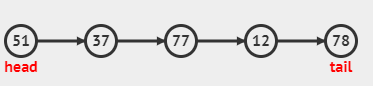
For the above-linked list, if k=2, then the value at the kth i.e second node from the end is ‘12’.
Note :
1.You don’t need to take any input. It has already been taken care of. Just implement the given function and return a pointer pointing to the k-th element from the last of the linked list.
2.It is guaranteed that k<=size of the linked list.
Problem approach
Step 1: Initialize two pointers, ptr1 and ptr2, at the head of the linked list.
Step 2: Move ptr1 forward by three positions. If the linked list has fewer than three nodes, it is too short to find the 3rd node from the end. Handle this case accordingly (e.g., return an error or implement custom logic based on your requirements).
Step 3: Move both ptr1 and ptr2 simultaneously until ptr1 reaches the end of the linked list, maintaining a gap of three positions between them.
Step 4: When ptr1 reaches the end of the list, ptr2 will be pointing to the 3rd node from the end. Return the value of the node pointed to by ptr2 or return the entire node if additional information is needed.
03
Round
Easy
Face to Face
Duration40 mins
Interview date30 Aug 2021
Coding problem6
The interviewer was good. He seemed to have a Java background, as he focused more on Java. This round was conducted in the morning, around 11 a.m. Only 12 students were shortlisted after this round.
1. N-th Fibonacci Number
Moderate
40m average time
70% success
0/80
Asked in companies



You are given an integer ‘N’, your task is to find and return the N’th Fibonacci number using matrix exponentiation.
Since the answer can be very large, return the answer modulo 10^9 +7.
Fibonacci number is calculated using the following formula:
F(n) = F(n-1) + F(n-2),
Where, F(1) = F(2) = 1.
For Example:
For ‘N’ = 5, the output will be 5.
Problem approach
Step 1: I initially solved this using recursion, but it was not efficient enough.
Step 2: The interviewer then asked if I could solve it using a different approach.
Step 3: So, I solved it using dynamic programming.
2. Java Question
What are the different access specifiers in Java? (Learn)
Problem approach
Tip 1: Have a good understanding of Java.
Tip 2: Listen to the question carefully.
Tip 3: Explain your answer with examples.
3. OOPs Question
What is encapsulation? Explain with an example of daily life. (Learn)
Problem approach
Tip 1: Have a good understanding of Java.
Tip 2: Listen to the question carefully.
Tip 3: Explain your answer with examples.
4. SQL Question
What are ACID properties in SQL? (Learn)
Problem approach
Tip 1: Have a good understanding of SQL.
Tip 2: Listen to the question carefully.
Tip 3: Explain each ACID property in detail.
5. SQL Question
What are TCL commands? (Learn)
Problem approach
Tip 1: Have a deep knowledge of SQL.
Tip 2: Listen to the question carefully.
Tip 3: Explain your answer in detail.
04
Round
Easy
HR Round
Duration10 mins
Interview date7 Sep 2021
Coding problem3
This round lasted only 10 minutes and was conducted in the evening. The purpose of this round was to assess your communication skills and determine the number of offers a student has.
1. Basic HR Question
Give your introduction. What is your parent's occupation?
Problem approach
Tip 1: Answer confidently and use proper English.
Tip 2: Express a strong interest in joining the company.
2. Basic HR Question
Do you have any other offers in hand? Why do you want to join this company?
Problem approach
Tip 1: Answer confidently in proper English.
Tip 2: Speak the truth; don't hide anything.
3. Basic HR Question
Are you comfortable relocating to Chennai?
Problem approach
Tip 1: Answer confidently in clear and correct English.
Tip 2: You should always answer "yes" to such questions.


Here's your problem of the day 
Solving this problem will increase your chance to get selected in this company
Skill covered: Programming
To make an AI less repetitive in a long paragraph, you should increase:
Choose another skill to practice
Similar interview experiences
Software Engineer Trainee
4 rounds | 4 problems
Interviewed by Hexaware Technologies
 Selected
1246 views

0 comments

0 upvotes
Software Engineer Trainee
2 rounds | 5 problems
Interviewed by Hexaware Technologies
Selected 1287 views
1 comments
0 upvotes
SDE - 1
6 rounds | 11 problems
Interviewed by Hexaware Technologies
 Selected
 602 views
0 comments
0 upvotes
Graduate Engineer Trainee
3 rounds | 3 problems
Interviewed by Hexaware Technologies
 Selected
 161 views
0 comments
0 upvotes
Companies with similar interview experiences

Software Engineer Trainee
2 rounds | 4 problems
Interviewed by Tata Consultancy Services (TCS)
Selected 1290 views
0 comments
0 upvotes