





HSBC Global Banking and Markets interview experience Real time questions & tips from candidates to crack your interview
SDE - 1
HSBC Global Banking and Markets


3 rounds | 6 Coding
problems

Rejected
Interview preparation journey

Journey
When I joined college, I was unaware of this Data Structure and Algorithm, which made my journey to getting an internship way more complicated. From that point, I started doing questions on multiple coding platforms.
Application story
I asked for a referral from my senior for this post. After the referral, I got an online assessment to complete.
Why selected/rejected for the role?
I was rejected because I have a good history of content preparation and I do not have a decent rank on coding platforms.
Preparation
Duration: 6 months
Topics: Data Structures, Pointers, OOPS, System Design, Algorithms, Dynamic Programming

1) Master the Fundamentals: Ensure you have a strong foundation in computer science concepts such as data structures, algorithms, object-oriented programming, and system design. This forms the backbone of your technical skills.
2) Learn Multiple Programming Languages: While it's essential to be proficient in at least one programming language, familiarize yourself with multiple languages as each has its strengths and use cases.
3) Build Projects: Practice by working on real-world projects. Building applications, and websites, or contributing to open-source projects will help you apply your knowledge and gain valuable experience.
4) Stay Updated: The tech industry evolves rapidly. Keep yourself updated with the latest technologies, programming languages, frameworks, and tools.
5) Code Review and Collaboration: Participate in code reviews and collaborate with other developers. This helps you learn from others, improve your coding skills, and understand different perspectives.
Application process
Where: Referral
Eligibility: Above 7 CGPA
1) Clear and Concise Format: Keep your resume clean, well-organized, and easy to read. Use a professional font, appropriate headings, and bullet points to present information clearly.
2) Tailor Your Resume: Customize your resume for each job application. Highlight relevant skills, experiences, and accomplishments that align with the specific job requirements.
3) Use Keywords: Many employers use applicant tracking systems (ATS) to screen resumes. Incorporate relevant keywords from the job description to increase the chances of your resume getting noticed.

Interview rounds
01
Round
Easy
Face to Face
Duration60 minutes
Interview date8 Nov 2022
Coding problem2
Timing: The coding interview was scheduled for 3:00 PM.
Environment: The coding interview took place in a well-lit conference room with a whiteboard for coding exercises. The room was quiet and conducive to focusing on the problem-solving process.
Any other significant activity: Before the coding interview, there was a brief introductory session where the interviewer explained the format of the interview and made the candidate feel comfortable.
The Interviewer: The interviewer was friendly and approachable, creating a relaxed atmosphere to help the candidate perform their best. They provided clear instructions and encouraged the candidate to ask questions if needed.
1. Delete Node In A Linked List
Easy
15m average time
80% success

0/40
Asked in companies



You are given a Singly Linked List of integers and a reference to the node to be deleted. Every node of the Linked List has a unique value written on it. Your task is to delete that node from the linked list.
A singly linked list is a linear data structure in which we can traverse only in one direction i.e. from Head to Tail. It consists of several nodes where each node contains some data and a reference to the next node.
Note:
• The reference to the head of the linked list is not given.
• The node to be deleted is not a tail node.
• The value of each node in the Linked List is unique.
• It is guaranteed that the node to be deleted is present in the linked list.
A sample Linked List-

2. Merge Two Sorted Linked Lists
Moderate
15m average time
80% success
0/80
Asked in companies



Given two sorted linked lists, list1, and list2, merge them to create a new sorted linked list that contains all the elements from both lists in ascending order.
02
Round
Easy
Video Call
Duration60 minutes
Interview date8 Nov 2022
Coding problem2
1. Triple Sum
Easy
15m average time
85% success
0/40
Asked in companies


Given an array nums of distinct integers and a target sum target, find all unique triplets in the array that add up to the target sum. Each triplet should be a list of three integers and should not contain duplicate triplets.
2. LCA Of Binary Tree
Moderate
10m average time
90% success
0/80
Asked in companies



You have been given a Binary Tree of distinct integers and two nodes ‘X’ and ‘Y’. You are supposed to return the LCA (Lowest Common Ancestor) of ‘X’ and ‘Y’.
The LCA of ‘X’ and ‘Y’ in the binary tree is the shared ancestor of ‘X’ and ‘Y’ that is located farthest from the root.
Note :
You may assume that given ‘X’ and ‘Y’ definitely exist in the given binary tree.
For example :
For the given binary tree
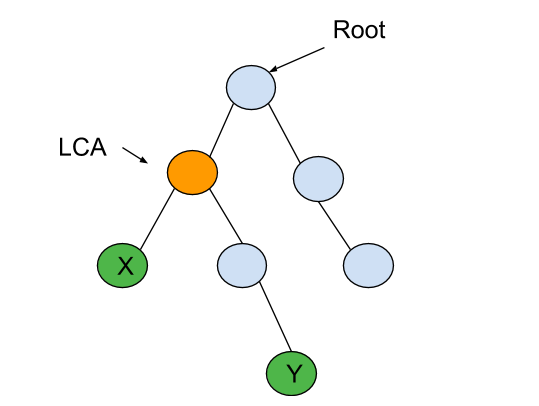
LCA of ‘X’ and ‘Y’ is highlighted in yellow colour.
03
Round
Easy
Video Call
Duration60 minutes
Interview date8 Nov 2022
Coding problem2
1. Minimum Cost Path
Moderate
25m average time
70% success
0/80
Asked in companies



The Minimum Cost Path problem is a classic optimization problem in graph theory and dynamic programming. Given a 2D grid or matrix with non-negative integer weights assigned to each cell, the goal is to find the minimum cost path from the top-left cell to the bottom-right cell while moving only rightwards or downwards.
2. Longest Increasing Subsequence
Moderate
30m average time
65% success
0/80
Asked in companies

The Longest Increasing Subsequence (LIS) problem is a classic algorithmic problem where the goal is to find the length of the longest subsequence of a given array that is in strictly increasing order. A subsequence is a sequence that can be derived from the original array by deleting some elements without changing the order of the remaining elements.


Here's your problem of the day 
Solving this problem will increase your chance to get selected in this company
Skill covered: Programming
How do you remove whitespace from the start of a string?
Choose another skill to practice
Similar interview experiences
SDE - 1
3 rounds | 7 problems
Interviewed by OYO
 Selected
6182 views

0 comments

0 upvotes
SDE - Intern
2 rounds | 3 problems
Interviewed by Amazon
Rejected
1566 views
0 comments
0 upvotes

SDE - 1
2 rounds | 5 problems
Interviewed by Meesho
Rejected
7245 views
0 comments
0 upvotes
SDE - 1
3 rounds | 9 problems
Interviewed by Salesforce
 Selected
 4552 views
0 comments
0 upvotes
Companies with similar interview experiences
SDE - 1
5 rounds | 12 problems
Interviewed by Amazon
 Selected
 117552 views
24 comments
0 upvotes

SDE - 1
4 rounds | 5 problems
Interviewed by Microsoft
Selected 60143 views
5 comments
0 upvotes
SDE - 1
3 rounds | 7 problems
Interviewed by Amazon
 Selected
 36138 views
7 comments
0 upvotes