





HSBC interview experience Real time questions & tips from candidates to crack your interview

SDE - 1
HSBC


2 rounds | 4 Coding
problems

Rejected
Interview preparation journey

Journey
I completed my B.tech and during my studies, I started practicing coding questions and participating in mock interviews. Since then, I have solved numerous questions on various practice websites.
Application story
This was an on-campus opportunity for me. The company visited my campus for placements and provided a CGPA-based cutoff for eligibility.
Why selected/rejected for the role?
I was rejected because I was not able to provide an accurate solution to the question given to me.
Preparation
Duration: 6 months
Topics: Data Structures and Algorithms, Object-Oriented Programming System, Operating system, Database Management System

Try to solve Data Structures and Algorithms-based questions on your own before looking at the solutions, and aim to do them as quickly as you can. Additionally, prepare for theoretical subjects like Operating Systems and Database Management Systems. I used Coding Ninjas' subjective notes for these topics, which are very accurate and up to the mark.
Application process
Where: Campus
Eligibility: Above 7 CGPA
Tip 1: Highlight your most relevant skills prominently in your resume. Identify the key skills required for the job and ensure they are mentioned in your skills section or integrated throughout your work experience descriptions.
Tip 2: Use action verbs to start your bullet points when describing your responsibilities and accomplishments. Action verbs like "implemented," "developed," "managed," and "led" bring your experiences to life and make your resume more engaging and dynamic.

Interview rounds
01
Round
Easy
Video Call
Duration60 minutes
Interview date23 Jun 2023
Coding problem2
In the technical interview round, we encountered a diverse set of questions that covered Data Structures and Algorithms (DSA) as well as core concepts of C++, including computer networking, Object-Oriented Programming (OOP), and Database Management Systems (DBMS). The purpose was to assess our knowledge, problem-solving abilities, and understanding of these crucial technical areas.
1. Longest Palindromic Substring
Moderate
20m average time
80% success

0/80
Asked in companies


You are given a string 'str' of length 'N'.
Your task is to return the longest palindromic substring. If there are multiple strings, return any.
A substring is a contiguous segment of a string.
For example :
str = "ababc"

The longest palindromic substring of "ababc" is "aba", since "aba" is a palindrome and it is the longest substring of length 3 which is a palindrome.

There is another palindromic substring of length 3 is "bab". Since starting index of "aba" is less than "bab", so "aba" is the answer.
2. Min Steps to one
Easy
15m average time
90% success
0/40
Asked in companies


You are given a positive integer 'N’. Your task is to find and return the minimum number of steps that 'N' has to take to get reduced to 1.
You can perform any one of the following 3 steps:
1) Subtract 1 from it. (n = n - 1) ,
2) If n is divisible by 2, divide by 2.( if n % 2 == 0, then n = n / 2 ) ,
3) If n is divisible by 3, divide by 3. (if n % 3 == 0, then n = n / 3 ).
For example:
Given:
‘N’ = 4, it will take 2 steps to reduce it to 1, i.e., first divide it by 2 giving 2 and then subtract 1, giving 1.
02
Round
Easy
Video Call
Duration60 minutes
Interview date23 Jun 2023
Coding problem2
1. Pattern Matching
Moderate
15m average time
85% success
0/80
Asked in companies



You are given a pattern in the form of a string and a collection of words. Your task is to determine if the pattern string and the collection of words have the same order.
Note :
The strings are non-empty.

The strings only contain lowercase English letters.
2. Shortest alternate colored path
Moderate
20m average time
80% success
0/80
Asked in companies

Consider a directed graph of ‘N’ nodes where each node is labeled from ‘0’ to ‘N - 1’. Each edge of the graph is either ‘red’ or ‘blue’ colored. The graph may contain self-edges or parallel edges. You are given two arrays, ‘redEdges’ and ‘blueEdges’, whose each element is of the form [i, j], denoting an edge from node ‘i’ to node ‘j’ of the respective color.
Your task is to compute an array ‘answer’ of size ‘N’, where ‘answer[i]’ stores the length of the shortest path from node ‘0’ to node ‘i’ such that the edges along the path have alternate colors. If there is no such path from node ‘0’ to ‘i’, then ‘answer[i] = -1’.
Example:
N = 4, redEdges = [[0, 1], [2, 3]], blueEdges = [[1, 2], [1, 3]]
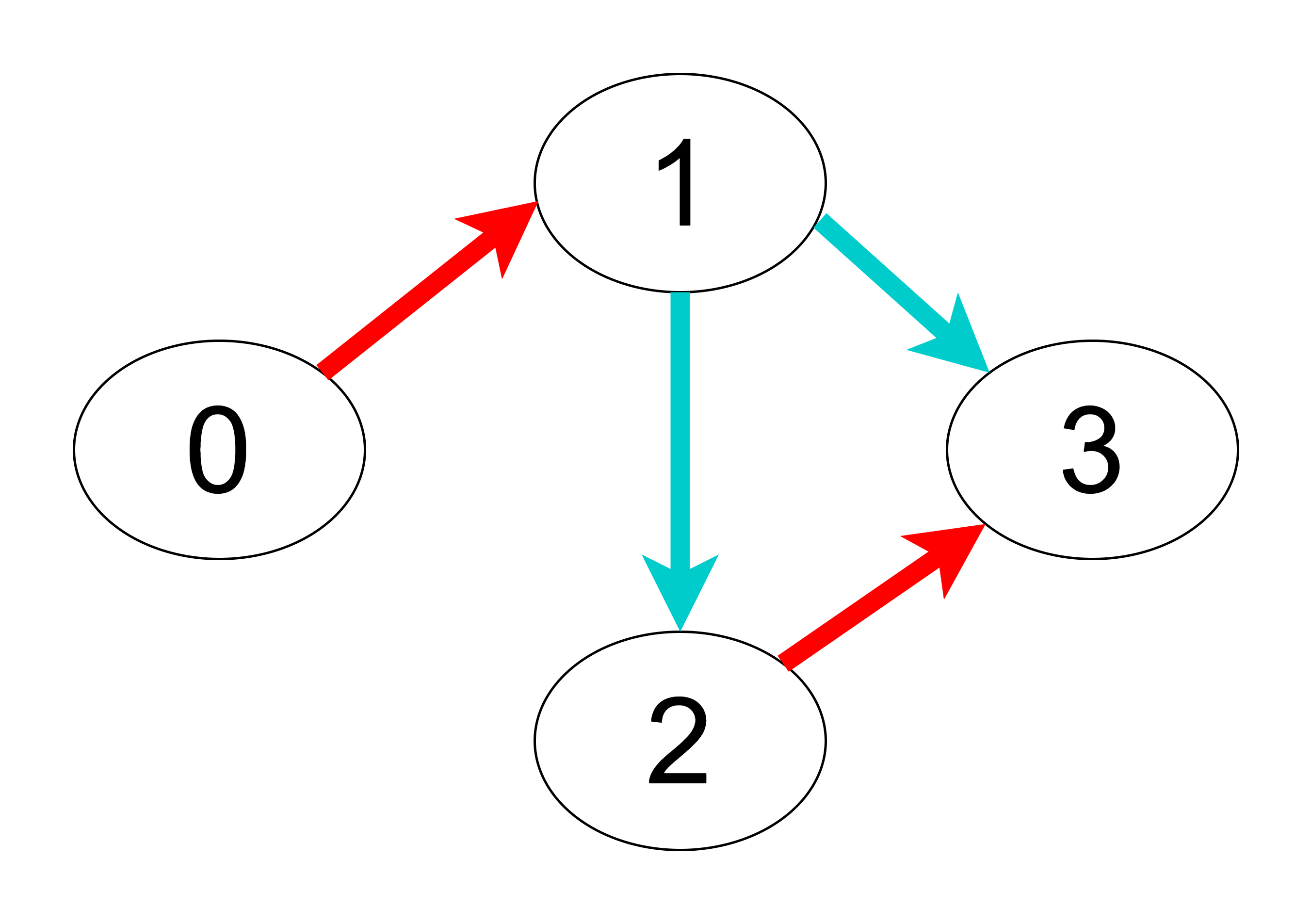
The shortest paths for each node from node ‘0’ are:
1: 0->1         Length: 1
2: 0->1->2      Length: 2
3: 0->1->3      Length: 2
So, the ‘answer’ array will be: [0, 1, 2, 2].
Note:
1. The given graph could be a disconnected graph.

2. Any two nodes ‘i’ and ‘j’ can have at most one red edge from ‘i’ to ‘j’ and at most one blue edge from ‘i’ to ‘j’.


Here's your problem of the day 
Solving this problem will increase your chance to get selected in this company
Skill covered: Programming
How do you remove whitespace from the start of a string?
Choose another skill to practice
Similar interview experiences
SDE - 1
3 rounds | 3 problems
Interviewed by HSBC

 Selected
1990 views

0 comments

0 upvotes
SDE - 1
3 rounds | 3 problems
Interviewed by HSBC
 Selected
 2325 views
0 comments
0 upvotes
SDE - 1
3 rounds | 5 problems
Interviewed by HSBC
Rejected
956 views
0 comments
0 upvotes
SDE - 1
2 rounds | 4 problems
Interviewed by HSBC
Rejected
942 views
0 comments
0 upvotes
Companies with similar interview experiences
SDE - 1
2 rounds | 3 problems
Interviewed by BNY Mellon
 Selected
 6786 views
3 comments
0 upvotes
SDE - 1
3 rounds | 6 problems
Interviewed by BNY Mellon
Selected 0 views
0 comments
0 upvotes

SDE - 1
3 rounds | 5 problems
Interviewed by CIS - Cyber Infrastructure
Selected 2418 views
0 comments
0 upvotes