





Hyundai Mobis interview experience Real time questions & tips from candidates to crack your interview
Post Graduate Engineer Trainee
Hyundai Mobis


3 rounds | 4 Coding
problems

 Selected
 Interview preparation journey

Preparation
Duration: 1 month
Topics: DSA, Embedded, Sensors, DBMS, Embedded C

Tip 1 : Do research on company
Tip 2 : be updated with technologies
Tip 3 : Spend more time on coding
Application process
Where: Company Website
Eligibility: CGPA above 7 (no current backlogs)
Tip 1 : don't make it vast and extra
Tip 2 : must include projects and trainings

Interview rounds
01
Round
Medium
Online Coding Interview
Duration60 minutes
Interview date29 Aug 2022
Coding problem2
Timing was from 9 Am to 5 Pm evening
1. Nth Fibonacci Number
Easy

0/40
Asked in companies



The n-th term of Fibonacci series F(n), where F(n) is a function, is calculated using the following formula -
    F(n) = F(n - 1) + F(n - 2),
    Where, F(1) = 1, F(2) = 1
Provided 'n' you have to find out the n-th Fibonacci Number. Handle edges cases like when 'n' = 1 or 'n' = 2 by using conditionals like if else and return what's expected.
"Indexing is start from 1"
Example :
Input: 6

Output: 8

Explanation: The number is ‘6’ so we have to find the “6th” Fibonacci number.
So by using the given formula of the Fibonacci series, we get the series:
[ 1, 1, 2, 3, 5, 8, 13, 21]
So the “6th” element is “8” hence we get the output.
Problem approach
The value N is a Positive integer that should be read from STDIN. The Nth term that is calculated by the program should be written to STDOUT. Other than the value of Nth term, no other characters/strings or message should be written to STDOUT.
For example, when N = 14, the 14th term in the series is 17. So only the value 17 should be printed to STDOUT
2. Permutations
Moderate
10m average time
90% success
0/80
Asked in companies



A permutation is a mathematical technique that determines the number of possible arrangements in a set when the order of the arrangements matters. A string of length 'N' has 'N'! permutations.
Given an array of distinct integers, return all the possible permutations of the array.
Example:
'ARR[]' = [1, 2]

The size of the array is 2. So, the total number of permutations is 2! = 2. The possible permutations are [1, 2] (the array itself) and [2,1] where the position of element 1 in the original array is swapped with element 2 and vice-versa.
Note:
1. All the numbers in the array are unique.

2. You can return the answer in any order.

3. The original array is also a permutation of the given array.
Problem approach
Maintain two variables num and den to store numerator and denominator.
We need to find n! and (n-r)!.
Traverse from 1 to n and multiple i by num to find n!.
Traverse from 1 to (n-r) and multiply i by den to find (n-r)!.
num/den is the final answer
02
Round
Easy
Online Coding Test
Duration30 minutes
Interview date29 Oct 2022
Coding problem1
30 min with 1 coding question
1. Bubble Sort
Easy
10m average time
90% success
0/40
Asked in companies



Bubble Sort is one of the sorting algorithms that works by repeatedly swapping the adjacent elements of the array if they are not in sorted order.
You are given an unsorted array consisting of N non-negative integers. Your task is to sort the array in non-decreasing order using the Bubble Sort algorithm.
For Example:
Bubble Sort implementation for the given array: {6,2,8,4,10} is shown below :-
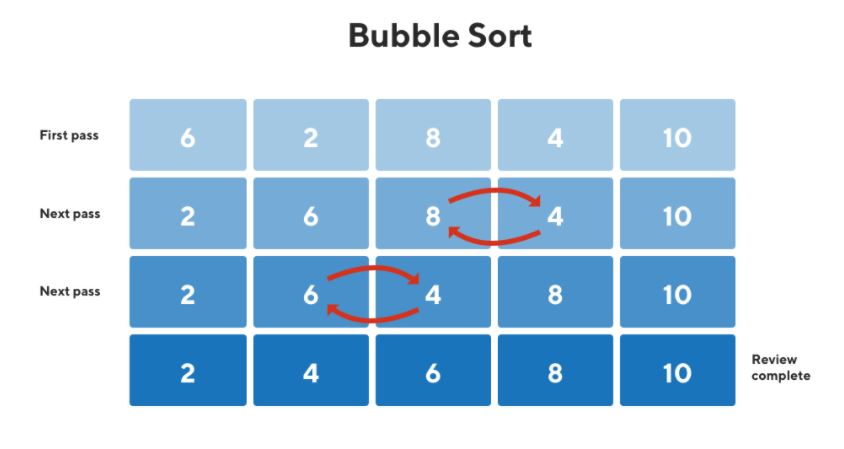
Problem approach
Repeatedly swap 2 adjacent elements if arr[j] > arr[j+1] .
Here, the maximum element of the unsorted array reaches the end of the unsorted array after each iteration.
Unlike selection sort, here, sorting is done from the back as shown in the dry run.
After (N-1) iterations , we get a sorted array.
03
Round
Medium
HR Round
Duration30-40 minutes
Interview date1 Sep 2022
Coding problem1
HR round with companies interviewer panel
1. Basic HR Questions
1. Describe yourself.
2. I got the questions related to my project regarding open and closed loop of a control system.
3. Weaknesses and strengths.
Problem approach
Tip 1 : Go through your projects
Tip 2 : Research a little about company
Tip 3 : Remember the company values


Here's your problem of the day 
Solving this problem will increase your chance to get selected in this company
Skill covered: Programming
How do you remove whitespace from the start of a string?
Choose another skill to practice
Similar interview experiences

SDE - 1
3 rounds | 7 problems
Interviewed by OYO
 Selected
6182 views

0 comments

0 upvotes

SDE - Intern
2 rounds | 3 problems
Interviewed by Amazon
Rejected
1566 views
0 comments
0 upvotes

SDE - 1
2 rounds | 5 problems
Interviewed by Meesho
Rejected
7245 views
0 comments
0 upvotes

SDE - 1
3 rounds | 9 problems
Interviewed by Salesforce
 Selected
 4552 views
0 comments
0 upvotes