





Infosys private limited interview experience Real time questions & tips from candidates to crack your interview
Digital Specialist Engineer
Infosys private limited


2 rounds | 6 Coding
problems

 Selected
 Interview preparation journey

Journey
I started my journey in 9th class when I found a great interest in coding; when I used to code a bit in HTML CSS, I learned that by myself from YouTube. I cleared my 12th with decent marks and got into tier 3 college as my main score was 72 percentile. Later in college, 1st year, I tried more coding languages such as C, C++, and Python, got interested in C++, and started working on my skills. At that time, I got interested in App development, a course suggested by my friend who used to code with me, and I learned Android with Kotlin from Internshala. Then I learned about Flutter and discovered that by myself using Google and YouTube and developed an app called Code World, an e-learning app that teaches coding in C and is available on PlayStore. Before getting into development, I had set an interest in Competitive Coding. Then, I participated in the Innovative India Coding Championship, coding by coding ninjas and Chandigarh University, and got AIR 271. Later, I participated in a hackathon conducted by CredAvenue and got into the top 25. My 1st hackathon, and I won 5k Rs. I participated in a hackathon by Xiaomi, got 5th rank, won Xiaomi Smart Speaker with Google Assistant, kept my coding and development skills together, and continued practicing more and more. ! I cleared CodeVita and got an offer from TCS, then I cleared HackWithInfy and got an offer for Digital Specialist Engineer at Infosys.
From my journey, I have learned that you will achieve more than you expect if you have a clear vision and a positive attitude towards your goal.
Application story
I applied for this post through HackwithInfy
Why selected/rejected for the role?
I solved all the coding questions in the interview, and they found that I am interested in learning new technologies, So I was selected for the role.
Preparation
Duration: 3 months
Topics: DSA, Array, Linked List, Graph, BST, Data Structures, Arrays, Linked Lists, Stacks, Queues, Trees, and Graphs.

Tip 1 : Be consistent in your practice
Tip 2 : Make notes of all the concepts you learn
Tip 3 : Keep revising the old concept
Application process
Where: Other
Eligibility: No criteria
Tip 1 : Have two good live projects
Tip 2 : Participate in competitions such as hackathons, and coding competitions to show your coding talent
Interview rounds
01
Round
Medium
Online Coding Test
Duration180 minutes
Interview date6 Mar 2022
Coding problem3
1. Paint House
Hard
20m average time
80% success

0/120
Asked in companies



You have been given ‘N’ houses, each house can be painted with any of three colours: green, red and yellow. You are also given a “cost” matrix of ‘N’ * 3 dimension which represents the cost of painting an i-th house (0-th based indexing) with j-th colour. The colour code is as follows: green - 0, red - 1 and yellow - 2. Now, you are supposed to find the minimum cost of painting all houses such that no adjacent houses are painted with the same colour.
Problem approach
Create an auxiliary 2D dp[][3] array to store the minimum cost of previously colored houses.
Initialize dp[0][0], dp[0][1], and dp[0][2] as the cost of cost[i][0], cost[i][1], and cost[i][2] respectively.
Traverse the given array cost[][3] over the range [1, N] and update the cost of painting the current house with colors red, blue, and green with the minimum of the cost other two colors in dp[i][0], dp[i][1], and dp[i][2] respectively.
After completing the above steps, print the minimum of dp[N – 1][0], dp[N – 1][1], and dp[N – 1][2] as the minimum cost of painting all the houses with different adjacent colors.
2. Nth Element Of Modified Fibonacci Series
Easy
15m average time
85% success
0/40
Asked in companies



You have been given two integers ‘X’ and ‘Y’ which are the first two integers of a series and an integer ‘N’. You have to find the Nth number of the series using the Fibonacci rule given by f(x) = f(x - 1) + f(x - 2).
The answer may be very large, return it after modulus 10 ^ 9 + 7.
Note:
The series is 1-based indexed.
3. Maximum Sum Circular Subarray
Moderate
10m average time
90% success
0/80
Asked in companies



You have been given a circular array/list ‘ARR’ containing ‘N’ integers. You have to find out the maximum possible sum of a non-empty subarray of ‘ARR’.
A circular array is an array/list in which the end of the array connects to the beginning of the array.
A subarray may only include each element of the fixed buffer of ‘ARR’ at most once. (Formally, for a subarray ‘ARR[i]’, ‘ARR[i+1]’, ..., ‘ARR[j]’, there does not exist ‘i’ <= ‘k1’, ‘k2’ <= ‘j’ with ‘k1’ % ‘N’ = k2 % ‘N’.)
For Example:
The ‘ARR’ = [1, 2, -3, -4, 5], the subarray [5, 1, 2] has the maximum possible sum which is 8. This is possible as 5 is connected to 1 because ‘ARR’ is a circular array.
Problem approach
Create an integer array rightMax of length n.
Set rightMax[n - 1] to nums[n - 1], set suffixSum to nums[n - 1].
Iterate over i from n - 2 to 0
Increase suffixSum by nums[i]
Update rightMax[i] to max(rightMax[i + 1], suffixSum)
Calculate the normal sum maxSum using Kadane's algorithm.
Set specialSum to nums[0], set sum to 0.
Iterate over i from 0 to n - 2
Increase prefixSum by nums[i]
Update specialSum to max(specialSum, prefixSum + rightMax[i + 1]).
Return max(maxSum, specialSum)
02
Round
Medium
Online Coding Interview
Duration45 minutes
Interview date18 May 2021
Coding problem3
1. BFS in Graph
Easy
10m average time
90% success
0/40
Asked in companies


Given an adjacency list representation of a directed graph with ‘n’ vertices and ‘m’ edges. Your task is to return a list consisting of Breadth-First Traversal (BFS) starting from vertex 0.
In this traversal, one can move from vertex 'u' to vertex 'v' only if there is an edge from 'u' to 'v'. The BFS traversal should include all nodes directly or indirectly connected to vertex 0.
Note:
The traversal should proceed from left to right according to the input adjacency list.
Example:
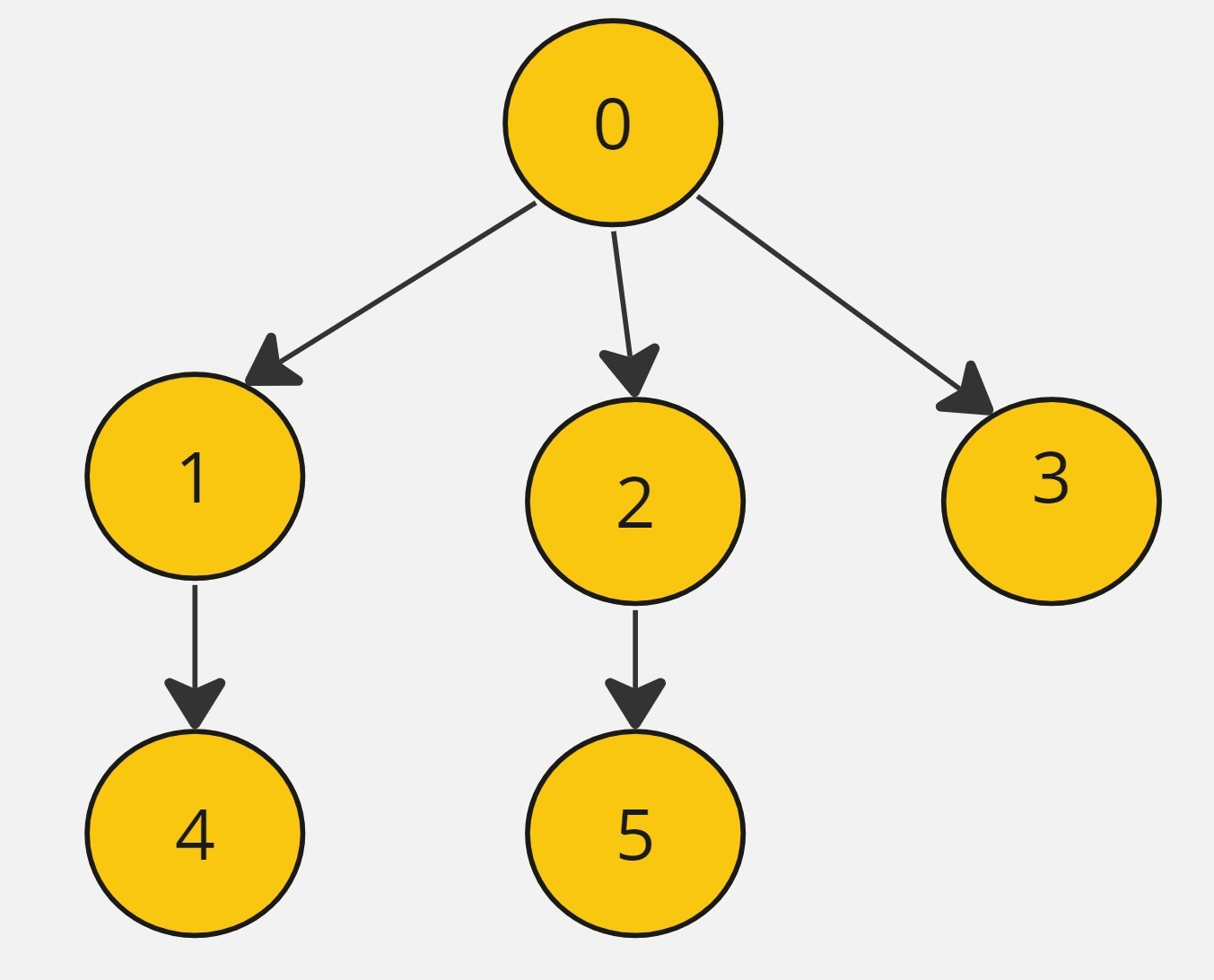
Adjacency list: { {1,2,3},{4}, {5}, {},{},{}}

The interpretation of this adjacency list is as follows:
Vertex 0 has directed edges towards vertices 1, 2, and 3.
Vertex 1 has a directed edge towards vertex 4.
Vertex 2 has a directed edge towards vertex 5.
Vertices 3, 4, and 5 have no outgoing edges.

We can also see this in the diagram below.

BFS traversal: 0 1 2 3 4 5
2. DBMS
What is 2 tier and 3 tier architecture in DBMS? (Learn)
Problem approach
A two-tier DB architecture either buries the application logic within the server database, on the client (inside the UI), or both of them. A three-tier DB architecture buries the process or application logic in the middle-tier. Thus, it acts as a separate entity from the Client/ User Interface and the data Interface.
3. OS Question
What is Kernel? (Learn)
Problem approach
The kernel is a computer program at the core of a computer's operating system and generally has complete control over everything in the system. It is the portion of the operating system code that is always resident in memory and facilitates interactions between hardware and software components.


Here's your problem of the day 
Solving this problem will increase your chance to get selected in this company
Skill covered: Programming
To make an AI less repetitive in a long paragraph, you should increase:
Choose another skill to practice
Similar interview experiences
Digital Specialist Engineer
3 rounds | 3 problems
Interviewed by Infosys private limited
Selected 
1042 views

0 comments

0 upvotes
Digital Specialist Engineer
2 rounds | 3 problems
Interviewed by Infosys private limited
 Selected
 816 views
0 comments
0 upvotes
Digital Specialist Engineer
2 rounds | 4 problems
Interviewed by Infosys private limited
Selected 1124 views
0 comments
0 upvotes
Digital Specialist Engineer
3 rounds | 4 problems
Interviewed by Infosys private limited
 Selected
 875 views
0 comments
0 upvotes