





Infosys privite limited interview experience Real time questions & tips from candidates to crack your interview
Specialist Programmer
Infosys privite limited


2 rounds | 9 Coding
problems
 Selected
 Interview preparation journey

Journey
My journey started in the early years of my B.Tech when I began exploring programming and building my fundamentals in computer science. Over time, I developed a strong interest in problem-solving and consistently practiced Data Structures and Algorithms, solving 950+ questions on coding platforms. This significantly improved my logical thinking and approach to complex problems.
Alongside DSA, I worked on full-stack development using the MERN stack and built projects like a real-time chat application and a Stack Overflow–like platform, which helped me gain practical experience in building scalable applications.
Managing DSA, development, and academics was challenging at times, but staying consistent helped me overcome those phases. Before the interview, I focused on revising core DSA concepts and preparing my projects thoroughly.
Overall, my journey has been driven by consistency, discipline, and continuous learning, which played a key role in helping me crack the Specialist Programmer role at Infosys.
Application story
I applied for the Specialist Programmer role at Infosys through my college placement drive. The process began with an online assessment round consisting of four coding questions. To become eligible for the Specialist Programmer (L1) role, it was required to solve at least two questions with 100% of the test cases passing.
After clearing the online assessment, I was shortlisted for the interview rounds. The interviews were conducted in physical mode at my college campus and lasted for approximately 1 hour and 35 minutes. The process mainly focused on evaluating my problem-solving skills, technical knowledge, and understanding of my projects.
Overall, the entire process was well-organized and provided a great learning experience.
Why selected/rejected for the role?
I believe I was selected because of my confident approach and strong problem-solving skills during the interview. I was able to clearly explain my thought process and justify my answers.
Additionally, whenever I was unsure about a question, I communicated it honestly instead of guessing or providing incorrect information. This demonstrated my authenticity and willingness to learn, which I believe created a positive impression on the interviewer.
Preparation
Duration: 6 Months
Topics: Data Structures, Algorithms, Dynamic Programming, Trees, Graphs, Greedy Algorithms, Segment Trees, Object-Oriented Programming (OOP), SQL, Full Stack Development

Tip 1: Be consistent with DSA and focus on problem-solving patterns rather than just solving random questions.
Tip 2: Revise core concepts like Data Structures, OOP, DBMS, and practice explaining your approach clearly.
Tip 3: Build and deeply understand real-world projects so that you can confidently discuss them during interviews.
Application process
Where: Campus
Eligibility: No backlogs. (Salary Package: 11 LPA)
Tip 1: Include strong projects with clear impact and be ready to explain each of them in detail.
Tip 2: Do not add anything to your resume that you cannot justify or explain during the interview.

Interview rounds
01
Round
Medium
Online Coding Test
Duration3 Hours
Interview date20 Dec 2025
Coding problem2
1. Oggy and Cockkroaches
Hard
45m average time
79% success

0/120
Oggy and Cockroaches are playing a game. 'N' cockroaches are hidden inside the holes in a straight line numbered from 1, 2,.., 'N'(i.e. 'i'th cockroach is present at coordinate 'i' where 0 < 'i' <= 'N'). At the time 't', the cockroach at position 'X[t]' comes out of the hole with 'A[t]' coins where 0 < 't' <= 'N'. Initially, at time 't' = 0, Oggy is at coordinate 0 and has 0 coins. Each second, he can remain idle or move only to its adjacent coordinates.
Oggy can collect the coins from 'i'th cockroach only if he is at the coordinate 'i' exactly when it appears.
You can assume that no time is taken to collect the coins.
Return a number 'C' denoting the maximum number of coins Oggy can collect.
Note: Assume 1-based indexing.
For example:
Let 'N' = 5, 'X' = [1, 2, 4, 3, 5] and 'A' = [20, 0, 10, 0, 1].
Oggy moves to position 1 and collects 'A[1]' coins at time t = 1. Then, Oggy will move to position 5, which takes 4 seconds. So, at time t = 5, he will collect 1 coin. In total, he will be able to collect 21 coins.
Hence, the answer will be 21.
Problem approach
Step 1: Sort the cockroaches by their distance from 0 (closest first).
Step 2: Sort the bullets in descending order of power.
Step 3: For each bullet:
- Use its power to kill cockroaches one by one.
- Reduce the bullet’s power after each kill.
- Move to the next cockroach.
Step 4: While killing, ensure that no cockroach reaches 0 before being killed.
- If yes → return -1
Step 5: If all cockroaches are killed → return the minimum time.
2. City And Bridges
Moderate
50m average time
60% success
0/80
Asked in companies



Ninja got a map in his hand with ‘N’ cities numbered 0 to ‘N’, connected with bridges. He asks his sister to delete some cities from the map.
He will ask his sister a ‘Q’ query. Each query is denoted by an integer ‘X’, meaning that he will delete the city ‘X’. He wants to see if the new map obtained after deleting the city node will have more connected components than the previous map.
He wants to build the program for the queries given by his sister for the above condition.
Ninja knows that you are a very good programmer and can help him in writing the code for the above. Help Ninja!
Note:
A connected component in the map is the maximum subset of cities that are connected i.e we can go from one city to any other in that subset.
Problem approach
Store points using a map for fast lookup
Start BFS from (1,1)
From (x, y) → check points within range (x±2, y±2)
Use map to efficiently find neighbors (avoid O(n²))
Mark visited and push into queue
If (n, m) reached → return distance
Else → return -1
02
Round
Medium
Face to Face
Duration95 minutes
Interview date22 Dec 2025
Coding problem7
1. Sort Biotonic DLL
Moderate
10m average time
90% success
0/80
Asked in company

Sort the given biotonic doubly linked list.
Note :
Biotonic Doubly linked list is the one which is first increasing and then decreasing. A strictly increasing or strictly decreasing doubly linked list is also biotonic.
Problem approach
Find middle using slow & fast pointers
Split the list into two halves
Recursively sort both halves
Merge two sorted lists
While merging, update next and prev pointers
Return the new head
2. Sum Of Node Distances
Moderate
15m average time
85% success
0/80
Asked in companies



You have been given an array/list ‘EDGES’ of size (N - 1) x 2 representing the undirected connected tree with ‘N’ nodes from 0…’N’ - 1 and ‘N’ - 1 edges such that the i’th edge connects ‘EDGES[i][0]’ node with ‘EDGES[i][1]’ node.
You need to print an array/list ‘ANS’, where ANS[i] is the sum of the distances between node ‘i’ and all other nodes.
For example:
For ‘N’ = 6 and ‘EDGES’ = [ [0,1], [0, 2], [2, 3], [2, 4], [2, 5] ], see the below picture for reference:

1. For node 0:
   a. Distance from node 0 to node 1 is 1.
   b. Distance from node 0 to node 2 is 1.
   c. Distance from node 0 to node 3 is 2.
   d. Distance from node 0 to node 4 is 2.
   e. Distance from node 0 to node 5 is 2.
   So the sum of all the distances is 8.

2. For node 1:
   a. Distance from node 1 to node 0 is 1.
   b. Distance from node 1 to node 2 is 2.
   c. Distance from node 1 to node 3 is 3.
   d. Distance from node 1 to node 4 is 3.
   e. Distance from node 1 to node 5 is 3.
   So the sum of all the distances is 12.

3. For node 2:
   a. Distance from node 2 to node 0 is 1.
   b. Distance from node 2 to node 1 is 2.
   c. Distance from node 2 to node 3 is 1.
   d. Distance from node 2 to node 4 is 1.
   e. Distance from node 2 to node 5 is 1.
   So the sum of all the distances is 6.

4. For node 3:
   a. Distance from node 3 to node 0 is 2.
   b. Distance from node 3 to node 1 is 3.
   c. Distance from node 3 to node 2 is 1.
   d. Distance from node 3 to node 4 is 2.
   e. Distance from node 3 to node 5 is 2.
   So the sum of all the distances is 6.

5. For node 4:
   a. Distance from node 4 to node 0 is 2.
   b. Distance from node 4 to node 1 is 3.
   c. Distance from node 4 to node 2 is 1.
   d. Distance from node 4 to node 3 is 2.
   e. Distance from node 4 to node 5 is 2.
   So the sum of all the distances is 6.

6. For node 5:
   a. Distance from node 5 to node 0 is 2.
   b. Distance from node 5 to node 1 is 3.
   c. Distance from node 5 to node 2 is 1.
   d. Distance from node 5 to node 3 is 2.
   e. Distance from node 5 to node 4 is 2.
   So the sum of all the distances is 6.

So, ‘ANS’ for the above example will be [8, 12, 6, 10, 10, 10].
Problem approach
* Build a graph with edge indices
* Push all police stations into the queue (multi-source BFS)
* Mark them visited with distance = 0
* Run BFS while `dist < d`
* If visiting an already visited node → mark that edge for removal
* Continue BFS
* Output all removed edge indices
3. Root to Leaf Path
Moderate
25m average time
70% success
0/80
Asked in companies



You are given an arbitrary binary tree consisting of 'N' nodes numbered from 1 to 'N'. Your task is to print all the root to leaf paths of the binary tree.
A leaf of a binary tree is the node which does not have a left child and a right child.
For Example :
Given a binary tree :
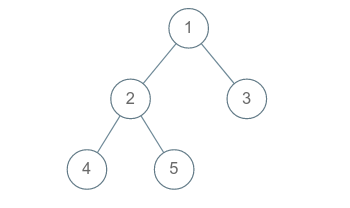
All the root to leaf paths are :
1 2 4
1 2 5
1 3
Note :
1. Two nodes may have the same value associated with it.
2. The root node will be fixed and will be provided in the function.
3. Note that the nodes in a path will appear in a fixed order. For example, 1 2 3 is not the same as 2 1 3.
4. Each path should be returned as a string consisting of nodes in order and separated by a space.
5. The path length may be as small as ‘1’.
Problem approach
Build the adjacency list (tree).
Start DFS from node 1.
Maintain a consecutive cat count.
If a node has a cat → increment; otherwise, reset to 0.
If the count exceeds m → stop that path.
If it is a leaf node → count it as a valid restaurant.
Return the total count.
4. Flight System
Design a scalable system similar to a flight booking platform like MakeMyTrip, where users can:
- Search for flights between two cities
- View available flights with prices and timings
- Book tickets
- Make payments
- View booking history
Problem approach
Tip 1: Clearly define functional and non-functional requirements before designing the system.
Tip 2: Break the system into scalable components like search, booking, and payment, and use caching and databases efficiently.
Tip 3: Always consider edge cases like concurrent bookings, failures, and scalability while explaining your design.
5. Locking Concepts
- What is lock granularity?
- What is intention locking?
6. DBMS
Find all users who have logged in for at least three consecutive days.
SELECT user_id
FROM (
SELECT
user_id,
login_date,
DATE_SUB(login_date, INTERVAL ROW_NUMBER() OVER (PARTITION BY user_id ORDER BY login_date) DAY) AS grp
FROM logins
) t
GROUP BY user_id, grp
HAVING COUNT(*) >= 3;
7. DBMS
Given a table logins:
| user_id | login_date |
Find the longest consecutive login streak for each user.


Here's your problem of the day 
Solving this problem will increase your chance to get selected in this company
Skill covered: Programming
How do you remove whitespace from the start of a string?
Choose another skill to practice
Similar interview experiences

SDE - 1
3 rounds | 7 problems
Interviewed by OYO
 Selected
6182 views

0 comments

0 upvotes
SDE - Intern
2 rounds | 3 problems
Interviewed by Amazon
Rejected
1566 views
0 comments
0 upvotes

SDE - 1
2 rounds | 5 problems
Interviewed by Meesho
Rejected
7245 views
0 comments
0 upvotes

SDE - 1
3 rounds | 9 problems
Interviewed by Salesforce
 Selected
 4552 views
0 comments
0 upvotes