





InMobi interview experience Real time questions & tips from candidates to crack your interview

SDE - 1
InMobi


4 rounds | 13 Coding
problems

 Selected
 Interview preparation journey

Preparation
Duration: 4 Months
Topics: Data Structures, Algorithms, System Design, Aptitude, OOPS

Tip 1 : Must do Previously asked Interview as well as Online Test Questions.
Tip 2 : Go through all the previous interview experiences from Codestudio and Leetcode.
Tip 3 : Do at-least 2 good projects and you must know every bit of them.
Application process
Where: Campus
Eligibility: Above 7 CGPA
Tip 1 : Have at-least 2 good projects explained in short with all important points covered.
Tip 2 : Every skill must be mentioned.
Tip 3 : Focus on skills, projects and experiences more.

Interview rounds
01
Round
Hard
Online Coding Test
Duration90 minutes
Interview date16 Aug 2021
Coding problem3
This round had 3 coding questions to solve under 90 minutes. Two of the questions were from Graph and one was related to Arrays.
1. Bipartite Graph
Moderate
50m average time
50% success

0/80
Asked in companies



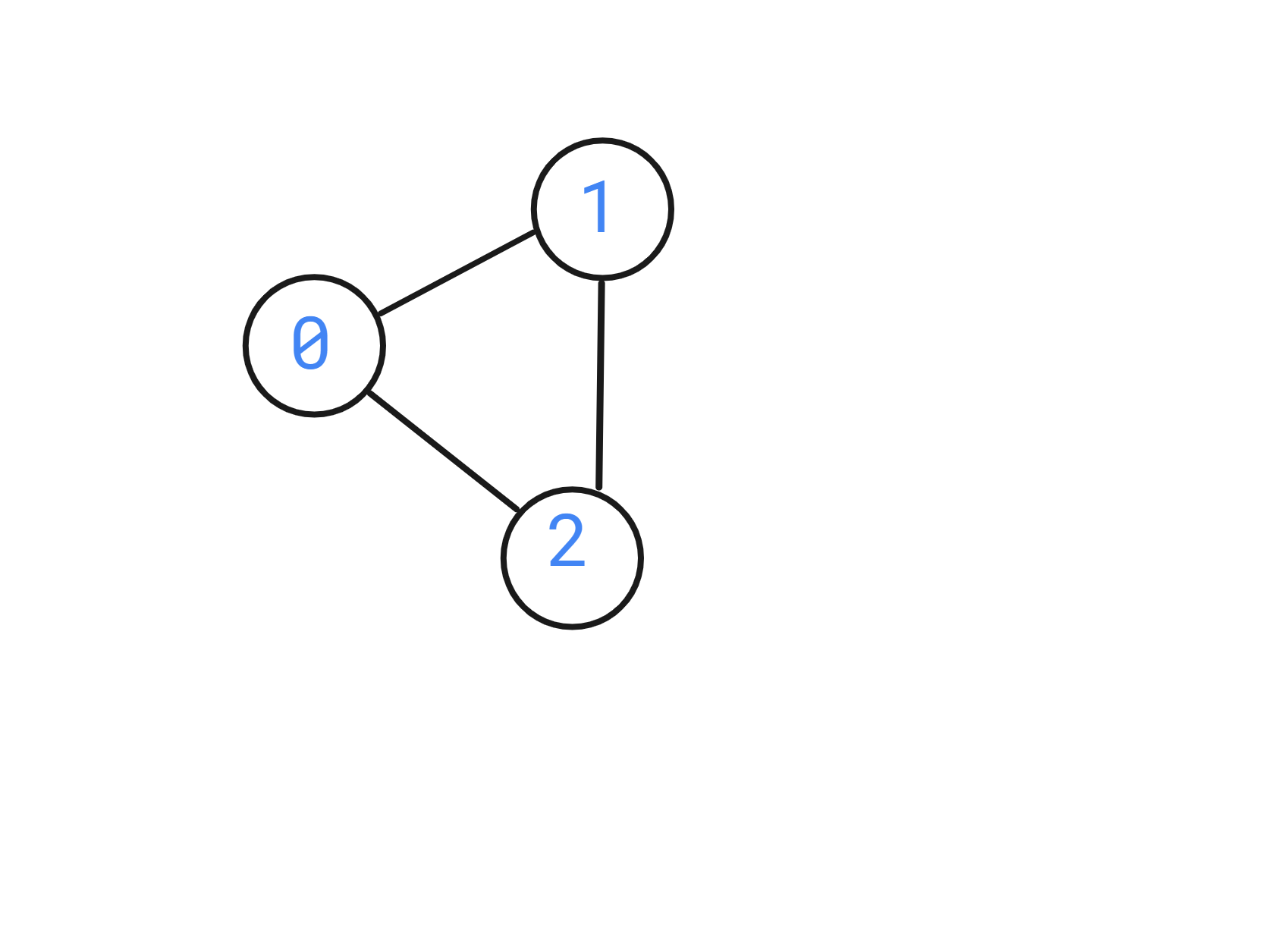
Given a graph, check whether the graph is bipartite or not. Your function should return true if the given graph's vertices can be divided into two independent sets, ‘U’ and ‘V’ such that every edge (‘u’, ‘v’) either connects a vertex from ‘U’ to ‘V’ or a vertex from ‘V’ to ‘U’.
You are given a 2D array ‘edges’ which contains 0 and 1, where ‘edges[i][j]’ = 1 denotes a bi-directional edge from ‘i’ to ‘j’.
Note:
If edges[i][j] = 1, that implies there is a bi-directional edge between ‘i’ and ‘j’, that means there exists both edges from ‘i’ to ‘j’ and to ‘j’ to ‘i’.
For example
Given:
‘N’ = 3
‘edges’ = [[0, 1, 1], [0, 0, 1], [0,0,0]].
Problem approach
Approach (Using BFS) :
1) Parse the given ‘edges’ into an adjacency matrix ‘graph’, by pushing ‘i’ is graph[j] and ‘j’ in graph[i] if edges[i][j] is 1.
2) Maintain a vector ‘color’ which denotes the color of the ‘i’ the node, initially, all colors are un-assigned, hence -1.
3) Maintain a color ‘c’ initially 0 to assign to nodes and flip after each level of the graph.
4) Now maintain a queue ‘que’ for doing a breadth-first traversal and push ‘i’, the root node in it.
5) While ‘que’ is not empty:
5.1) Maintain a variable ‘node’ which denotes the node in the front of the ‘que’.
5.2) Traverse all the neighbors ‘nbr’ of the current node.
i) If the ‘color[nbr]’ is equal to ‘color[node]’, return false, since this is not possible, as discussed above.
ii) Else if the ‘color[nbr]’ is -1, which means it is unassigned, assign it ‘c’.
5.3) Flip the color after traversing all the ‘nbr’ of ‘node’.
6) If we exit the loop, return true, since all nodes have been assigned colors and no 2 adjacent nodes have the same color.
TC : O(N^2), where N = no. of nodes
SC : O(N)
2. Count Subarrays with Given XOR
Moderate
15m average time
85% success
0/80
Asked in companies


Given an array of integers ‘ARR’ and an integer ‘X’, you are supposed to find the number of subarrays of 'ARR' which have bitwise XOR of the elements equal to 'X'.
Note:
An array ‘B’ is a subarray of an array ‘A’ if ‘B’ that can be obtained by deletion of, several elements(possibly none) from the start of ‘A’ and several elements(possibly none) from the end of ‘A’.
Problem approach
Approach 1 (Brute Force) :
1) Create a variable ans, which stores the total number of subarrays. We will set the variable ans as 0.
2) Iterate index from 0 to N - 1.
3) Iterate pos from index to M - 1.
3.1) We will maintain a variable currentXor, which will store the XOR of all elements present in the
current subarray. We will set currentXor as 0.
4) We will traverse num from index to pos. We will update currentXor with XOR of currentXor and
ARR[num].
4.1) Check if currentXor is equal to X.
4.2) Increment ans by 1.
5) Return the variable ans.
TC : O(N^3), where N=size of the array
SC : O(1)
Approach 2 (Using Hashing) :
1) Create a HashMap “prefXor” which stores the count of subarrays having a particular XOR value.
2) Create a variable “curXor” which stores the XOR for ‘i’ elements. Initialise it with zero. Also, create a
variable called “ans” to store the count of the subarrays having XOR ‘X’.
3) Start iterating through given array/list using a variable ‘i’ such that 0 <= ‘i’ < n
3.1) Update the “curXor” i.e. curXor = curXor ^ arr[i]
3.2) Store the required value of the prefix Xor to make the XOR of the subarray ending at the current
index equal to X i.e. req = X ^ curXor
3.3) Now add the count of prefix arrays with required xor i.e. ans = ans + prefXor[req]
3.4) Update the “prefXor” HashMap with the “curXor” i.e. prefXor[curXor] = prefXor[curXor] + 1
TC : O(N), where N=size of the array
SC : O(N)
3. Course Schedule
Easy
15m average time
85% success
0/40
Asked in companies



You are a student of Netaji Subhas Institute of Technology. You have to take ‘N’ number of courses labelled from 1 to N to complete your B.Tech Degree.
Some courses may have prerequisites, for example, to take course 1 you have to first take course 2, which is expressed as a pair: [1, 2]. Now, your task is to find is it possible for you to finish all courses.
Note: There are no duplicate pairs in the prerequisites array.
For example-
If N = 2 and prerequisite = [[1, 2]]. Then, there are a total of 2 courses you need to take. To take course 1 you need to finish course 2. So, it is possible to complete all courses.
Problem approach
Approach (Using Kahn's Algo) :
1) Create a graph using the ‘prerequisites’ array.
2) We compute indegree(number of incoming edges) for each vertex present in the graph.
3) We initialise an integer variable ‘visited’ to 0, representing the count of visited nodes.
4) Pick all vertices with indegree 0 and add them in a queue.
5) We do the following operations until the queue becomes empty.
i) Remove a vertex from the queue.
ii) Increment ‘visited’ by 1.
iii) Decrement the indegree of all its adjacent vertices by 1.
iv) If indegree of adjacent vertices is reduced to 0, then add them to the queue.
6) If ‘visited’ is equal to ‘N’, then return “Yes” else return “No”.
TC : O(N+M), where N = no. of vertices and M = no. of edges in the graph
SC : O(N)
02
Round
Medium
Video Call
Duration60 Minutes
Interview date16 Aug 2021
Coding problem4
In this round, the interviewer asked me 2 coding questions in which I was expected to first explain my approach with proper complexity analysis and then write the corresponding pseudo codes. After these, I was asked some questions related to Operating Systems.
1. Diameter Of Binary Tree
Easy
10m average time
90% success
0/40
Asked in companies



You are given a Binary Tree.
Return the length of the diameter of the tree.
Note :
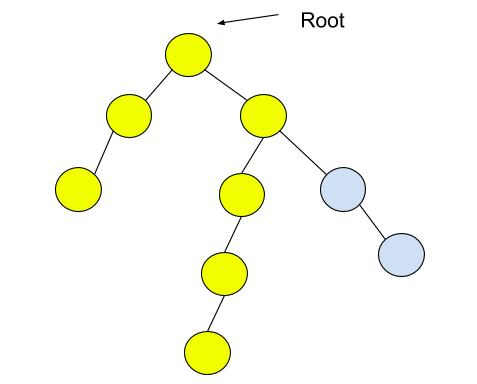
The diameter of a binary tree is the length of the longest path between any two end nodes in a tree.

The number of edges between two nodes represents the length of the path between them.
Example :
Input: Consider the given binary tree:
Output: 6

Explanation:
Nodes in the diameter are highlighted. The length of the diameter, i.e., the path length, is 6.
Problem approach
Approach :
1) If the root node is NULL, assign “height” = 0 and return 0 because the height and diameter of an empty
tree will be 0.
2) Initialize two variables, “leftHeight” and “rightHeight” to 0, which denotes the height of the left subtree
and right subtree, respectively.
3) Recur for the left subtree and store the diameter of the left subtree in a variable i.e. leftDiameter =
getDiameter(root->left, leftHeight)
4) Similarly, recur for the right subtree and store the diameter of the right subtree in a variable i.e.
rightDiamater = getDiamter(root->right, rightHeight)
5) Update the height of the tree i.e. height = max(leftHeight, rightHeight) + 1
6) The diameter of the given tree will be the maximum of the following terms:
i) “leftDiameter”
ii) “rightDiameter”
iii) “leftHeight” + “rightHeight”
7) Return the maximum of above terms i.e. max(leftDiameter, rightDiameter, leftHeight + rightHeight).
TC : O(N), where 'N' is the number of nodes in the binary tree.
SC : O(N)
2. Shortest Path in a Binary Matrix
Moderate
37m average time
65% success
0/80
Asked in companies

You have been given a binary matrix of size 'N' * 'M' where each element is either 0 or 1. You are also given a source and a destination cell, both of them lie within the matrix.
Your task is to find the length of the shortest path from the source cell to the destination cell only consisting of 1s. If there is no path from source to destination cell, return -1.
Note:
1. Coordinates of the cells are given in 0-based indexing.
2. You can move in 4 directions (Up, Down, Left, Right) from a cell.
3. The length of the path is the number of 1s lying in the path.
4. The source cell is always filled with 1.
For example -
1 0 1
1 1 1
1 1 1
For the given binary matrix and source cell(0,0) and destination cell(0,2). Few valid paths consisting of only 1s are

X 0 X     X 0 X
X X X     X 1 X
1 1 1     X X X
The length of the shortest path is 5.
Problem approach
Approach : I solved this problem using BFS.
Breadth-First-Search considers all the paths starting from the source and moves ahead one unit in all those paths at
the same time. This makes sure that the first time when the destination is visited, it is the path with the shortest
length.
Steps :
1) Create an empty queue and enqueue source cell and mark it as visited
2) Declare a ‘STEPS’ variable, to keep track of the length of the path so far
3) Loop in level order till the queue is not empty
3.1) Fetch the front cell from the queue
3.2) If the fetched cell is the destination cell, return ‘STEPS’
3.3) Else for each of the 4 adjacent cells of the current cell, we enqueue each valid cell into the queue
and mark them visited.
3.4) Increment ‘STEPS’ by 1 when all the cells in the current level are processed.
4) If all nodes in the queue are processed and the destination cell is not reached, we return -1.
TC : O(N*M), where ‘N’ and ‘M’ are the number of rows and columns in the Binary Matrix respectively.
SC : O(N*M)
3. OS Question
What is Memory Protection in OS ?
Problem approach
1) Memory protection is a strategy that makes it possible to manage the amount of access rights that are granted to
the memory found on a computer hard drive.
2) The main purpose of this type of protection is to minimize the potential for some type of storage violation that
would harm the data contained in the memory, or damage a portion of the memory capacity of the hard drive.
3) One of the main functions of memory protection is the prevention of any application from making use of memory
that the operating system has not specifically allocated to that application.
4) This prevents applications from seizing control of an inordinate amount of memory and possibly causing damage
that negatively impacts other applications that are currently in use, or even creating a loss of data that is saved on the
hard drive.
5) In many operating systems, this is managed by segmenting the memory for use by all open applications, ensuring
that each has enough to operate properly without creating issues with the other running applications.
4. OS Question
What are the differences b/w mutex and semaphore?
Problem approach
Semaphore : Semaphore is simply a variable that is non-negative and shared between threads. A semaphore is a
signaling mechanism, and a thread that is waiting on a semaphore can be signaled by another thread. It uses two
atomic operations, 1)wait, and 2) signal for the process synchronization.
A semaphore either allows or disallows access to the resource, which depends on how it is set up.
Mutex : The full form of Mutex is Mutual Exclusion Object. It is a special type of binary semaphore which used for
controlling access to the shared resource. It includes a priority inheritance mechanism to avoid extended priority
inversion problems. It allows current higher priority tasks to be kept in the blocked state for the shortest time possible.
However, priority inheritance does not correct priority- inversion but only minimizes its effect.
Main Differences b/w Mutex and Semaphore :
1) Mutex is a locking mechanism whereas Semaphore is a signaling mechanism
2) Mutex is just an object while Semaphore is an integer
3) Mutex has no subtype whereas Semaphore has two types, which are counting semaphore and binary semaphore.
4) Semaphore supports wait and signal operations modification, whereas Mutex is only modified by the process that
may request or release a resource.
5) Semaphore value is modified using wait () and signal () operations, on the other hand, Mutex operations are locked
or unlocked.
03
Round
Medium
Video Call
Duration50 Minutes
Interview date16 Aug 2021
Coding problem5
This round had 2 questions from DSA which I had to code under 50 minutes and then the interviewer asked some questions from Android as I did a project in Mobile App Development.
1. Find The Repeating And Missing Number
Easy
10m average time
90% success
0/40
Asked in companies

You are given an array 'nums' consisting of first N positive integers. But from the N integers, one of the integers occurs twice in the array, and one of the integers is missing. You need to determine the repeating and the missing integer.
Example:
Let the array be [1, 2, 3, 4, 4, 5]. In the given array ‘4’ occurs twice and the number ‘6’ is missing.
Problem approach
Approach 1 :
1) We use a count array to store the frequency.
2) We initialize the count array to zero for all the numbers.
3) Now, iterate through the array and increment the corresponding frequency count of the numbers.
4) Now, we iterate through the count (frequency) array.
5) The number with a frequency equal to zero is the missing number while the number with a frequency equal to two
is the repeating number.
TC : O(N), where N=size of the array
SC : O(N)
Approach 2 :
1) Traverse the array and mark the index corresponding to the current number.
2) While traversing if the index corresponding to the current number has already been marked. Then the current
number is the repeating number in the array.
3) In order to determine the missing number, traverse the array again and look for a positive value.
4) The index corresponding to the positive number gives us the missing number (= index + 1).
TC : O(N), where N=size of the array
SC : O(1)
2. Stack using queue
Moderate
25m average time
65% success
0/80
Asked in companies


Implement a Stack Data Structure specifically to store integer data using two Queues.
There should be two data members, both being Queues to store the data internally. You may use the inbuilt Queue.
Implement the following public functions :
1. Constructor:
It initializes the data members(queues) as required.

2. push(data) :
This function should take one argument of type integer. It pushes the element into the stack and returns nothing.

3. pop() :
It pops the element from the top of the stack and, in turn, returns the element being popped or deleted. In case the stack is empty, it returns -1.

4. top :
It returns the element being kept at the top of the stack. In case the stack is empty, it returns -1.

5. size() :
It returns the size of the stack at any given instance of time.

6. isEmpty() :
It returns a boolean value indicating whether the stack is empty or not.
Operations Performed on the Stack:
Query-1(Denoted by an integer 1): Pushes an integer data to the stack. (push function)

Query-2(Denoted by an integer 2): Pops the data kept at the top of the stack and returns it to the caller. (pop function)

Query-3(Denoted by an integer 3): Fetches and returns the data being kept at the top of the stack but doesn't remove it, unlike the pop function. (top function)

Query-4(Denoted by an integer 4): Returns the current size of the stack. (size function)

Query-5(Denoted by an integer 5): Returns a boolean value denoting whether the stack is empty or not. (isEmpty function)
Example
Operations:
1 5
1 10
2
3
4

Enqueue operation 1 5: We insert 5 at the back of the queue.
  Queue: [5]

Enqueue operation 1 10: We insert 10 at the back of the queue.
  Queue: [5, 10]

Dequeue operation 2: We remove the element from the front of the queue, which is 5, and print it.
  Output: 5
  Queue: [10]

Peek operation 3: We return the element present at the front of the queue, which is 10, without removing it.
  Output: 10
  Queue: [10]

IsEmpty operation 4: We check if the queue is empty.
  Output: False
  Queue: [10]
Problem approach
Approach : A stack can be implemented using two queues. Let stack to be implemented be ‘s’ and queues used to
implement be ‘q1’ and ‘q2’. Stack ‘s’ can be implemented in two ways :
Method 1 (push - O(1) , pop - O(n) ) :
1) push(s, x) operation :
i) Enqueue x to q1 (assuming size of q1 is unlimited).
2) pop(s) operation :
i) One by one dequeue everything except the last element from q1 and enqueue to q2.
ii) Dequeue the last item of q1, the dequeued item is result, store it.
iii) Swap the names of q1 and q2
iv) Return the item stored in step 2.
TC : push(s,x) -> O(1)
pop() -> O(n)
Method 2 (push - O(n) , pop - O(1) ) :
1) push(s, x) operation :
i) Enqueue x to q2
ii) One by one dequeue everything from q1 and enqueue to q2.
iii) Swap the names of q1 and q2
2) pop(s) operation :
i) Dequeue an item from q1 and return it.
TC : push(s,x) -> O(n)
pop() -> O(1)
3. Android Question
What is the life cycle of Android activity?
Problem approach
1) OnCreate(): It is called when activity is created. Using this, the views are created and data is collected from bundles.
2) OnStart(): It is called if the activity is becoming visible to the user. It may be succeeded by onResume() if the activity comes to the foreground, or onStop() if it becomes hidden.
3) OnResume(): It is called when the activity will start an interaction with the user.
4) OnPause(): This is called when the activity is moving to the background but hasn’t been killed yet.
5) OnStop(): This is called when an activity is no longer visible to the user.
6) OnDestroy(): This is called when the activity is finished or destroyed.
7) OnRestart(): This is called after the activity has been stopped, prior to it being started again.
4. Android Question
What is an intent?
Problem approach
An intent is a messaging object that is used to request an action from other components of an application. It can also be used to launch an activity, send SMS, send an email, display a web page, etc.
It shows notification messages to the user from within an Android-enabled device. It alerts the user of a particular state that occurred. There are two types of intents in Android:
1) Implicit Intent- Used to invoke the system components.
2) Explicit Intent- Used to invoke the activity class.
5. Android Question
What is context?
Problem approach
The context in Android is the context of the current state of the application or object. The context comes with services like giving access to databases and preferences, resolving resources, and more.
There are two types of context. They are :
Activity context :
1) This activity context is attached to the lifecycle of an activity.
2) The activity context can be used when you are passing the context in the scope of an activity or you need the context whose lifecycle is attached to the context of the activity.
Application context :
1) This application context is attached to the lifecycle of an application.
2) The application context should be used where you need a context whose lifecycle is separate from the current context or when you are passing a context beyond the scope of activity.
04
Round
Easy
HR Round
Duration30 Minutes
Interview date16 Aug 2021
Coding problem1
This was my last round and I hoped it to go good just like the other rounds. The interviewer was very straight to point
and professional. The interview lasted for 30 minutes.
1. Basic HR Question
Tell me something not there in your resume.
Problem approach
If you get this question, it's an opportunity to choose the most compelling information to share that is not obvious from
your resume.
Example :
Strength -> I believe that my greatest strength is the ability to solve problems quickly and efficiently, which makes me
unique from others.
Ability to Handle Pressure -> I enjoy working under pressure because I believe it helps me grow and become more
efficient .
Tip : Emphasize why you were inspired to apply for the job. You can also explain that you are willing to invest a great
deal of energy if hired.
These are generally very open ended questions and are asked to test how quick wit a candidate is. So there is
nothing to worry about if you have a good cammand over your communication skills and you are able to propagate
your thoughts well to the interviewer.


Here's your problem of the day 
Solving this problem will increase your chance to get selected in this company
Skill covered: Programming
How do you remove whitespace from the start of a string?
Choose another skill to practice
Similar interview experiences
SDE - 1
4 rounds | 11 problems
Interviewed by InMobi
Selected 
1603 views

0 comments

0 upvotes

SDE - 1
3 rounds | 7 problems
Interviewed by OYO
Selected 6182 views
0 comments
0 upvotes
SDE - 1
2 rounds | 3 problems
Interviewed by InMobi
Rejected
2207 views
0 comments
0 upvotes

SDE - 1
3 rounds | 9 problems
Interviewed by Salesforce
 Selected
 4552 views
0 comments
0 upvotes
Companies with similar interview experiences
SDE - 1
5 rounds | 12 problems
Interviewed by Amazon
 Selected
 117552 views
24 comments
0 upvotes
SDE - 1
4 rounds | 5 problems
Interviewed by Microsoft
Selected 60143 views
5 comments
0 upvotes
SDE - 1
3 rounds | 7 problems
Interviewed by Amazon
 Selected
 36138 views
7 comments
0 upvotes