





Intuit interview experience Real time questions & tips from candidates to crack your interview

SDE - Intern
Intuit


3 rounds | 6 Coding
problems

 Selected
 Interview preparation journey

Journey
I started coding at the end of my first year of college, and companies for internships came at the end of my second year. One year is a good time for preparation, I believe, given you consistently work on it. I took a coding test and was asked about DSA and OOP in one interview, and OOP, Operating Systems, and DBMS in the second one.
Application story
I applied simply because the company visited my campus. It was the fourth company to come and the first one to conduct a coding test. I was not shortlisted by any of the other companies, as they did their shortlisting based on gender and resume.
Why selected/rejected for the role?
I believe I was selected for this role because I was able to answer most of the questions asked and was confident during my interview. The simple thought process that helped me be confident was realizing that this wasn't the last company visiting the campus. There would be more opportunities ahead, so all I had to do was relax and prepare for my interview.
Preparation
Duration: 12 months
Topics: Data Structures & Algorithms, Object Oriented Programming, Database Management Systems, NodeJS and Django, Operating Systems.

Tip 1: Don't prepare specifically for the interview. Simply focus on learning and upskilling yourself.
Tip 2: Take mock interviews just 1 or 2 days before your final interview.
Tip 3: Be honest and don't boast in your CV. Companies prefer people who are willing to learn over those who claim to know everything but are unwilling to work.
Application process
Where: Campus
Eligibility: Above 7 CGPA, and only CSE, DSE and EE branches were allowed.
Tip 1: Don't boast about your projects or add fake ones.
Tip 2: Explain your learning experiences along with your contributions.

Interview rounds
01
Round
Medium
Online Coding Interview
Duration90 minutes
Interview date6 Aug 2022
Coding problem3
1. Minimum Number of Platform Needed
Easy
23m average time
85% success

0/40
Asked in companies



You are given the arrival and departure times of N trains at a railway station in a day. You need to find the minimum of platforms required for the railway station such that no train waits i.e No train should wait for the platform to be clear or free.
2. House Robber II
Moderate
15m average time
80% success
0/80
Asked in companies


Mr. X is a professional robber planning to rob houses along a street. Each house has a certain amount of money hidden.
All houses along this street are arranged in a circle. That means the first house is the neighbour of the last one. Meanwhile, adjacent houses have a security system connected, and it will automatically contact the police if two adjacent houses are broken into on the same night.
You are given an array/list of non-negative integers 'ARR' representing the amount of money of each house. Your task is to return the maximum amount of money Mr. X can rob tonight without alerting the police.
Note:
It is possible for Mr. X to rob the same amount of money by looting two different sets of houses. Just print the maximum possible robbed amount, irrespective of sets of houses robbed.
For example:
(i) Given the input array arr[] = {2, 3, 2} the output will be 3 because Mr X cannot rob house 1 (money = 2) and then rob house 3 (money = 2), because they are adjacent houses. So, he’ll rob only house 2 (money = 3)

(ii) Given the input array arr[] = {1, 2, 3, 1} the output will be 4 because Mr X rob house 1 (money = 1) and then rob house 3 (money = 3).

(iii) Given the input array arr[] = {0} the output will be 0 because Mr. X has got nothing to rob.
3. Maximum activities
Easy
15m average time
85% success
0/40
Asked in companies


You are given N activities with their start time Start[] and finish time Finish[]. You need to tell the maximum number of activities a single person can perform.
Note:
A person can only work on a single activity at a time. The start time of one activity can coincide with the end time of another.
03
Round
Easy
Video Call
Duration75 minutes
Interview date8 Aug 2022
Coding problem2
1. Construct Binary Tree From In-order and Level-order.
Hard
0/120
Asked in companies

You are given two arrays, ‘inOrder’ and ‘levelOrder’, representing the in-order and level-order traversal of a binary tree, respectively. Your task is to construct the binary tree from the given in-order and level-order traversals.
For Example:
You are given ‘inOrder’ = {4, 2, 5, 1, 3, 6} and ‘levelOrder’ = {1, 2, 3, 4, 5, 6}. The binary tree constructed from given traversals will look like this:
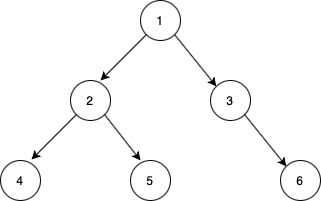
The inorder traversal of the above tree will be { 4, 2, 5, 1, 3, 6 }.
2. Technical Questions
Problem approach
Understanding and learning OOPS is really necessary and helps you make scalable applications. The questions asked are generally easy, you on your own should try to think of ways to think of real-life examples of such scenarios that are used in OOPS.


Here's your problem of the day 
Solving this problem will increase your chance to get selected in this company
Skill covered: Programming
How do you remove whitespace from the start of a string?
Choose another skill to practice
Similar interview experiences
SDE - Intern
3 rounds | 6 problems
Interviewed by Intuit
 Selected
4331 views

0 comments

0 upvotes
SDE - Intern
3 rounds | 3 problems
Interviewed by Intuit
Rejected
3052 views
2 comments
0 upvotes
SDE - Intern
2 rounds | 5 problems
Interviewed by Intuit

Rejected
1237 views
0 comments
0 upvotes
SDE - Intern
3 rounds | 8 problems
Interviewed by Intuit
Rejected
1005 views
0 comments
0 upvotes
Companies with similar interview experiences

SDE - Intern
3 rounds | 6 problems
Interviewed by Amazon

Rejected
15605 views
4 comments
0 upvotes
SDE - Intern
4 rounds | 7 problems
Interviewed by Microsoft
 Selected
 15499 views
1 comments
0 upvotes
SDE - Intern
2 rounds | 4 problems
Interviewed by Amazon
Selected 10216 views
2 comments
0 upvotes