





Jaguar Land Rover interview experience Real time questions & tips from candidates to crack your interview
Graduate Software Intern
Jaguar Land Rover


3 rounds | 4 Coding
problems

 Selected
 Interview preparation journey

Journey
I started coding after getting into college. Until then, I had no idea about programming at all. Try to reach out to your seniors to help you understand what matters most after getting into college, as they have already experienced your phase of life. Of course, each senior will have different opinions, but you need to be smart enough to decide what’s right for you!
Application story
It was an on-campus opportunity, so the process was no different from any other company. If you are eligible for the company, just apply and go through the hiring process.
Why selected/rejected for the role?
Selected, as I passed all their screening tests. They expected me to solve problems and outperform my peer group. They also emphasized doing it in less time with accuracy.
Preparation
Duration: 6 Months
Topics: OOPS, DBMS, Networks, Operating System, DSA, HLD

Tip 1: Practice makes a man perfect, so keep practicing rather than dreaming or imagining.
Tip 2: Theoretical topics should be reviewed just before the interviews, i.e., at the end of your preparation journey.
Tip 3: Keep participating in contests on competitive programming platforms. Never cheat yourself while preparing.
Application process
Where: Campus
Eligibility: Eligible Branches: BSBE, CE, EEE, EP, ME, CL, ECE, CSE and MnC only for pre-final year B.Tech students CPI cut-off: greater than 6.5 (Salary: INR 80,000 + Accommodation Per Month)
Tip 1: Don't fake anything, because most interviewers just open the CV in front of you and iterate over all topics.
Tip 2: Don't make any blunders like spelling or grammar mistakes. There are many tools on the market, so it is expected that you avoid such errors.
Tip 3: Keep it to a single page.
Tip 4: Never create a CV in one go. Keep iterating and fine-tuning your CV until it is final.

Interview rounds
01
Round
Medium
Online Coding Interview
Duration30 minutes
Interview date12 Aug 2022
Coding problem0
This round was completely online and very tricky. It featured a never-ending list of 1-mark, 3-mark, and 5-mark questions. There was no limit on the number of questions, and you could attempt them at your own speed. If you correctly answered a 1-mark question, the next question was worth 3 marks and more challenging. If you answered that correctly, the subsequent question would be worth 5 marks. Otherwise, you would return to a 1-mark question.
02
Round
Easy
Online Coding Test
Duration60 minutes
Interview date14 Aug 2022
Coding problem2
There were only 2 easy DSA questions.
1. Queue Using Stack
Moderate
30m average time
60% success

0/80
Asked in companies



Implement a queue data structure which follows FIFO(First In First Out) property, using only the instances of the stack data structure.
Note:
1. To implement means you need to complete some predefined functions, which are supported by a normal queue such that it can efficiently handle the given input queries which are defined below.


2. The implemented queue must support the following operations of a normal queue:

a. enQueue(data) : This function should take one argument of type integer and place the integer to the back of the queue.

b. deQueue(): This function should remove an integer from the front of the queue and also return that integer. If the queue is empty, it should return -1.

c. peek(): This function returns the element present in the front of the queue. If the queue is empty, it should return -1.

d. isEmpty(): This function should return true if the queue is empty and false otherwise.


3. You will be given q queries of 4 types:

a. 1 val - For this type of query, you need to insert the integer val to the back of the queue.

b. 2 - For this type of query, you need to remove the element from the front of the queue, and also return it.

c. 3 - For this type of query, you need to return the element present at the front of the queue(No need to remove it from the queue).

d. 4 - For this type of query, you need to return true if the queue is empty and false otherwise.


4. For every query of type:

a. 1, you do not need to return anything.

b. 2, return the integer being deQueued from the queue.

c. 3, return the integer present in the front of the queue.

d. 4, return “true” if the queue is empty, “false” otherwise.
Example
Operations:
1 5
1 10
2
3
4

Enqueue operation 1 5: We insert 5 at the back of the queue.
Queue: [5]

Enqueue operation 1 10: We insert 10 at the back of the queue.
Queue: [5, 10]

Dequeue operation 2: We remove the element from the front of the queue, which is 5, and print it.
Output: 5
Queue: [10]

Peek operation 3: We return the element present at the front of the queue, which is 10, without removing it.
Output: 10
Queue: [10]

IsEmpty operation 4: We check if the queue is empty.
Output: False
Queue: [10]
2. Intersection of Two Linked Lists
Easy
25m average time
73% success
0/40
Asked in companies



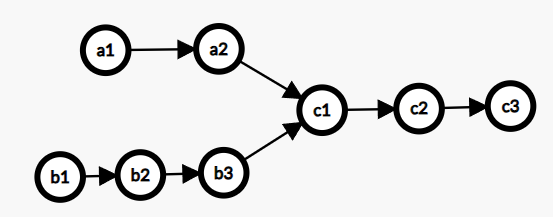
You are given two Singly Linked Lists of integers, which may have an intersection point.
Your task is to return the first intersection node. If there is no intersection, return NULL.
Example:-
The Linked Lists, where a1, a2, c1, c2, c3 is the first linked list and b1, b2, b3, c1, c2, c3 is the second linked list, merging at node c1.
03
Round
Easy
Face to Face
Duration60 minutes
Interview date19 Aug 2022
Coding problem2
This was an online interview. There were two interviewers, and each of them asked one problem. The problems were very easy. After that, they proceeded to ask questions specific to JLR, such as why you want to join, which model you like, whether you know the price of any car, why that is your favorite model, and other questions related to JLR.
1. Check whether the given string is a valid palindrome
Easy
10m average time
90% success
0/40
Asked in companies


You are given a string 'S'. Your task is to check whether the string is palindrome or not. For checking palindrome, consider alphabets and numbers only and ignore the symbols and whitespaces.
Note :
String 'S' is NOT case sensitive.
Example :
Let S = “c1 O$d@eeD o1c”.
If we ignore the special characters, whitespaces and convert all uppercase letters to lowercase, we get S = “c1odeedo1c”, which is a palindrome. Hence, the given string is also a palindrome.
Problem approach
I solved it using a two-pointer approach, with the left pointer at the start and the right pointer at the end, continuing the while loop until left.
2. Find Duplicate
Easy
15m average time
85% success
0/40
Asked in companies



You are given an array of integers 'ARR' containing N elements. Each integer is in the range [1, N-1], with exactly one element repeated in the array.
Your task is to find the duplicate element. The duplicate element may be repeated more than twice in the error, but there will be exactly one element that is repeated in the array.
Note :
All the integers in the array appear only once except for precisely one integer which appears two or more times.
Problem approach
They were expecting me to solve it using a map. Later, they went on to ask a few questions related to the map data structure.


Here's your problem of the day 
Solving this problem will increase your chance to get selected in this company
Skill covered: Programming
How do you remove whitespace from the start of a string?
Choose another skill to practice
Similar interview experiences
SDE - 1
3 rounds | 3 problems
Interviewed by Jaguar Land Rover
 Selected
5013 views

0 comments

0 upvotes
Trainee Technology
2 rounds | 5 problems
Interviewed by Jaguar Land Rover
Selected 1700 views
0 comments
0 upvotes
SDE - 1
3 rounds | 4 problems
Interviewed by Jaguar Land Rover
Selected 2153 views
0 comments
0 upvotes

SDE - 1
3 rounds | 9 problems
Interviewed by Salesforce
 Selected
 4552 views
0 comments
0 upvotes