





John Deere India Pvt. Ltd. (JDTCI) interview experience Real time questions & tips from candidates to crack your interview
Software Engineer
John Deere India Pvt. Ltd. (JDTCI)


2 rounds | 4 Coding
problems

Rejected
Interview preparation journey

Journey
I came to know about this job from there official site i have applied to this job and get selected for exam, then i have given the exam and also got selected for the interview
Application story
I applied for this profile on the company website where i got the test link after applying for the jobs
Why selected/rejected for the role?
I was not able to answer the optimal approach for a problem that's why i think i was rejected in the interview
Preparation
Duration: 4 months
Topics: Data Structures, Pointers, OOPS, System Design, Algorithms, Dynamic Programming

Tip 1 : Graph should be on your tips.
Tip 2 : while explaining the solution to interviewer, dont just hop onto the most optimal solution. Start with the brute force one, give the cons of brute force solution, and then go step by step till you reach the optimal solution.
Tip 3 : Improve on your communication skills as well.
Application process
Where: Company Website
Eligibility: Above 6 CGPA
Tip 1 : Mention only what is required for your profile, for e.g. do not stress too much on your co curricular stuff. Rather, try explaining more of your technical stuff that is relevant for your job.
Tip 2 : keep it limited to 1 page. And make sure its a pdf and not an image.

Interview rounds
01
Round
Medium
Video Call
Duration60 mins
Interview date8 Sep 2022
Coding problem2
1. Cycle Detection In Undirected Graph
Moderate

0/80
Asked in companies



You have been given an undirected graph with 'N' vertices and 'M' edges. The vertices are labelled from 1 to 'N'.
Your task is to find if the graph contains a cycle or not.
A path that starts from a given vertex and ends at the same vertex traversing the edges only once is called a cycle.
Example :
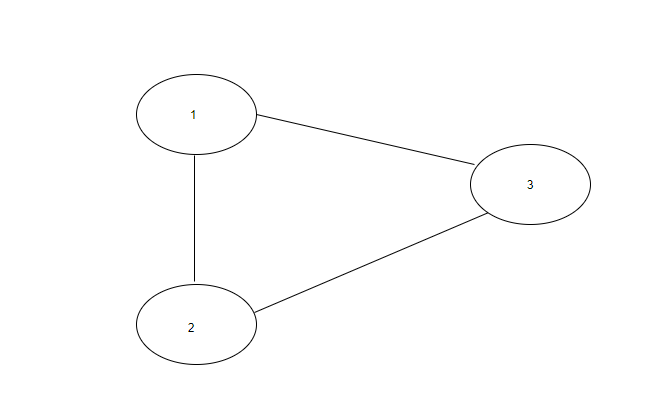
In the below graph, there exists a cycle between vertex 1, 2 and 3.
Note:
1. There are no parallel edges between two vertices.

2. There are no self-loops(an edge connecting the vertex to itself) in the graph.

3. The graph can be disconnected.
For Example :
Input: N = 3 , Edges =  [[1, 2], [2, 3], [1, 3]].
Output: Yes

Explanation : There are a total of 3 vertices in the graph. There is an edge between vertex 1 and 2, vertex 2 and 3 and vertex 1 and 3. So, there exists a cycle in the graph.
Problem approach
A very popular floyd cycle detection algorithm.
1. Started with basic Hash map algorithms
2. Optimised with the floyd cycle algorithm.
2. Maximum Path Sum Between Two Leaves
Hard
50m average time
35% success
0/120
Asked in companies



You are given a non-empty binary tree where each node has a non-negative integer value. Return the maximum possible sum of path between any two leaves of the given tree.
The path is also inclusive of the leaf nodes and the maximum path sum may or may not go through the root of the given tree.
If there is only one leaf node in the tree, then return -1.
Problem approach
1) Maximum root to leaf path sum for the subtree rooted under current node.
2) The maximum path sum between leaves (desired output).
For every visited node X, we find the maximum root to leaf sum in left and right subtrees of X. We add the two values with X->data, and compare the sum with maximum path sum found so far.
02
Round
Easy
Video Call
Duration60 mins
Interview date8 Sep 2022
Coding problem2
1. Euler Totient Function
Hard
60m average time
50% success
0/120
Asked in companies


You are given a positive integer ‘N’, your task is to return an array/list of integers such that the sum of Euler Totient Function values of each integer of the array is equal to ‘N’.
Euler Totient Function:
In number theory, Euler's totient function counts the positive integers up to a given integer ‘N’ that is relatively prime to ‘N’.
More details about Euler’s Totient Function can be found here
For Example:
For ‘N’ = 10, if we take the array as 1, 2, 5, 10,
The Euler totient function value of 1 is 1.
The Euler totient function value of 2 is 1.
The Euler totient function value of 5 is 4.
The Euler totient function value of 10 is 4.
So, the summation will be 1 + 1 + 4 + 4 = 10.
Hence this is a valid array for ‘N’ = 10.
Note:
The solution will be verified by the actual value of the Euler Totient Function of 'N' and the sum of the Euler Totient Function of all the values returned. In the output, only the 'YES' or 'NO' is printed, according to the correctness of the solution.
Problem approach
The Euler's totient function, also known as Euler's phi function or simply phi function, is a mathematical function that calculates the count of numbers less than a given positive integer n that are coprime to n. In other words, it calculates the count of positive integers from 1 to n (inclusive) that are relatively prime to n, i.e., they do not share any common positive integer greater than 1 as a factor with n.
2. Cycle Detection in a Singly Linked List
Moderate
15m average time
80% success
0/80
Asked in companies



You are given a Singly Linked List of integers. Return true if it has a cycle, else return false.
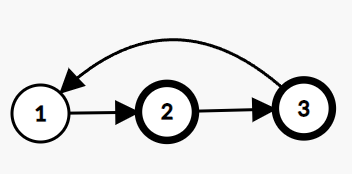
A cycle occurs when a node's next points back to a previous node in the list.
Example:
In the given linked list, there is a cycle, hence we return true.
Problem approach
Step 1 : For detecting loop I followed a two pointer approach, one slow pointer and one fast pointer. If two pointers meet, then there is loop
Step 2 : For finding the initial position of the loop, i started one pointer from the beginning and another pointer from the node they met while detecting the loop. The node where these two pointers meet again, the the initial position of the loop.


Here's your problem of the day 
Solving this problem will increase your chance to get selected in this company
Skill covered: Programming
How do you remove whitespace from the start of a string?
Choose another skill to practice
Similar interview experiences

SDE - 1
3 rounds | 7 problems
Interviewed by OYO
 Selected
6182 views

0 comments

0 upvotes

SDE - Intern
2 rounds | 3 problems
Interviewed by Amazon
Rejected
1566 views
0 comments
0 upvotes

SDE - 1
2 rounds | 5 problems
Interviewed by Meesho
Rejected
7246 views
0 comments
0 upvotes

SDE - 1
3 rounds | 9 problems
Interviewed by Salesforce
 Selected
 4552 views
0 comments
0 upvotes
Companies with similar interview experiences

Software Engineer
3 rounds | 7 problems
Interviewed by Optum
 Selected
 8607 views
1 comments
0 upvotes
Software Engineer
5 rounds | 5 problems
Interviewed by Microsoft
 Selected
 11120 views
1 comments
0 upvotes
Software Engineer
2 rounds | 4 problems
Interviewed by Amazon
Selected 5208 views
1 comments
0 upvotes