





Josh Technology Group interview experience Real time questions & tips from candidates to crack your interview

Associate Enginner
Josh Technology Group


3 rounds | 5 Coding
problems

Rejected
Interview preparation journey

Journey
I received this opportunity through on-campus placement. Although I successfully cleared the coding round, I faced rejection in the subsequent technical rounds. The feedback indicated a preference for code with lower time and space complexity. I am now focusing on refining my coding approach by reducing complexity and incorporating comments to enhance code readability in future interviews.
Application story
I obtained this chance through on-campus recruitment. Although I successfully passed the coding round, regrettably, I faced rejection in the subsequent technical interviews. They emphasized a preference for code with lower time and space complexity. I am now actively working on streamlining my code, prioritizing efficiency, and incorporating comments for clarity.
Why selected/rejected for the role?
I unfortunately faced rejection in the technical rounds. They emphasized a preference for code with lower complexity in terms of time and space. I am actively refining my code to minimize complexity, and I'll incorporate comments for clarity.
Preparation
Duration: 6 Months
Topics: Data Structures & Algorithms, Operating System, Object-Oriented Programming System, DBMS, CN

Tip 1: Ensure thorough revision of your projects to grasp all the details solidly.
Tip 2: Prioritize a comprehensive understanding of Data Structures and Algorithms (DSA); platforms like Coding Ninjas are highly recommended for interview preparation.
Tip 3: Maintain confidence and a relaxed demeanour during the interview to effectively convey your skills and knowledge.
Application process
Where: Campus
Eligibility: 7 CGPA
Tip 1: Craft a concise resume, ideally limiting it to one page, and ensure it highlights your confidently mastered skills.
Tip 2: Maintain honesty on your resume; avoid including inaccurate information.

Interview rounds
01
Round
Easy
Online Coding Interview
Duration50 Minutes
Interview date12 May 2023
Coding problem1
In that particular round, there were 60 technical questions covering topics such as output-based, OOPs-based, and a portion dedicated to SQL (ranging from easy to medium difficulty). Additionally, there were ten aptitude questions of easy difficulty. There are negative markings for MCQs. If you clear this round, then only you get the link for the next round. At the last of the assessment, there was a single coding question to code.
1. Minimum Number of Platform Needed
Easy
23m average time
85% success

0/40
Asked in companies



You are given the arrival and departure times of N trains at a railway station in a day. You need to find the minimum of platforms required for the railway station such that no train waits i.e No train should wait for the platform to be clear or free.
02
Round
Easy
Video Call
Duration60 minutes
Interview date15 May 2023
Coding problem2
This round consists of 3 Coding questions. You have to solve it within the given time and space complexity with proper commenting only then you will be shortlisted. I only remember two of the 3 questions asked.
1. Intersection Of Two Sorted Arrays
Easy
10m average time
90% success
0/40
Asked in companies



You are given two arrays 'A' and 'B' of size 'N' and 'M' respectively. Both these arrays are sorted in non-decreasing order. You have to find the intersection of these two arrays.
Intersection of two arrays is an array that consists of all the common elements occurring in both arrays.
Note :
1. The length of each array is greater than zero.
2. Both the arrays are sorted in non-decreasing order.
3. The output should be in the order of elements that occur in the original arrays.
4. If there is no intersection present then return an empty array.
Problem approach
Finding the intersection of two arrays means identifying the elements that are common to both arrays. Here are the steps to find the intersection of two arrays:
1. Create the Arrays: Start with two arrays that you want to find the intersection of. Let's call them `array1` and `array2`.
2. Initialize an Empty Result Array: You'll need a container to store the common elements. You can use an empty array or any other suitable data structure depending on your programming language.
3. Choose a Method:
- Brute Force: The simplest method is to use nested loops to compare each element of one array with each element of the other array. If an element is found in both arrays, add it to the result array.
- Optimized Methods: Depending on the programming language, you may have access to built-in functions or data structures that can optimize this process, such as sets or hash tables.
4. Iterate Through the First Array:
- If you're using nested loops, start by iterating through `array1`.
5. Compare Elements:
- For each element in `array1`, check if it exists in `array2`. You can use a nested loop for brute force or utilize the optimized methods available in your programming language.
6. Add Common Elements to Result Array:
- If an element is found in both `array1` and `array2`, add it to the result array. Ensure that you don't add duplicates if they exist in either array.
7. Iterate Through the Second Array:
- If you're using nested loops, now iterate through `array2`. This step is essential if you want to find elements that appear in both arrays regardless of their order.
8. Finalize the Result:
- If you haven't been adding elements to the result array in the previous steps (e.g. if you used sets or hash tables), make sure to finalize your result array now.
9. Result Array Contains Intersection:
- The resulting array now contains the intersection of `array1` and `array2`. It includes all the elements that are common to both arrays.
10. Handle Duplicates (Optional):
- If your arrays contain duplicate elements, and you want to eliminate duplicates from the result, you can do so by applying additional logic or using data structures that do not allow duplicates.
11. Output or Use the Intersection: Depending on your use case, you can now use, display, or manipulate the elements in the result array as needed.
Here's a simple example in Python:
```python
def find_intersection(array1, array2):
result = []
for element in array1:
if element in array2 and element not in result:
result.append(element)
return result
```
This function takes two arrays (`array1` and `array2`) as input and returns an array containing their intersection.
2. Reverse Linked List
Moderate
15m average time
85% success
0/80
Asked in companies



Given a singly linked list of integers. Your task is to return the head of the reversed linked list.
For example:
The given linked list is 1 -> 2 -> 3 -> 4-> NULL. Then the reverse linked list is 4 -> 3 -> 2 -> 1 -> NULL and the head of the reversed linked list will be 4.
Follow Up :
Can you solve this problem in O(N) time and O(1) space complexity?
03
Round
Easy
Video Call
Duration60 minutes
Interview date16 May 2023
Coding problem2
1. Delete Kth node from the end of a Linked List
Moderate
15m average time
95% success
0/80
Asked in companies



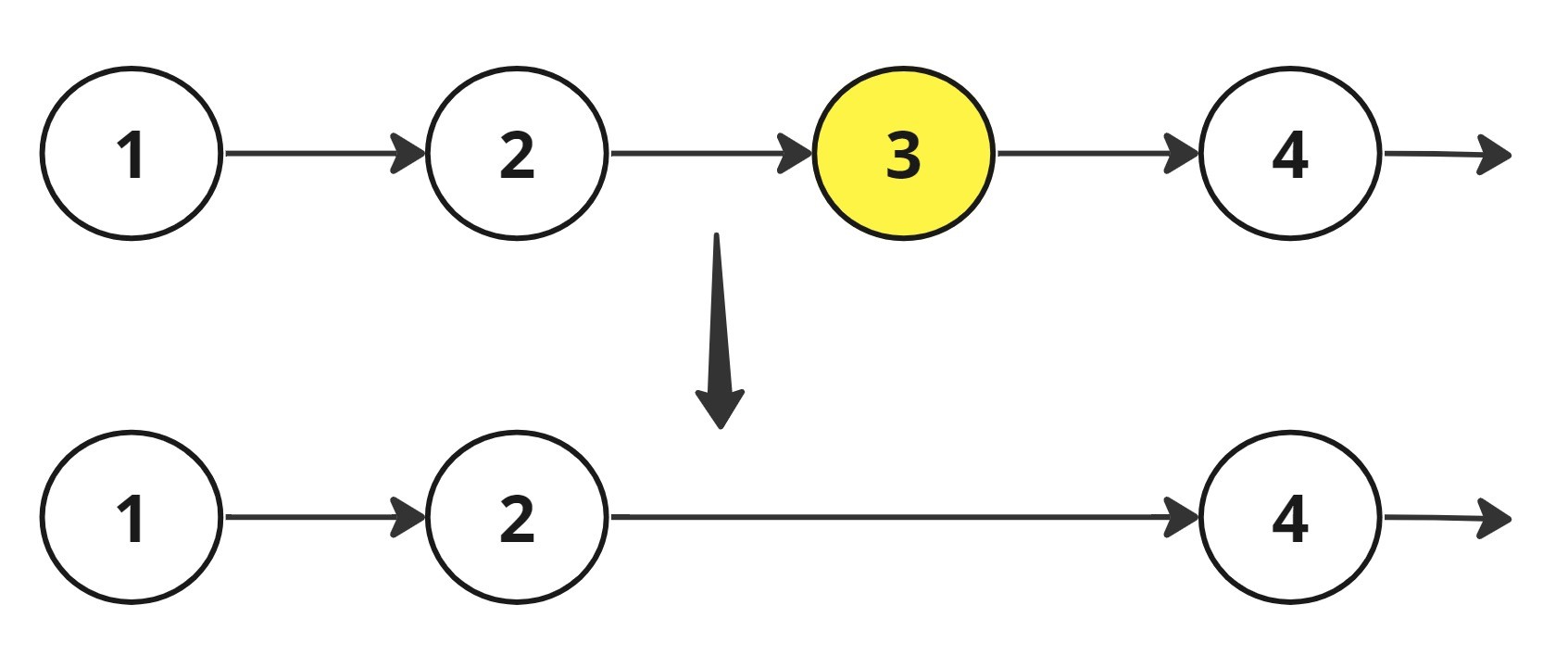
You have been given a singly Linked List of 'N' nodes with integer data and an integer 'K'.
Your task is to remove the 'K'th node from the end of the given Linked List and return the head of the modified linked list.
Example:
Input : 1 -> 2 -> 3 -> 4 -> 'NULL'  and  'K' = 2
Output: 1 -> 2 -> 4 -> 'NULL'
Explanation:
After removing the second node from the end, the linked list become 1 -> 2 -> 4 -> 'NULL'.
2. Row with Maximum 1's
Easy
10m average time
90% success
0/40
Asked in companies



You have been given a non-empty grid ‘mat’ with 'n' rows and 'm' columns consisting of only 0s and 1s. All the rows are sorted in ascending order.
Your task is to find the index of the row with the maximum number of ones.
Note: If two rows have the same number of ones, consider the one with a smaller index. If there's no row with at least 1 zero, return -1.
Example:
Input: 'n' = 3, 'm' = 3, 'mat' = [[1, 1, 1], [0, 0, 1], [0, 0, 0]]

Output: 0

Explanation: The row with the maximum number of ones is 0 (0 - indexed).


Here's your problem of the day 
Solving this problem will increase your chance to get selected in this company
Skill covered: Programming
How do you remove whitespace from the start of a string?
Choose another skill to practice
Similar interview experiences
SDE - 1
3 rounds | 6 problems
Interviewed by Josh Technology Group
Rejected

1741 views

0 comments

0 upvotes
Software Developer
3 rounds | 5 problems
Interviewed by Josh Technology Group

 Selected
 1137 views
0 comments
0 upvotes
SDE - 1
3 rounds | 3 problems
Interviewed by Josh Technology Group
Selected 1733 views
0 comments
0 upvotes
SDE - 1
4 rounds | 7 problems
Interviewed by Josh Technology Group
Rejected
1445 views
0 comments
0 upvotes