





Josh Technology Group interview experience Real time questions & tips from candidates to crack your interview

SDE - 1
Josh Technology Group


3 rounds | 9 Coding
problems

Rejected
Interview preparation journey

Preparation
Duration: 3 months
Topics: Data Structures, Algorithms, System Design, Aptitude, OOPS

Tip 1 : Do Hands-on Practice
Tip 2 : Practice coding questions
Tip 3 : Practice aptitude questions
Application process
Where: Campus
Eligibility: Above 6.5 CGPA
Tip 1 : Have some projects on your resume.
Tip 2 : Do not put false things on your resume.

Interview rounds
01
Round
Medium
Online Coding Interview
Duration180 minutes
Interview date7 Sep 2021
Coding problem4
There were around 50 MCQ questions of DSA and there was no negative marking.
1. Ways To Make Coin Change
Moderate
20m average time
80% success

0/80
Asked in companies



You are given an infinite supply of coins of each of denominations D = {D0, D1, D2, D3, ...... Dn-1}. You need to figure out the total number of ways W, in which you can make a change for value V using coins of denominations from D. Print 0, if a change isn't possible.
Problem approach
See, here each coin of a given denomination can come an infinite number of times. (Repetition allowed), this is what we call UNBOUNDED KNAPSACK. We have 2 choices for a coin of a particular denomination, either i) to include, or ii) to exclude. But here, the inclusion process is not for just once; we can include any denomination any number of times until N<0.
Basically, If we are at s[m-1], we can take as many instances of that coin ( unbounded inclusion ) i.e count(S, m, n – S[m-1] ) ; then we move to s[m-2]. After moving to s[m-2], we can’t move back and can’t make choices for s[m-1] i.e count(S, m-1, n ).
Finally, as we have to find the total number of ways, so we will add these 2 possible choices, i.e count(S, m, n – S[m-1] ) + count(S, m-1, n ) ; which will be our required answer.
2. Square Root
Easy
15m average time
80% success
0/40
Asked in companies



You are given a positive integer ‘n’.
Your task is to find and return its square root. If ‘n’ is not a perfect square, then return the floor value of sqrt(n).
Example:
Input: ‘n’ = 7

Output: 2

Explanation:
The square root of the number 7 lies between 2 and 3, so the floor value is 2.
Problem approach
Take care of some base cases, i.e when the given number is 0 or 1.
Create some variables, lowerbound l = 0, upperbound r = n, where n is the given number, mid and ans to store the answer.
Run a loop until l <= r , the search space vanishes
Check if the square of mid (mid = (l + r)/2 ) is less than or equal to n, If yes then search for a larger value in second half of search space, i.e l = mid + 1, update ans = mid
Else if the square of mid is more than n then search for a smaller value in first half of search space, i.e r = mid – 1
Print the value of answer ( ans)
3. 0 1 Knapsack
Easy
15m average time
85% success
0/40
Asked in companies


A thief is robbing a store and can carry a maximal weight of W into his knapsack. There are N items and the ith item weighs wi and is of value vi. Considering the constraints of the maximum weight that a knapsack can carry, you have to find and return the maximum value that a thief can generate by stealing items.
Problem approach
An efficient solution is to use the Greedy approach. The basic idea of the greedy approach is to calculate the ratio value/weight for each item and sort the item on basis of this ratio. Then take the item with the highest ratio and add them until we can’t add the next item as a whole and at the end add the next item as much as we can. Which will always be the optimal solution to this problem.
A simple code with our own comparison function can be written as follows, please see the sort function more closely, the third argument to sort function is our comparison function which sorts the item according to value/weight ratio in non-decreasing order.
After sorting we need to loop over these items and add them in our knapsack satisfying above-mentioned criteria.
4. Kth Smallest Element
Easy
15m average time
85% success
0/40
Asked in companies



You are given an array of integers 'ARR' of size 'N' and another integer 'K'.
Your task is to find and return 'K'th smallest value present in the array.
Note: All the elements in the array are distinct.
Example
If 'N' is 5 and 'K' is 3 and the array is 7, 2, 6, 1, 9

Sorting the array we get 1, 2, 6, 7, 9

Hence the 3rd smallest number is 6.
Problem approach
We can find the kth smallest element in time complexity better than O(N log N). we know the Set in C++ STL is implemented using Binary Search Tree and we also know that the time complexity of all cases(searching, inserting, deleting ) in BST is log (n) in the average case and O(n) in the worst case. We are using set because it is mentioned in the question that all the elements in an array are distinct.
02
Round
Easy
Online Coding Test
Duration180 minutes
Interview date7 Sep 2021
Coding problem3
1. Maximum Subarray Sum
Moderate
25m average time
75% success
0/80
Asked in companies



Given an array of numbers, find the maximum sum of any contiguous subarray of the array.
For example, given the array [34, -50, 42, 14, -5, 86], the maximum sum would be 137, since we would take elements 42, 14, -5, and 86.
Given the array [-5, -1, -8, -9], the maximum sum would be -1.
Follow up: Do this in O(N) time.
Problem approach
The simple idea of Kadane’s algorithm is to look for all positive contiguous segments of the array (max_ending_here is used for this). And keep track of maximum sum contiguous segment among all positive segments (max_so_far is used for this). Each time we get a positive sum compare it with max_so_far and update max_so_far if it is greater than max_so_far
2. Merge k sorted lists
Hard
25m average time
65% success
0/120
Asked in companies

Given 'k' sorted linked lists, each list is sorted in increasing order. You need to merge all these lists into one single sorted list. You need to return the head of the final linked list.
For example:
Input:
3
3
4 6 8
3
2 5 7
2
1 9

Output:
1 2 4 5 6 7 8 9

Explanation:
First list is: 4 -> 6 -> 8 -> NULL
Second list is: 2 -> 5 -> 7 -> NULL
Third list is: 1 -> 9 -> NULL
The final list would be: 1 -> 2 -> 4 -> 5 -> 6 -> 7 -> 8 -> 9 -> NULL
Problem approach
In this Divide and Conquer approach is used. This approach doesn’t require extra space for heap and works in O(nk Log k)
It is known that the merging of two linked lists can be done in O(n) time and O(n) space.
The idea is to pair up K lists and merge each pair in linear time using O(n) space.
After the first cycle, K/2 lists are left each of size 2*N. After the second cycle, K/4 lists are left each of size 4*N and so on.
Repeat the procedure until we have only one list left.
3. Rotate Linked List
Moderate
25m average time
65% success
0/80
Asked in companies



You are given a linked list having ‘n’ nodes and an integer ‘k’.
You have to rotate the linked list to the right by ‘k’ positions .
Example :
Input: linked list = [1 2 3 4] , k = 2

Output: 3 4 1 2

Explanation:
We have to rotate the given linked list to the right 2 times. After rotating it to the right once it becomes 4->1->2->3. After rotating it to the right again, it becomes 3->4->1->2.
Problem approach
To rotate a linked list by k, we can first make the linked list circular and then moving k-1 steps forward from head node, making (k-1)th node’s next to null and make kth node as head.
03
Round
Easy
Face to Face
Duration30 minutes
Interview date7 Sep 2021
Coding problem2
This was a machine-coding round where major emphasis was given on coding practice and knowledge of Web Development
1. Web Development Question
We have to code a Todo alike app called PROJECT PLANNER with raw HTML, CSS & JS, all the instructions related to UI Design and functionality and scoring criteria about the app were told before starting the code.
An additional feature like integrating local storage was a plus point.
Problem approach
Tip 1 : Proper understanding of basic concepts
Tip 2 : Hands-one practice is a must
2. Water Supply In A Village
Hard
45m average time
55% success
0/120
Asked in companies


There are ‘N’ houses in a village. Ninja wants to supply water for all the houses by building wells and laying pipes.
For each house ‘i’, we can either build a well inside it directly with cost ‘WELLS[i]’, or pipe in water from another well to it. The total cost to lay pipes between houses is given by the array ‘PIPES’, where ‘PIPES[i]’ = ‘[HOUSE1, HOUSE2, COST]’ and the ‘COST’ represent the total cost connect ‘HOUSE1’ and ‘HOUSE2’ together using a pipe.
Note: Given all the connections are bidirectional.
For Example:
For ‘N’ = 3, ‘WELLS[]’ = ‘[1,2,2]’, ‘PIPES[]’ = [ [1, 2, 1], [2 , 3, 1]]. The image shows the costs of connecting houses using pipes. The best strategy is to build a well in the first house with cost 1 and connect the other houses to it with cost 2 so the total cost is 3.
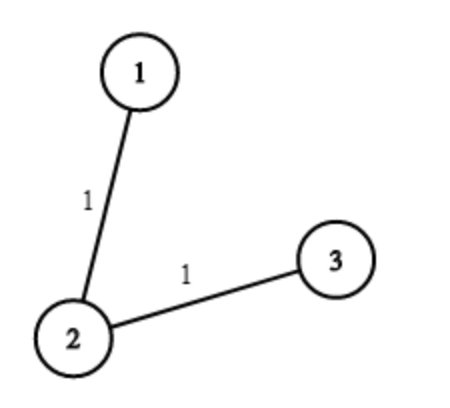
Ninja wants to find out the minimum total cost to supply water to all houses in the village. Can you help the Ninja to find out this minimum cost?
Problem approach
We can assume this problem as a Shortest path problem/Minimum spanning tree problem. In this problem, in a graph, consider cities as nodes, pipe connects two cities as edges with cost. Now wells cost, they are self-connected edges, we can add an extra node as root node 0, and connect all 0 and every node with costs ‘WELLS[i]’. So that we can have one graph/tree, and can get minimum spanning trees / shortest path in a graph.


Here's your problem of the day 
Solving this problem will increase your chance to get selected in this company
Skill covered: Programming
Which keyword is used for inheritance?
Choose another skill to practice
Similar interview experiences
SDE - 1
3 rounds | 6 problems
Interviewed by Josh Technology Group
Rejected

1639 views

0 comments

0 upvotes
SDE - 1
3 rounds | 6 problems
Interviewed by Josh Technology Group
Rejected
1113 views
0 comments
0 upvotes
SDE - 1
3 rounds | 3 problems
Interviewed by Josh Technology Group
 Selected
 1622 views
0 comments
0 upvotes
SDE - 1
4 rounds | 7 problems
Interviewed by Josh Technology Group
Rejected
1300 views
0 comments
0 upvotes
Companies with similar interview experiences

SDE - 1
2 rounds | 3 problems
Interviewed by BNY Mellon
 Selected
 6547 views
3 comments
0 upvotes
SDE - 1
3 rounds | 6 problems
Interviewed by BNY Mellon
 Selected
 0 views
0 comments
0 upvotes

SDE - 1
3 rounds | 5 problems
Interviewed by CIS - Cyber Infrastructure
Selected 2294 views
0 comments
0 upvotes