





Josh Technology Group interview experience Real time questions & tips from candidates to crack your interview

SDE - Intern
Josh Technology Group


3 rounds | 5 Coding
problems
 Selected
 Interview preparation journey

Preparation
Duration: 6 Months
Topics: Data Structures, Trees, Linked Lists, OOPS, Dynamic Programming

Tip 1 : Clear your data structure basics
Tip 2 : Do atleast 200-300 questions
Tip 3 : Do some projects too
Application process
Where: Campus
Eligibility: Above 7 CGPA
Tip 1 : Make it one pager
Tip 2 : Add all your achievements related to job profile only

Interview rounds
01
Round
Medium
Online Coding Interview
Duration90 minutes
Interview date10 Aug 2021
Coding problem1
1. Level Order Traversal
Easy
15m average time
85% success

0/40
Asked in companies



You have been given a Binary Tree of integers. You are supposed to return the level order traversal of the given tree.
For example:
For the given binary tree
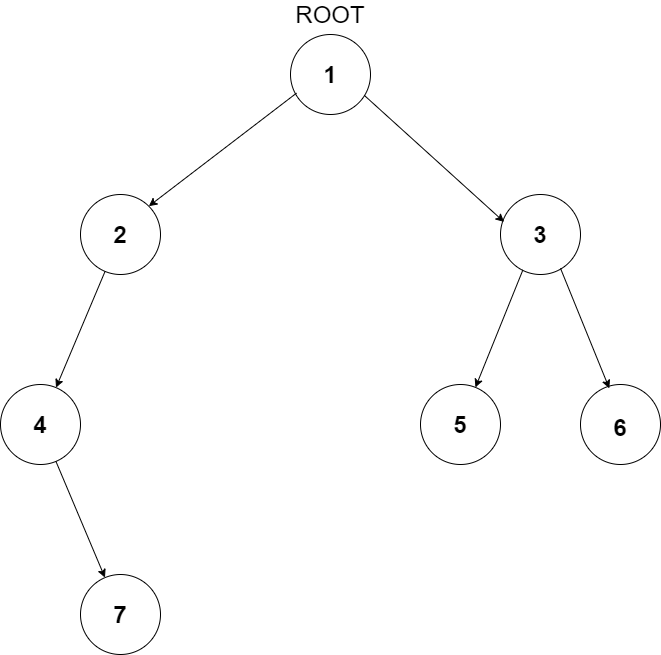
The level order traversal will be {1,2,3,4,5,6,7}.
02
Round
Medium
Video Call
Duration120 Minutes
Interview date30 Oct 2021
Coding problem2
1. Connect MidPoints
Easy
15m average time
86% success
0/40
Asked in companies


You have been given a curve whose edges are parallel to either x-axis or y-axis. You need to return another curve which will pass through the midpoints of all the edges of the curve. The curve will be given in the form of a linked list, where each node represents the coordinates of the curve.
The curve to be returned will also be in the form of a linked list, where each node may represent the coordinates of the midpoints of the edges.
Note
1. The coordinates of the curve will be given in non-descending order of x coordinate from start to end of the linked list and for every two adjacent coordinates either the x-coordinate or the y-coordinate will be the same.
2. All the coordinates will be pairwise distinct i.e there are no two coordinates (x1, y1) and (x2, y2) such that x1 = x2 and y1 = y2.
3. The first coordinate and the last coordinate in the input can be assumed as the starting point and the ending point of the curve respectively.
4. You may assume that the starting point and ending point of the curve will be the midpoint of the first edge, and the last edge of the input curve( in the order of input coordinates) respectively.
5. If the coordinates of the midpoint are not whole numbers, you may take the floor value of the coordinates. For example, the midpoint (3.5, 5) will be taken as (3, 5).
2. Left View Of Binary Tree
Moderate
30m average time
60% success
0/80
Asked in companies



You have been given a Binary Tree of 'n' nodes, where the nodes have integer values
Print the left view of the binary tree.
Example :
If the input tree is as depicted in the picture:
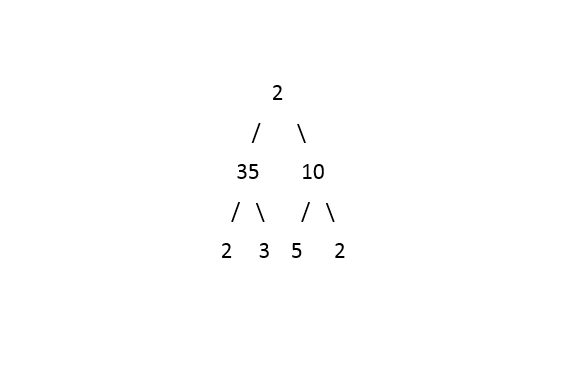
The Left View of the tree will be: 2 35 2
03
Round
Hard
Video Call
Duration180 Minutes
Interview date31 Aug 2021
Coding problem2
1. Search In BST
Easy
15m average time
85% success
0/40
Asked in companies



There is a Binary Search Tree (BST) consisting of ‘N’ nodes. Each node of this BST has some integer data.
You are given the root node of this BST, and an integer ‘X’. Return true if there is a node in BST having data equal to ‘X’, otherwise return false.
A binary search tree (BST) is a binary tree data structure that has the following properties:
1. The left subtree of a node contains only nodes with data less than the node’s data.

2. The right subtree of a node contains only nodes with data greater than the node’s data.

3. The left and right subtrees must also be binary search trees.
Note:
It is guaranteed that all nodes have distinct data.
2. Trapping Rain Water
Moderate
15m average time
80% success
0/80
Asked in companies



You have been given a long type array/list 'arr’ of size 'n’.
It represents an elevation map wherein 'arr[i]’ denotes the elevation of the 'ith' bar.
Print the total amount of rainwater that can be trapped in these elevations.
Note :
The width of each bar is the same and is equal to 1.
Example:
Input: ‘n’ = 6, ‘arr’ = [3, 0, 0, 2, 0, 4].

Output: 10

Explanation: Refer to the image for better comprehension:

Note :
You don't need to print anything. It has already been taken care of. Just implement the given function.
Problem approach
I give the best O(N) solution by two pointers approach


Here's your problem of the day 
Solving this problem will increase your chance to get selected in this company
Skill covered: Programming
How do you remove whitespace from the start of a string?
Choose another skill to practice
Similar interview experiences
SDE - Intern
6 rounds | 14 problems
Interviewed by Josh Technology Group
 Selected
5584 views

0 comments

0 upvotes
SDE - Intern
5 rounds | 6 problems
Interviewed by Josh Technology Group
Selected 3263 views
0 comments
0 upvotes
SDE - Intern
2 rounds | 4 problems
Interviewed by Josh Technology Group
Selected 1140 views
1 comments
0 upvotes
SDE - Intern
7 rounds | 7 problems
Interviewed by Josh Technology Group
Selected 1137 views
0 comments
0 upvotes
Companies with similar interview experiences

SDE - Intern
2 rounds | 4 problems
Interviewed by Arcesium
 Selected
 3738 views
0 comments
0 upvotes
SDE - Intern
3 rounds | 5 problems
Interviewed by Arcesium
Selected 2683 views
0 comments
0 upvotes

SDE - Intern
3 rounds | 5 problems
Interviewed by BNY Mellon
 Selected
 2348 views
0 comments
0 upvotes