





Josh Technology Group interview experience Real time questions & tips from candidates to crack your interview

SDE - 1
Josh Technology Group


3 rounds | 8 Coding
problems

Rejected
Interview preparation journey

Journey
This was an on-campus opportunity for batch 2022 passing graduates for SD (Software Developer role) and FE ( Frontend Engineer role). This was my experience in the SD role. First, it consists of three rounds for appearing in the interview. It consists of MCQ, Subjective and Coding rounds. The first three rounds are on the same day. Writing comments add some idea of your approach in subjective and coding rounds increases your probability of qualifying the rounds. Each round was an elimination round.
Application story
This was an on-campus opportunity for batch 2022 passing graduates for SD (Software Developer role) and FE ( Frontend Engineer role). This was my experience in the SD role. First, it consists of three rounds for appearing in the interview. It consists of MCQ, Subjective and Coding rounds. The first three rounds are on the same day. Writing comments add some idea of your approach in subjective and coding rounds increases your probability of qualifying the rounds. Each round was an elimination round.
Why selected/rejected for the role?
Overall it was a nice experience. After getting this close and facing failure feels bad. But life is not about giving up. Keep coding and keep hustling. I hope that this experience gives you some motivation. A strong suggestion is to comment on your different approaches so that it helps the community. Thanks and goodbye.
Preparation
Duration: 3 Months
Topics: OOPs, DSA, JAVA, Spring-boot, Algorithms, operating system

Tip 1 : Be confident
Tip 2 : Be Clear about your question
Tip 3 : Do practise atleast 150-200 DSA questions
Application process
Where: Campus
Eligibility: 7 CGPA
Tip 1 : mention those technology where you feel confident
Tip 2 : Clear you resume

Interview rounds
01
Round
Medium
Online Coding Interview
Duration50 Minutes
Interview date17 Jan 2023
Coding problem3
This round consists of 50 MCQs related to pointers, output prediction, OOPs, and some programming fundamentals questions. The time duration for the round was 50 minutes. Some aptitude questions were also there. Having a decent knowledge of OOPs and pointers will be an advantage to qualify for this round.
1. Number following a pattern
Hard
15m average time
85% success

0/120
Asked in companies

You are given a string 'S' that consists of I’s and D’s pattern only. 'I' is for increasing, and 'D' is for decreasing. Your task is to return the string that consists of a minimum number following that pattern.
Note:
1) Digits of the number should be in the range [1,9] and can’t repeat.

2) The length of the string should be less than or equal to 8.
2. Left Sum
Easy
10m average time
90% success
0/40
Asked in companies



Given a binary tree having ‘N’ number of nodes. Your task is to find the sum of all left nodes present in the input binary tree. That is, you need to take the sum of all nodes which are the left child of some node.
Note :
1. A binary tree is a tree in which each node can have at most two children.
2. The given tree will be non-empty i.e the number of non-NULL nodes will always be greater than or equal to 1.
3. Multiple nodes in the tree can have the same values, all values in the tree will be positive.
3. Swap Kth Elements
Easy
15m average time
85% success
0/40
Asked in companies

Given an array ‘ARR’ of size ‘N,’ swap the Kth element from beginning with the Kth element from the end.
For example:
If ‘N’ = 5 and K = 2
[1, 2, 3, 4, 5]

Then the output will be [1, 4, 3, 2, 5].
02
Round
Easy
Video Call
Duration60 Minutes
Interview date18 Jan 2023
Coding problem3
The round starts with an introduction. The interviewer was very friendly. He didn’t ask much about my projects and suddenly shifted to DSA questions. The whole Interview was taken on Calyxpod. He asked me two questions. The duration of the interview was about 1 hour and 15 minutes. Questions are:
1. First Missing Positive
Moderate
18m average time
84% success
0/80
Asked in companies



You are given an array 'ARR' of integers of length N. Your task is to find the first missing positive integer in linear time and constant space. In other words, find the lowest positive integer that does not exist in the array. The array can have negative numbers as well.
For example, the input [3, 4, -1, 1] should give output 2 because it is the smallest positive number that is missing in the input array.
2. Size of Largest BST in Binary Tree
Easy
10m average time
90% success
0/40
Asked in companies



You have been given a Binary Tree of 'N' nodes, where the nodes have integer values. Your task is to return the size of the largest subtree of the binary tree which is also a BST.
A binary search tree (BST) is a binary tree data structure which has the following properties.
• The left subtree of a node contains only nodes with data less than the node’s data.
• The right subtree of a node contains only nodes with data greater than the node’s data.
• Both the left and right subtrees must also be binary search trees.
Example:
Given binary tree:
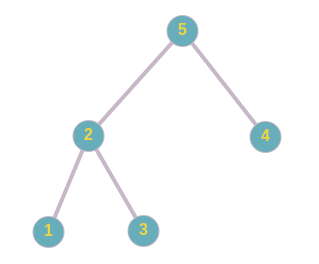
In the given binary tree, subtree rooted at 2 is a BST and its size is 3.
3. Sort 0 1 2
Easy
22m average time
0/40
Asked in companies


You have been given an integer array/list(ARR) of size 'N'. It only contains 0s, 1s and 2s. Write a solution to sort this array/list.
Note :
Try to solve the problem in 'Single Scan'. ' Single Scan' refers to iterating over the array/list just once or to put it in other words, you will be visiting each element in the array/list just once.
03
Round
Hard
Face to Face
Duration120 Minutes
Interview date19 Jan 2023
Coding problem2
There were two Interviewers. The duration of the interview was about 2 hours and 45 minutes. Yes, you read it right, around 3 hrs. They ask me two DSA questions during the whole round. Questions are:
1. Ninja And Covid-19 Vaccine
Moderate
15m average time
85% success
0/80
Asked in companies

The process of the COVID-19 vaccine has started in a special city structured like a binary tree. Ninja has been appointed as a doctor to do this vaccination. Some of the houses in the city are already vaccinated and Ninja wants to vaccinate the people in the remaining houses.
But the problem is that Ninja doesn’t remember the address of these remaining houses. However, he remembers that the houses that are still not vaccinated are at a ‘K’ distance from the last houses in the city. Ninja wants to find out how the number of these non-vaccinated houses.
Note :
The last house is similar to a leaf node in a binary tree and a house that is present at ‘K’ distance from the last house should be the direct ancestor of this last house.
For Example :
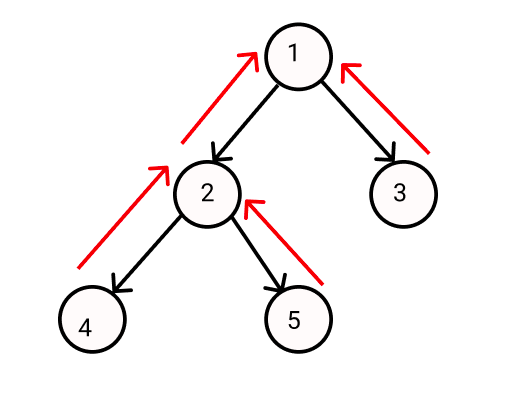
In this example :
2 is the direct ancestor of 4 and 5.
1 is the direct ancestor of 2, 3, 4, and 5.
2. Sibling Nodes
Moderate
20m average time
80% success
0/80
Asked in companies

You have been given a Binary Tree of ‘N’ nodes, where the nodes have integer values. Your task is to print all nodes that don’t have a sibling node.
Note:
1. Node ‘U’ is said to be a sibling of node ‘V’ if and only if both ‘U’ and ‘V’ have the same parent.
2. Root 1 is a sibling node.


Here's your problem of the day 
Solving this problem will increase your chance to get selected in this company
Skill covered: Programming
What is the output of print(type("Python"))?
Choose another skill to practice
Similar interview experiences
SDE - 1
3 rounds | 6 problems
Interviewed by Josh Technology Group

Rejected

1621 views

0 comments

0 upvotes
SDE - 1
3 rounds | 6 problems
Interviewed by Josh Technology Group
Rejected
1100 views
0 comments
0 upvotes
SDE - 1
3 rounds | 3 problems
Interviewed by Josh Technology Group
 Selected
 1613 views
0 comments
0 upvotes
SDE - 1
4 rounds | 7 problems
Interviewed by Josh Technology Group
Rejected
1288 views
0 comments
0 upvotes
Companies with similar interview experiences

SDE - 1
2 rounds | 3 problems
Interviewed by BNY Mellon
 Selected
 6537 views
3 comments
0 upvotes
SDE - 1
3 rounds | 6 problems
Interviewed by BNY Mellon
 Selected
 0 views
0 comments
0 upvotes

SDE - 1
3 rounds | 5 problems
Interviewed by CIS - Cyber Infrastructure
Selected 2290 views
0 comments
0 upvotes