





Josh Technology Group interview experience Real time questions & tips from candidates to crack your interview

SDE - 1
Josh Technology Group


3 rounds | 6 Coding
problems

Rejected
Interview preparation journey

Preparation
Duration: 6 months
Topics: Data structure, coding question practice, OOPS, algorithms, CS Fundamentals

Tip 1 : Practice coding questions as many as you can
Tip 2 : Study CS Fundamentals
Tip 3 : Do make projects and mention them in your resume
Application process
Where: Campus
Eligibility: 7.5 CGPA
Tip 1 : It should only be one page long
Tip 2 : Mention your projects in it

Interview rounds
01
Round
Easy
Online Coding Interview
Duration50 minutes
Interview date6 Sep 2021
Coding problem2
This phase consists of 50 MCQs. Some of them are as follows:
1. Predict Output
#include
int main()
{
void fun(int, int[]);
int arr[] = {1, 2, 3, 4};
int i;
fun(4, arr);
for(i=0; i<4; i++)
printf("%d,", arr[i]);
return 0;
}
void fun(int n, int arr[])
{
int *p=0;
int i=0;
while(i++ < n)
p = &arr[i];
*p=0;
}
Problem approach
Step 1: void fun(int, int[]); This prototype tells the compiler that the function fun() accepts one integer value and one array as an argument and does not return anything.
Step 2: int arr[] = {1, 2, 3, 4}; The variable a is declared as an integer array and it is initialized to
a[0] = 1, a[1] = 2, a[2] = 3, a[3] = 4
Step 3: int i; The variable i is declared as an integer type.
Step 4: fun(4, arr); This function does not affect the output of the program. Let's skip this function.
Step 5: for(i=0; i<4; i++) { printf("%d,", arr[i]); } The for loop runs untill the variable i is less than '4' and it prints the each value of array a.
Hence the output of the program is 1,2,3,4
2. Predict Output
#include
int main()
{
int arr[5], i=0;
while(i<5)
arr[i]=++i;
for(i=0; i<5; i++)
printf("%d, ", arr[i]);
return 0;
}
Problem approach
Garbage value, 1, 2, 3, 4,
02
Round
Medium
Online Coding Test
Duration75 minutes
Interview date6 Sep 2021
Coding problem2
This round is basically the coding round only.
1. Subarray With Given Sum
Moderate
15m average time
85% success

0/80
Asked in companies



Given an array ARR of N integers and an integer S. The task is to find whether there exists a subarray(positive length) of the given array such that the sum of elements of the subarray equals to S or not. If any subarray is found, return the start and end index (0 based index) of the subarray. Otherwise, consider both the START and END indexes as -1.
Note:
If two or more such subarrays exist, return any subarray.
For Example: If the given array is [1,2,3,4] and the value of S is equal to 7. Then there are two possible subarrays having sums equal to S are [1,2,3] and [3,4].
Problem approach
The idea is simple as we know that all the elements in subarray are positive so, If a subarray has sum greater than the given sum then there is no possibility that adding elements to the current subarray will be equal to the given sum. So the Idea is to use a similar approach to a sliding window.
Start with an empty subarray
add elements to the subarray until the sum is less than x( given sum ).
If the sum is greater than x, remove elements from the start of the current subarray.
2. Find Peak Element
Easy
15m average time
85% success
0/40
Asked in companies


You are given an array 'arr' of length 'n'. Find the index(0-based) of a peak element in the array. If there are multiple peak numbers, return the index of any peak number.
Peak element is defined as that element that is greater than both of its neighbors. If 'arr[i]' is the peak element, 'arr[i - 1]' < 'arr[i]' and 'arr[i + 1]' < 'arr[i]'.
Assume 'arr[-1]' and 'arr[n]' as negative infinity.
Note:
1.  There are no 2 adjacent elements having same value (as mentioned in the constraints).
2.  Do not print anything, just return the index of the peak element (0 - indexed).
3. 'True'/'False' will be printed depending on whether your answer is correct or not.
Example:
Input: 'arr' = [1, 8, 1, 5, 3]

Output: 3

Explanation: There are two possible answers. Both 8 and 5 are peak elements, so the correct answers are their positions, 1 and 3.
Problem approach
Using Binary Search, check if the middle element is the peak element or not. If the middle element is not the peak element, then check if the element on the right side is greater than the middle element then there is always a peak element on the right side. If the element on the left side is greater than the middle element then there is always a peak element on the left side.
03
Round
Medium
Online Coding Test
Duration75 minutes
Interview date6 Sep 2021
Coding problem2
This round consists of 3 coding questions.
1. Valid Parentheses
Easy
10m average time
80% success
0/40
Asked in companies



You're given a string 'S' consisting of "{", "}", "(", ")", "[" and "]" .
Return true if the given string 'S' is balanced, else return false.
For example:
'S' = "{}()".

There is always an opening brace before a closing brace i.e. '{' before '}', '(' before ').
So the 'S' is Balanced.
Problem approach
The idea is to put all the opening brackets in the stack. Whenever you hit a closing bracket, search if the top of the stack is the opening bracket of the same nature. If this holds then pop the stack and continue the iteration, in the end if the stack is empty, it means all brackets are well-formed . Otherwise, they are not balanced.
steps are :
Declare a character stack.
Now traverse the string exp.
If the current character is a starting bracket ( ‘(‘ or ‘{‘ or ‘[‘ ) then push it to stack.
If the current character is a closing bracket ( ‘)’ or ‘}’ or ‘]’ ) then pop from stack and if the popped character is the matching starting bracket then fine.
Else brackets are Not Balanced.
After complete traversal, if there is some starting bracket left in stack then Not balanced, else Balanced.
2. Left View Of Binary Tree
Moderate
30m average time
60% success
0/80
Asked in companies



You have been given a Binary Tree of 'n' nodes, where the nodes have integer values
Print the left view of the binary tree.
Example :
If the input tree is as depicted in the picture:
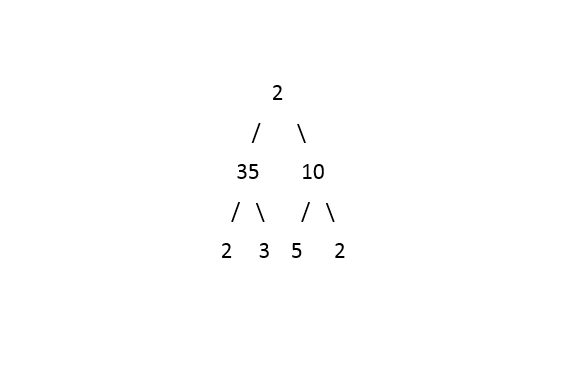
The Left View of the tree will be: 2 35 2


Here's your problem of the day 
Solving this problem will increase your chance to get selected in this company
Skill covered: Programming
How do you remove whitespace from the start of a string?
Choose another skill to practice
Similar interview experiences
SDE - 1
3 rounds | 6 problems
Interviewed by Josh Technology Group
 Selected
1869 views

0 comments

0 upvotes
SDE - 1
3 rounds | 6 problems
Interviewed by Josh Technology Group
Rejected
1027 views
0 comments
0 upvotes
SDE - 1
3 rounds | 3 problems
Interviewed by Josh Technology Group
Selected 1486 views
0 comments
0 upvotes
SDE - 1
4 rounds | 7 problems
Interviewed by Josh Technology Group
Rejected
1160 views
0 comments
0 upvotes
Companies with similar interview experiences

SDE - 1
2 rounds | 3 problems
Interviewed by BNY Mellon
 Selected
 6365 views
3 comments
0 upvotes
SDE - 1
3 rounds | 6 problems
Interviewed by BNY Mellon
 Selected
 0 views
0 comments
0 upvotes

SDE - 1
3 rounds | 5 problems
Interviewed by CIS - Cyber Infrastructure
Selected 2197 views
0 comments
0 upvotes