





LEVERAGE EDU interview experience Real time questions & tips from candidates to crack your interview
SDE - 1
LEVERAGE EDU


3 rounds | 6 Coding
problems

 Selected
 Interview preparation journey

Journey
My journey began with a passion for solving problems and creating solutions through technology. I started by learning programming languages such as HTML, CSS, and JavaScript, and soon discovered my love for web development. I took on projects that challenged me to learn new skills, from building dynamic websites to creating interactive applications. As I gained experience, I expanded my knowledge to include backend development, databases, and API integration. I collaborated with teams to create robust software systems that met the needs of clients and end-users. Along the way, I learned the importance of communication, teamwork, and continuous learning. Today, I continue to push the boundaries of technology and strive to create meaningful, impactful software solutions.
Application story
I applied through on-campus placement portal. Around 800 students have applied from Computer Science and Electronics and Communication branches.
Why selected/rejected for the role?
I feel I was selected because I was confident about the topics I mentioned in my resume and had very string fundamentals about the profile. Also I had done a computer vision intern which added a lot of weight
Preparation
Duration: 5 months
Topics: Operating System, DBMS, SQL Data Structures, Pointers, OOPS, System Design, Algorithms, Dynamic Programming

Tip 1 : Consistency is the key during preparation
Tip 2 : Hands - on practice is must as it helps a lot during interviews
Tip 3 : Always start from understanding the basics instead of mugging up things from internet.
Tip 4 : Chose your final year project wisely , your interview round has high chances of being revolving around your project
Application process
Where: Campus
Eligibility: 7 CGPA
Tip 1 : You must include at least 2 projects , it shows your hands on skill, a piece on which you have worked .
Tip 2 : Include the certifications (if any) only if you are aware of that subject , you can expect questions on that particular tech - stack .

Interview rounds
01
Round
Medium
Face to Face
Duration90 minutes
Interview date9 Jul 2022
Coding problem3
1. Relative Sorting
Moderate
25m average time
65% success

0/80
Asked in companies



Given two arrays ‘ARR’ and ‘BRR’ of size ‘N’ and ‘M’ respectively. Your task is to sort the elements of ‘ARR’ in such a way that the relative order among the elements will be the same as those are in ‘BRR’. For the elements not present in ‘BRR’, append them in the last in sorted order.
For example
Consider the arrays as ARR = { 9, 5, 8, 4, 6, 5 } and BRR = { 8, 4, 5 }
The output for the above example  is { 8, 4, 5, 5, 6, 9 }.
Note:
Elements of ‘BRR’ are non repeating.
Problem approach
Step 1 :
Step 2 :
2. Ninja and his Courses
Hard
50m average time
50% success
0/120
Asked in company

You are going to study at Coding Ninja Institute. There are ‘N’ courses in this institute with some dependencies. You have been given a ‘DEPENDENCIES’ array/list of size ‘M’ where ‘DEPENDENCIES[i]’ is equal to [‘Xi’, ‘Yi’] representing that the course ‘Xi’ must be taken before the course ‘Yi’.
In one semester, you can take at most ‘K’ courses. So, you have to find the minimum number of semesters he takes all the courses.
Note: It is guaranteed that you can take all the courses in some way.
For example:
Let‘N’ = 3 , ‘K’ = 1 and ‘DEPENDENCIES’ = [ [1, 2] [2, 3] ].
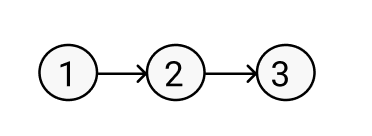
In this example, if you want to take ‘COURSE_3’ then first you have to take ‘COURSE_2’ in the previous semester. If you want to take ‘COURSE_2’, then first you have to take ‘COURSE_1’ in the previous semester.
The value of ‘K’ is 1 which means in a semester we can choose at most 1 course.
3. Justify Text
Hard
35m average time
50% success
0/120
Asked in companies



Given a sentence(in the form of an array of words), and an integer ‘L’, return an array of strings i.e a paragraph such that each line has exactly ‘L’ characters, and is left and right justified.
Justification of text means that space is added between words so that both edges of each line are aligned with both margins. The last line in the paragraph is aligned left.
One needs to add the maximum number of words in a line such that the number of lines is minimised.
We can add whitespaces in a line so that each line has exactly the same number of characters i.e L.
If the number of spaces on a line does not divide evenly between words, the empty slots on the left will be assigned more spaces than the slots on the right.
For the last line of text, it should be left justified and no extra space is inserted between words.
For example:
Let the given sentence be: [ “what”, “must”, “be”, “shall”, “be.”]
And L=12.

The justified output will be :

[ “what must be”
“Shall be.”       ]

Note that the last line is only left justified.
02
Round
Easy
Telephonic
Duration60 minutes
Interview date15 Jul 2022
Coding problem2
1. Minimum Cost Path
Moderate
25m average time
70% success
0/80
Asked in companies



You have been given a matrix of ‘N’ rows and ‘M’ columns filled up with integers. Find the minimum sum that can be obtained from a path which from cell (x,y) and ends at the top left corner (1,1).
From any cell in a row, we can move to the right, down or the down right diagonal cell. So from a particular cell (row, col), we can move to the following three cells:
Down: (row+1,col)
Right: (row, col+1)
Down right diagonal: (row+1, col+1)
2. Right View
Moderate
35m average time
65% success
0/80
Asked in companies



You have been given a Binary Tree of integers.
Your task is to print the Right view of it.
The right view of a Binary Tree is a set of nodes visible when the tree is viewed from the Right side and the nodes are printed from top to bottom order.
03
Round
Easy
HR Round
Duration20 minutes
Interview date22 Jul 2022
Coding problem1
1. Basic HR Questions
Tell me about yourself.
What is your educational background?
Explain your final year project
What was your role in the team that made project?
Are you ready to relocate?


Here's your problem of the day 
Solving this problem will increase your chance to get selected in this company
Skill covered: Programming
How do you remove whitespace from the start of a string?
Choose another skill to practice
Similar interview experiences

SDE - 1
3 rounds | 7 problems
Interviewed by OYO
Selected 
6182 views

0 comments

0 upvotes
SDE - Intern
2 rounds | 3 problems
Interviewed by Amazon
Rejected
1566 views
0 comments
0 upvotes

SDE - 1
2 rounds | 5 problems
Interviewed by Meesho
Rejected
7245 views
0 comments
0 upvotes
SDE - 1
3 rounds | 9 problems
Interviewed by Salesforce
 Selected
 4552 views
0 comments
0 upvotes
Companies with similar interview experiences
SDE - 1
5 rounds | 12 problems
Interviewed by Amazon
 Selected
 117552 views
24 comments
0 upvotes
SDE - 1
4 rounds | 5 problems
Interviewed by Microsoft
Selected 60143 views
5 comments
0 upvotes
SDE - 1
3 rounds | 7 problems
Interviewed by Amazon
 Selected
 36138 views
7 comments
0 upvotes