





Mathworks interview experience Real time questions & tips from candidates to crack your interview

SDE - Intern
Mathworks


3 rounds | 2 Coding
problems

 Selected
 Interview preparation journey

Journey
Started coding 2 years back when I was in 2nd year.
I got to know that to get an internship we have to do some coding type stuff.
I started with basic coding and started with hackerank and gradually increases the difficulty of the problem.
After that I moved to leetcode and firstly I solved problems on the basis of tags first easy then medium then hard.
Do all the standard problem of each topic.
Application story
This is an on-campus opportunity open to students with a GPA of 7 or higher; after a pre-placement talk, a final selection will be made on the CGPA and resume, and approximately 300 students will be tested (assessment online). ) accessible, and then 20 students were selected for interviews and interviews. Four of them received internship offers.
Why selected/rejected for the role?
For a fresher, the companies look for a person with learning mindset , they tested the basic knowledge and felt I possess the skills and can fit their culture , hence I was selected.
Preparation
Duration: 6 months
Topics: Data Structures, Dynamic Programming, Graph Theory, OOPS

Tip 1 : Revision of important topics and questions is key
Tip 2 : You should have thorough knowledge of the tech stack you have used in your projects
Application process
Where: Campus
Eligibility: Above 7 CGPA
Tip 1 : Highlight the important points in your CV. Could be some algorithm you implemented in your project or key frameworks you used.
Tip 2 : Try to have a single page resume with concise information highlighting your key achievements.
Tip 3 : Don't write anything you can't answer questions on.

Interview rounds
01
Round
Medium
Online Coding Test
Duration60 minutes
Interview date8 Aug 2021
Coding problem2
Timing: The test was conducted at around 6pm.
1. Optimal Strategy for a Game
Easy
15m average time
85% success

0/40
Asked in companies


You and your friend Ninjax are playing a game of coins. Ninjax place the 'N' number of coins in a straight line.
The rule of the game is as follows:
1. Each coin has a value associated with it.

2. It’s a two-player game played against an opponent with alternating turns.

3. At each turn, the player picks either the first or the last coin from the line and permanently removes it.

4. The value associated with the coin picked by the player adds up to the total amount the player wins.
Ninjax is a good friend of yours and asks you to start first.
Your task is to find the maximum amount you can definitely win at the end of this game.
Note:
'N' is always even number.

Ninjax is as smart as you, so he will play so as to maximize the amount he wins.
Example 1:
Let the values associated with four coins be: [9, 5, 21, 7]

Let’s say that initially, you pick 9 and Ninjax picks 7.
Then, you pick 21 and Ninjax picks 5.
So, you win a total amount of (9+21), i.e. 30.

In case you would have picked up 7 initially and Ninjax would have picked 21 (as he plays optimally).
Then, you would pick 9 and Ninjax would choose 5. So, you win a total amount of (7+9), i.e. 16, which is not the maximum you can obtain.

Thus, the maximum amount you can win is 30.
Example 2:
Let the values associated with four coins be: [20, 50, 5, 10]

Let’s say that initially, you pick 10 and Ninjax picks 20.
Then, you pick 50 and Ninjax picks 5.
So, you win a total amount of (10+50), i.e. 60.

In case you would have picked up 20 initially and Ninjax would have picked 50 (as he plays optimally).
Then, you would pick 10 and Ninjax would choose 5. So, you win a total amount of (20+10), i.e. 30, which is not the maximum you can obtain.

Thus, the maximum amount you can win is 60.
Problem approach
This was a medium level DP problem which I was able to solve after some thinking.
2. Convert Bst To The Greater Sum Tree
Moderate
30m average time
70% success
0/80
Asked in companies


You have been given a Binary Search Tree of integers. You are supposed to convert it to a greater sum tree such that the value of every node in the given BST is replaced with the sum of the values of all the nodes which are greater than the value of the current node in the tree.
A Binary Search Tree is a tree, whose internal nodes each store a value greater than all the values in the node's left subtree and less than those in its right subtree.
Note :
You need to modify the given tree only. You are not allowed to create a new tree.
For example:
For the given binary search tree
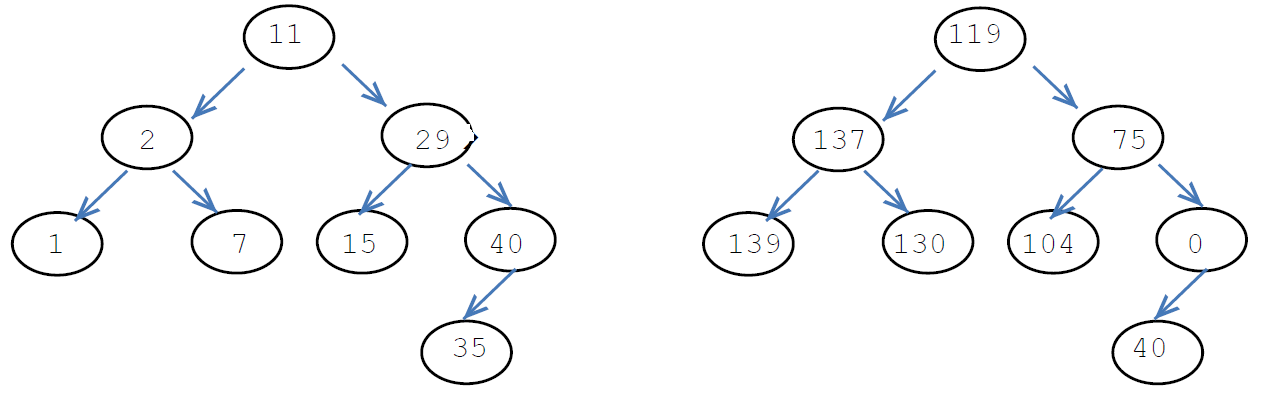
11 will be replaced by {15 + 29 + 35 + 40}, i.e. 119.
2 will be replaced by {7 + 11 + 15 + 29 + 35 + 40}, i.e. 137.
29 will be replaced by {35 + 40}, i.e. 75.
1 will be replaced by {2 + 7 + 11 + 15 + 29 + 35 + 40}, i.e. 139.
7 will be replaced by {11 + 15 + 29 + 35 + 40}, i.e. 130.
15 will be replaced by {15 + 29 + 35 + 40}, i.e. 104.
40 will be replaced by 0 {as there is no node with a value greater than 40}.
35 will be replaced by {40}, i.e. 40.
Problem approach
I solved this problem using inorder traversal in tree.
First calculate the sum of all nodes present in the tree.
Then for each node the sum of all greater nodes can be updated using the total sum and the sum of nodes visited so far.
02
Round
Easy
Group Discussion
Duration60 minutes
Interview date9 Aug 2022
Coding problem0
On the day of the interview, there was a PPT of about 30 minutes in which they told about the company and its EDG program. It’s mandatory to attend the PPT and should be listened to carefully as the GD round is based on it.
We were divided into two groups for the GD round. The host asked us to discuss our understanding of the EDG program and it's various benefits. The round went on for around 20-25 min after which we were asked to conclude our discussion.
03
Round
Medium
HR Round
Duration75 minutes
Interview date9 Aug 2021
Coding problem0
Managerial + HR round
The round started 10-15 min after the GD round
1. I was asked to introduce myself and describe my strengths and weaknesses.
2. Thorough discussions about my projects. I was asked questions about the tech stack I used and why I chose that particular framework etc.
3. My knowledge about the EDG program.
4. Problems faced with team members in a project and how I solved them.
5. Some situational questions.
After that I was asked some general HR questions including:
1. What my motivation was for JEE
2. Why Mathworks
3. My future plans and some behavioural questions


Here's your problem of the day 
Solving this problem will increase your chance to get selected in this company
Skill covered: Programming
What does dict.keys() return?
Choose another skill to practice
Similar interview experiences
SDE - Intern
4 rounds | 3 problems
Interviewed by Mathworks
 Selected
1327 views

0 comments

0 upvotes
SDE - Intern
3 rounds | 3 problems
Interviewed by Mathworks
Selected 1563 views
0 comments
0 upvotes
SDE - Intern
5 rounds | 7 problems
Interviewed by Mathworks
 Selected
 855 views
0 comments
0 upvotes
SDE - Intern
5 rounds | 7 problems
Interviewed by Mathworks
 Selected
 211 views
0 comments
0 upvotes
Companies with similar interview experiences
SDE - Intern
3 rounds | 6 problems
Interviewed by Amazon

Rejected
16227 views
4 comments
0 upvotes

SDE - Intern
4 rounds | 7 problems
Interviewed by Microsoft
Selected 16245 views
1 comments
0 upvotes
SDE - Intern
2 rounds | 4 problems
Interviewed by Amazon
Selected 10548 views
2 comments
0 upvotes