





Meddo Health interview experience Real time questions & tips from candidates to crack your interview
SDE - Intern
Meddo Health


2 rounds | 5 Coding
problems

 Selected
 Interview preparation journey

Preparation
Duration: 2 months
Topics: Data Structure, Algorithm, OOPS, OS, Computer Network, DBMS.

Tip 1 : Focus More on Linked List and Tree.
Tip 2 : Prepare your project well.
Tip 3 : Practice DSA in a regular manner.
Application process
Where: Linkedin
Eligibility: No criteria
Tip 1 : Have some good projects based on the MERN stack.
Tip 2 : Provide GitHub and Project link in resume.

Interview rounds
01
Round
Medium
Online Coding Test
Duration60 minutes
Interview date1 Aug 2021
Coding problem2
In the online assessment, 2 coding questions were there and I am able to solve both questions.
1. Median of two sorted arrays
Hard
25m average time
65% success

0/120
Asked in companies



Given two sorted arrays 'a' and 'b' of size 'n' and 'm' respectively.
Find the median of the two sorted arrays.
Median is defined as the middle value of a sorted list of numbers. In case the length of list is even, median is the average of the two middle elements.
The expected time complexity is O(min(logn, logm)), where 'n' and 'm' are the sizes of arrays 'a' and 'b', respectively, and the expected space complexity is O(1).
Example:
Input: 'a' = [2, 4, 6] and 'b' = [1, 3, 5]

Output: 3.5

Explanation: The array after merging 'a' and 'b' will be { 1, 2, 3, 4, 5, 6 }. Here two medians are 3 and 4. So the median will be the average of 3 and 4, which is 3.5.
Problem approach
I solved the problem using binary search in one of the arrays which has a minimum size among the two.
2. Next Greater Element II
Moderate
35m average time
70% success
0/80
Asked in companies



You are given a circular array 'a' of length 'n'.
A circular array is an array in which we consider the first element is next of the last element. That is, the next element of 'a[n - 1]' is 'a[0]'.
Find the Next Greater Element(NGE) for every element.
The Next Greater Element for an element 'x' is the first element on the right side of 'x' in the array, which is greater than 'x'.
If no greater elements exist to the right of 'x', consider the next greater element as -1.
Example:
Input: 'a' = [1, 5, 3, 4, 2]

Output: NGE = [5, -1, 4, 5, 5]

Explanation: For the given array,

- The next greater element for 1 is 5.

- There is no greater element for 5 on the right side. So we consider NGE as -1.

- The next greater element for 3 is 4.

- The next greater element for 4 is 5, when we consider the next elements as 4 -> 2 -> 1 -> 5.

- The next greater element for 2 is 5, when we consider the next elements as 2 -> 1 -> 5.
Problem approach
I solved the problem using stack.
02
Round
Easy
Video Call
Duration60 minutes
Interview date4 Aug 2021
Coding problem3
My interviewer was very friendly and he always provides hints whenever I was stuck on a problem.
1. Maximum Sum Subsequence
Hard
45m average time
55% success
0/120
Asked in companies



You are given an array “NUMS” consisting of N integers and an integer, K. Your task is to determine the maximum sum of an increasing subsequence of length K.
Note:
1. The array may contain duplicate elements.
2. The array can also contain negative integers.
3. Every element of the subsequence must be greater than or equal to the previous element.
The subsequence of an array is a sequence of numbers that can be formed by deleting some or no elements without changing the order of the remaining elements. For example, if the given array “NUMS” = {1, 2, 5, 4, 8}, then {1, 2, 5, 4, 8}, {1, 5, 8}, {2} are some of the valid subsequences whereas the sequence {4, 2} is not a valid subsequence as the order of the elements differ from the original array.
Problem approach
I solve this problem in linear time complexity with Kadane’s algorithm along with that will also get the subarray that is giving the largest positive-sum
2. Right View
Moderate
35m average time
65% success
0/80
Asked in companies



You have been given a Binary Tree of integers.
Your task is to print the Right view of it.
The right view of a Binary Tree is a set of nodes visible when the tree is viewed from the Right side and the nodes are printed from top to bottom order.
Problem approach
I solved this problem using recursion.
3. Left View Of Binary Tree
Moderate
30m average time
60% success
0/80
Asked in companies


You have been given a Binary Tree of 'n' nodes, where the nodes have integer values
Print the left view of the binary tree.
Example :
If the input tree is as depicted in the picture:
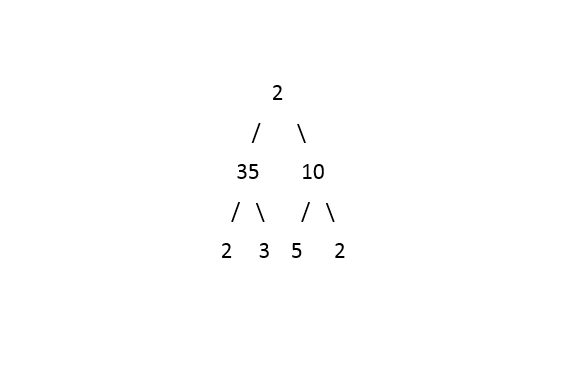
The Left View of the tree will be: 2 35 2
Problem approach
I solved this problem using recursion.


Here's your problem of the day 
Solving this problem will increase your chance to get selected in this company
Skill covered: Programming
How do you remove whitespace from the start of a string?
Choose another skill to practice
Similar interview experiences

SDE - 1
3 rounds | 7 problems
Interviewed by OYO
Selected 
6182 views

0 comments

0 upvotes
SDE - Intern
2 rounds | 3 problems
Interviewed by Amazon
Rejected
1566 views
0 comments
0 upvotes

SDE - 1
2 rounds | 5 problems
Interviewed by Meesho
Rejected
7246 views
0 comments
0 upvotes

SDE - 1
3 rounds | 9 problems
Interviewed by Salesforce
 Selected
 4552 views
0 comments
0 upvotes
Companies with similar interview experiences
SDE - Intern
3 rounds | 6 problems
Interviewed by Amazon

Rejected
16213 views
4 comments
0 upvotes
SDE - Intern
4 rounds | 7 problems
Interviewed by Microsoft
 Selected
 16224 views
1 comments
0 upvotes
SDE - Intern
2 rounds | 4 problems
Interviewed by Amazon
Selected 10541 views
2 comments
0 upvotes