





Microsoft interview experience Real time questions & tips from candidates to crack your interview

SDE - 1
Microsoft


5 rounds | 9 Coding
problems

 Selected
 Interview preparation journey

Preparation
Duration: 3 months
Topics: Data Structures, Algorithms, System Designs, Operating Systems, DBMS

Tip 1 : Be solid with the basics of Ds, Algo. Good to have end to end projects which are hosted on cloud.
Tip 2 : Its always good to be presentable and have good communications skills
Tip 3 : Be honest, clear in approach and always walkthrough your thought process to the interviewer
Application process
Where: Campus
Eligibility: Min 7.5 CGPA was required
Tip 1 : Mention your projects and experience at the top. Be clear on what was done, a brief on how it was done, language /tech stack involved. If possible try to host and make it accessible. You never know if you can present it with just one click.
Tip 2 : Choose a balance between, white spaces and text, it should be well indented, no grammatical errors.
Tip 3 : It takes less than 2 min to scan a resume. Don't mention things which are irrelevant.

Interview rounds
01
Round
Medium
Online Coding Interview
Duration45 minutes
Interview date22 Nov 2017
Coding problem3
It was an online round hosted on cocubes. It consisted of 3 coding questions only and the duration of the test was 45 mins.
The test link with a unique id and password was sent to the email 1 day prior to the test day. It consisted to platform specification, sample test etc.
On the day of test, we were given a time slot of 5pm - 11pm. We could attempt the test as per our comfort.
The instructions were pretty straightforward and we could attempt it from anywhere.
There were only 2 requirements. A webcam must be available. And a decent internet.
About the Platform.
In all of the problems base classes and code were disabled, we needed to implement only certain classes/ functions. Clipboard copy was blocked, tab switching was not allowed and rest the platform is very basic and simple.
1. Add two numbers represented by linked lists
Moderate
10m average time
80% success

0/80
Asked in companies


You have been given two singly Linked Lists, where each of them represents a positive number without any leading zeros.
Your task is to add these two numbers and print the summation in the form of a linked list.
Example:
If the first linked list is 1 -> 2 -> 3 -> 4 -> 5 -> NULL and the second linked list is 4 -> 5 -> NULL.

The two numbers represented by these two lists are 12345 and 45, respectively. So, adding these two numbers gives 12390.

So, the linked list representation of this number is 1 -> 2 -> 3 -> 9 -> 0 -> NULL.
Problem approach
The steps are:
1. Traverse the two linked lists from start to end
2. Add the two digits each from respective linked lists.
3. If one of the list has reached the end then take 0 as its digit.
4. Continue it until both the lists end.
5. If the sum of two digits is greater than 9 then set carry as and the current digit as sum % 10
2. Maximum Subarray Sum
Moderate
35m average time
81% success
0/80
Asked in companies


You are given an array 'arr' of length 'n', consisting of integers.
A subarray is a contiguous segment of an array. In other words, a subarray can be formed by removing 0 or more integers from the beginning and 0 or more integers from the end of an array.
Find the sum of the subarray (including empty subarray) having maximum sum among all subarrays.
The sum of an empty subarray is 0.
Example :
Input: 'arr' = [1, 2, 7, -4, 3, 2, -10, 9, 1]

Output: 11

Explanation: The subarray yielding the maximum sum is [1, 2, 7, -4, 3, 2].
3. Sum of leaf nodes at maximum level
Easy
15m average time
85% success
0/40
Asked in companies


You have been given a binary tree of integers. Your task is to calculate the sum of all the leaf nodes which are present at the deepest level of this binary tree. If there are no such nodes, print 0.
NOTE: The deepest level of a binary tree is the level which is present at the maximum depth from the root node.
Follow up:
Can you solve this problem in a single traversal of the binary tree?
Problem approach
Perform iterative level order traversal using queue and find the sum of the nodes at each level and if there are no children for every node at the current level mark this level as the maximum level. Sum of all the leaf nodes at maximum level will be the required answer.
02
Round
Hard
Group Discussion
Duration60 minutes
Interview date22 Nov 2017
Coding problem1
This round is known as the group fly round. After clearing the first round, we were called at the Microsoft Gurgaon office for the face to face interviews. Approximately, 60 students were there on the day I was called. I guess there were multiple days for multiple slots.
We all were divided into groups of 6-8 people and were called inside a round table room with 1 interviewer. This round consisted of 1 problem only to be discussed over with the interviewer. And the solutions to be written on pen paper.
The key here is to walk through the thought process and the steps with the interviewer. He will go around the table and will have discussion with each one of us and discuss about the pros, cons of the solutions.
It is advisable to ask as many questions as possible, to gather requirements and to be sure what are the expectations.
1. System Design
You need to design a global auditorium booking platform, which could be booked from anywhere in the world. It can host multiple shows at once as it has 2 stages with different seating capacity. The system should be intelligent enough to provide a recommended date/ time in case of overbooking/ date not available. There cannot be a queue of bookings pending. It should be either confirmed or declined with a next best date. Assume, you will be given the opening and closing information of the auditorium. (Take every Tuesday off for maintenance)
Problem approach
For this, as it can be related to any online seat booking platform (Book My Show, RedBus with similar use cases) I kept in mind the current user experience and basic features that are required. Please make sure to ask as many questions and be involved with the interviewer, walk him through what are you thinking, How it can achieved, why it is necessary. I drew Use Case Diagrams and Class Diagrams very neatly for clear understanding.
03
Round
Medium
Face to Face
Duration60 minutes
Interview date22 Nov 2017
Coding problem2
This was the first face to face round.
It was held just after the group fly. From my group fly slot, 2/7 were selected.
The interviewer made me comfortable, we started informal talks about college and hobbies.
It kicked off with some basic discussion of the previous round problems, he had some questions about the encryption and security related stuff from payment scenario.
Then there were some behavioral questions and lastly there were a couple of whitepaper coding questions.
1. N-Queens
Hard
55m average time
35% success
0/120
Asked in companies



You are given an integer 'N'. For a given 'N' x 'N' chessboard, find a way to place 'N' queens such that no queen can attack any other queen on the chessboard.
A queen can be killed when it lies in the same row, or same column, or the same diagonal of any of the other queens. You have to print all such configurations.
Problem approach
I explained him a working 4*4 chessboard problem and scaled it to general size (n*n).
2. Left view of binary tree
Moderate
30m average time
60% success
0/80
Asked in companies



You have been given a Binary Tree of 'n' nodes, where the nodes have integer values
Print the left view of the binary tree.
Example :
If the input tree is as depicted in the picture:
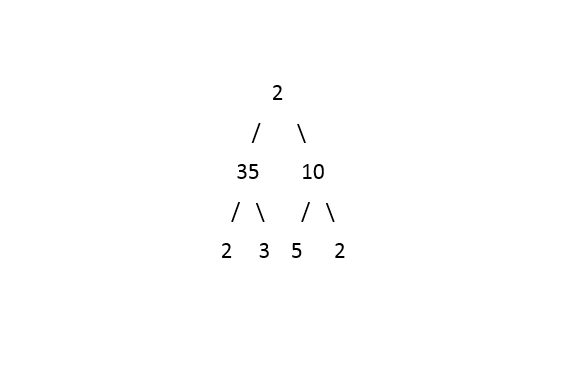
The Left View of the tree will be: 2 35 2
04
Round
Easy
Face to Face
Duration45 minutes
Interview date22 Nov 2017
Coding problem2
This was the second face to face. Almost 50% students were selected from the first face to face round.
This was very straightforward round, a hectic day and it was already late by now.
The interviewer started with formal introduction and gave me 2 very basic problems to code.
This code consists of writing the entire code from scratch on whitepaper, with unit tests that can cover almost all scenarios. Some sample test cases were given by the interviewer at the end, to validate and dry run my solution.
1. Cycle Detection in a Linked List
Moderate
15m average time
80% success
0/80
Asked in companies

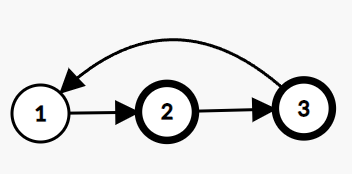
You are given a Singly Linked List of integers. Return true if it has a cycle, else return false.
A cycle occurs when a node's next points back to a previous node in the list.
Example:
In the given linked list, there is a cycle, hence we return true.
Problem approach
A very popular floyd cycle detection algorithm.
1. Started with basic Hash map algorithms
2. Optimised with the floyd cycle algorithm.
2. Maximum path sum between two leaves of a binary tree
Hard
50m average time
35% success
0/120
Asked in companies


You are given a non-empty binary tree where each node has a non-negative integer value. Return the maximum possible sum of path between any two leaves of the given tree.
The path is also inclusive of the leaf nodes and the maximum path sum may or may not go through the root of the given tree.
If there is only one leaf node in the tree, then return -1.
Problem approach
1) Maximum root to leaf path sum for the subtree rooted under current node.
2) The maximum path sum between leaves (desired output).
For every visited node X, we find the maximum root to leaf sum in left and right subtrees of X. We add the two values with X->data, and compare the sum with maximum path sum found so far.
05
Round
Easy
HR Round
Duration30 minutes
Interview date22 Nov 2017
Coding problem1
This was the final round.
It was very late in the evening, around 10pm.
The interviewer here was one of the senior manager in the org (M2).
This kicked off with very informal conversations and introductions.
The interviewer was very engaging.
1. Manager Discussion
Problem approach
Tip 1: The cross questioning can go intense some time, think before you speak.
Tip 2: Be open minded and answer whatever you are thinking, in these rounds I feel it is important to have opinion.
Tip 3: Context of questions can be switched, pay attention to the details. It is okay to ask questions in these round, like what are the projects currently the company is investing, which team you are mentoring. How all is the work environment etc.
Tip 4: Since everybody in the interview panel is from tech background, here too you can expect some technical questions. No coding in most of the cases but some discussions over the design can surely happen,


Here's your problem of the day 
Solving this problem will increase your chance to get selected in this company
Skill covered: Programming
What does dict.keys() return?
Choose another skill to practice
Similar interview experiences
SDE - 1
5 rounds | 15 problems
Interviewed by Microsoft
 Selected
4682 views

0 comments

0 upvotes
SDE - 1
5 rounds | 7 problems
Interviewed by Microsoft
 Selected
 3045 views
0 comments
0 upvotes
SDE - 1
1 rounds | 2 problems
Interviewed by Microsoft

Rejected
7681 views
0 comments
0 upvotes
SDE - 1
4 rounds | 7 problems
Interviewed by Microsoft
Selected 1492 views
0 comments
0 upvotes
Companies with similar interview experiences

SDE - 1
5 rounds | 12 problems
Interviewed by Amazon
 Selected
 117625 views
24 comments
0 upvotes
SDE - 1
3 rounds | 7 problems
Interviewed by Amazon
 Selected
 36160 views
7 comments
0 upvotes
SDE - 1
3 rounds | 11 problems
Interviewed by Amazon

Rejected
22341 views
4 comments
0 upvotes