





Microsoft interview experience Real time questions & tips from candidates to crack your interview

SDE - 1
Microsoft


5 rounds | 12 Coding
problems
 Selected
 Interview preparation journey

Preparation
Duration: 2.5 months
Topics: DSA(DP, Backtracking, strings), DBMS, OOPS, LLD-HLD, Projects

Tip 1 : There was very less time gap between interview call and interviews, so be prepared.
Tip 2 : Try to solve problems without applying topic tags, this will help us to solve new problems.
Tip 3 : Try developing projects using various design patterns and SOLID principles.
Application process
Where: Referral
Eligibility: Need two development projects on Resume and 1.5+ YOE
Tip 1 : Need two development projects
Tip 2 : Product based companies

Interview rounds
01
Round
Medium
Online Coding Test
Duration110 minutes
Interview date10 Feb 2022
Coding problem2
It happened in morning
1. 0 1 Knapsack
Easy
15m average time
85% success

0/40
Asked in companies



A thief is robbing a store and can carry a maximal weight of W into his knapsack. There are N items and the ith item weighs wi and is of value vi. Considering the constraints of the maximum weight that a knapsack can carry, you have to find and return the maximum value that a thief can generate by stealing items.
2. Lexicographically smallest equivalent string
Moderate
25m average time
75% success
0/80
Asked in companies

Ninja has two strings ‘s’ and ‘t’ of same length, he knows that both strings are equivalent strings which means s[i], t[i] will follow all rules of any equivalence relation that are:
Ninja wants your help to find the lexicographically smallest equivalent string of a given string ‘str’.
Note:
1. String ‘s’, ‘t’ and ‘str’ consist of only lowercase English letters from ‘a’ – ‘z’.
2. String ‘s’ and ‘t’ are of same length.
For example:
Let s = “abc” , t = “xyz” and str = “xbc” then all strings that we can generate are “abc”, “abz”, “ayc”,”ayz”, “xbc”, “xbz”, “xyc”, “xyz” and smallest of all these is “abc”.
02
Round
Easy
Video Call
Duration50 minutes
Interview date11 Feb 2022
Coding problem2
The interview started with self introduction followed by work and project which I'm doing in current company. Tech stack which I use in current project has been asked.
Two Coding questions, we have to write a production ready code which cover all the edge cases. This was also conducted on Codility.
1. Covid Vaccination
Moderate
0/80
Asked in companies



We are suffering from the Second wave of Covid-19. The Government is trying to increase its vaccination drives. Ninja wants to help the Government to plan an effective method to help increase vaccination following safety measures. Time is running out. Can you help the nation?
You are given two positive integers: ‘n,’ ‘maxVaccines’ denoting the number of days for which this vaccination drive will go on and the total number of vaccines available for the drive, respectively. You have to find the number of vaccines administered each day. You are also given a number ‘dayNumber,’ and we are interested to know the maximum number of vaccines that can be administered on ‘dayNumber’ th day.
The rules of the vaccination drive :
1. There should be a positive number of vaccines administered each day during the vaccination drive.
2. The absolute difference between the number of vaccines in two consecutive days should not exceed 1.
3. The sum of all the elements of the vaccines array does not exceed maxVaccines, that is, you cannot administer more vaccines than what is provided to you.
4. Vaccines administered on ‘dayNumber’ th day should be maximized.
Problem approach
Solved the question using various approaches in the decreasing order of time complexities and finally coded the optimized version using binary search. (Easy-Medium)
2. Java Questions
A story based question which was asked in terms of threads and tasks.
Problem approach
Never solved this type of question earlier hence took some time to analyze and come up with a solution. Interviewer was helpful, answered all of my doubts. Finally solved the question using BFS + degrees concept. Interviewer asked me to think about edge cases. Missed one of the edge cases, got to know regarding it from the Interviewer, made code modifications to handle it. (Med-Hard)
03
Round
Medium
Video Call
Duration60 minutes
Interview date11 Feb 2022
Coding problem4
Taken by Software Engineer with 5+ years of experience.
1. Puzzle Questions
Detailed discussion about current work and tech stack.
2. Add Two Numbers As Linked Lists
Moderate
20m average time
80% success
0/80
Asked in companies



You are given two non-negative numbers 'num1' and 'num2' represented in the form of linked lists.
The digits in the linked lists are stored in reverse order, i.e. starting from least significant digit (LSD) to the most significant digit (MSD), and each of their nodes contains a single digit.
Calculate the sum of the two numbers and return the head of the sum list.
Example :
Input:
'num1' : 1 -> 2 -> 3 -> NULL
'num2' : 4 -> 5 -> 6 -> NULL

Output: 5 -> 7 -> 9 -> NULL

Explanation: 'num1' represents the number 321 and 'num2' represents 654. Their sum is 975.
3. Word Search - l
Moderate
30m average time
60% success
0/80
Asked in companies


You are given a 2D board('N' rows and 'M' columns) of characters and a string 'word'.
Your task is to return true if the given word exists in the grid, else return false. The word can be constructed from letters of sequentially adjacent cells, where adjacent cells are horizontally or vertically neighboring.
Note:
The same letter cell should not be used more than once.
For Example:
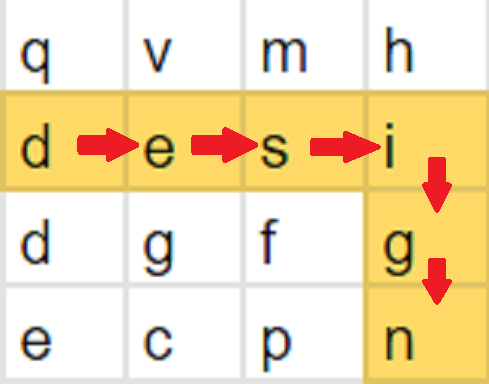
For a given word “design” and the given 2D board
[[q’, ‘v’, ‘m’, ‘h’],
 [‘d’, ‘e’, ‘s’, ‘i’],
 [‘d’, ‘g’, ‘f’, ‘g’],
 [‘e’, ‘c’, ‘p’, ‘n’]]

The word design can be formed by sequentially adjacent cells as shown by the highlighted color in the 2nd row and last column.
Problem approach
Trie based approach. Only asked for approach, did not ask to code
4. Operating System Questions
Discussion on Multi-Threading, Mutual Exclusion, Design Patterns in Java, Inheritance vs Interfaces, Synchronization, Producer-Consumer problem
04
Round
Medium
Video Call
Duration80 minutes
Interview date12 Feb 2022
Coding problem2
1. System Design
This round also started off with introduction followed by prior experience. Then Interviewer asked me an LLD question where I needed to design and code one of the Microsoft Product's features. Used SOLID principles and factory pattern in designing which impressed the interviewer. (Thanks to my current company's project where I learnt and used SOLID principles + various design patterns in production). Then I wrote code for my design. Interviewer told me that it is correct solution but can still be improvised with additional design patterns. Then I was asked two programming questions.
2. Break The Integer
Moderate
30m average time
70% success
0/80
Asked in companies


Ninja is given an integer ‘N’ . One day Ninja decides to break the integer into K positive parts (K>=2) such that the sum of all parts is equal to ‘N’.Ninja wants to maximize the product of all the ‘K’ parts.
Help Ninja in helping what maximum possible product it can obtain by breaking the integer ‘N’ into ‘K’ positive parts where ‘K’ can be any integer greater than 2.
05
Round
Easy
HR Round
Duration40 minutes
Interview date14 Feb 2022
Coding problem2
This was the last round. Interviewer was one of the senior most persons with 15+ years of experience in Microsoft. Again I gave my intro, clearly explained the work which I currenlty do with architecture diagrams. The result of previous round was very good, hence didn't get any technical questions further. Was asked generic questions like reason to join Microsoft, how my life went till now etc.
1. Basic HR Questions
Why do you want to join Microsoft?
How was your previous work experience?
2. Valid Parentheses
Easy
10m average time
80% success
0/40
Asked in companies

You're given a string 'S' consisting of "{", "}", "(", ")", "[" and "]" .
Return true if the given string 'S' is balanced, else return false.
For example:
'S' = "{}()".

There is always an opening brace before a closing brace i.e. '{' before '}', '(' before ').
So the 'S' is Balanced.


Here's your problem of the day 
Solving this problem will increase your chance to get selected in this company
Skill covered: Programming
How do you remove whitespace from the start of a string?
Choose another skill to practice
Similar interview experiences
SDE - 1
5 rounds | 15 problems
Interviewed by Microsoft
 Selected
4035 views

0 comments

0 upvotes
SDE - 1
5 rounds | 7 problems
Interviewed by Microsoft
 Selected
 2661 views
0 comments
0 upvotes
SDE - 1
1 rounds | 2 problems
Interviewed by Microsoft

Rejected
7425 views
0 comments
0 upvotes
SDE - 1
4 rounds | 7 problems
Interviewed by Microsoft
Selected 1272 views
0 comments
0 upvotes
Companies with similar interview experiences
SDE - 1
5 rounds | 12 problems
Interviewed by Amazon
 Selected
 115097 views
24 comments
0 upvotes
SDE - 1
3 rounds | 7 problems
Interviewed by Amazon
 Selected
 35147 views
7 comments
0 upvotes
SDE - 1
3 rounds | 11 problems
Interviewed by Amazon

Rejected
21829 views
4 comments
0 upvotes