





Microsoft interview experience Real time questions & tips from candidates to crack your interview

SWE Intern
Microsoft


4 rounds | 5 Coding
problems

 Selected
 Interview preparation journey

Preparation
Duration: 6 Months
Topics: Data structures, algorithms, OOPS, recursion, trees, arrays

Tip 1 : Practise DSA by writing on paper
Tip 2 : Ask questions and think loud during interviews
Application process
Where: Campus
Eligibility: 7+ CGPA, No backlogs
Tip 1 : make sure the resume is not more than 1 page long
Tip 2 : provide links to projects in resume

Interview rounds
01
Round
Easy
Online Coding Interview
Duration45 Minutes
Interview date8 Jul 2022
Coding problem2
two questions, no proctoring, the questions were very easy
1. Ninja and his Birthday Treat
Easy
30m average time
60% success

0/40
Asked in company
Ninja, on his birthday, decided to give a treat to 'N' children in his neighbourhood. Ninja took every child to a nearby candy shop and bought them candies. The shop contains ‘M’ types of candies with an unlimited supply of each candy. The cost of each candy is between 1 and M, inclusive and distinct.
The shopkeeper has marked every candy with a number between 1 and M, inclusive. To make this process fascinating, Ninja found a way. He asked every child three integers, ‘L’, ‘R’, and ‘X’. Then he bought exactly ‘X’ pieces of each candy from [L to R] , i.e., “L, L+1, L+2,..., R-1, R”.
Your task is to find the lexicographically smallest array “A” of ‘M’ integers where each element represents the cost of the ith candy, such that the total cost spent by Ninja is minimum.
Note:
The cost array is a permutation of the first M natural numbers.
The shop has unlimited supplies of candies.
In case of multiple permutations, print one which is lexicographically minimum.
For example:
Let’s say ‘N’ = 3 , ‘M’ = 5
The integers told by children are { {2 , 4 , 1} ,{1 , 3 , 2} , {3, 3 , 5} }

The optimal permutation will  be {3 2 1 4 5}
Costs paid by Ninja are 7, 12, and 5, respectively.
The total cost would be 7 + 12 + 5 = 24
2. Pair Sum
Easy
15m average time
90% success
0/40
Asked in companies



You are given an integer array 'ARR' of size 'N' and an integer 'S'. Your task is to return the list of all pairs of elements such that each sum of elements of each pair equals 'S'.
Note:
Each pair should be sorted i.e the first value should be less than or equals to the second value.

Return the list of pairs sorted in non-decreasing order of their first value. In case if two pairs have the same first value, the pair with a smaller second value should come first.
02
Round
Easy
Video Call
Duration30 minutes
Interview date13 Jul 2022
Coding problem1
Technical round focused on DSA
1. Minimum Boats To Cross River
Easy
15m average time
85% success
0/40
Asked in companies


Ninja and his friends are on a trip. They have come across a river and want to cross the river with the help of boats. There are a total of 'N' people on the trip including Ninja himself. The weight of each person is given in an array 'ARR'. One boat can accommodate at most two persons only if the sum of their weight does not exceed 'L', i.e., the maximum weight capacity of the boat, otherwise, the boat will accommodate only one person. Given the weight of each person and the maximum weight capacity 'L', your task is to find the minimum number of boats required to ensure that everyone crosses the river.
03
Round
Medium
Video Call
Duration60 Minutes
Interview date13 Jul 2022
Coding problem1
2nd Technical round based on DSA
1. Longest Consecutive Sequence
Moderate
40m average time
70% success
0/80
Asked in companies



You are given an unsorted array/list 'ARR' of 'N' integers. Your task is to return the length of the longest consecutive sequence.
The consecutive sequence is in the form ['NUM', 'NUM' + 1, 'NUM' + 2, ..., 'NUM' + L] where 'NUM' is the starting integer of the sequence and 'L' + 1 is the length of the sequence.
Note:
If there are any duplicates in the given array we will count only one of them in the consecutive sequence.
For example-
For the given 'ARR' [9,5,4,9,10,10,6].

Output = 3
The longest consecutive sequence is [4,5,6].
Follow Up:
Can you solve this in O(N) time and O(N) space complexity?
04
Round
Medium
Video Call
Duration30 Minutes
Interview date13 Jul 2022
Coding problem1
AA round with a senior employee
1. Normal BST To Balanced BST
Moderate
15m average time
85% success
0/80
Asked in companies

You have been given a binary search tree of integers with ‘N’ nodes. Your task is to convert it into a balanced BST with the minimum height possible.
A binary search tree (BST) is a binary tree data structure that has the following properties.
• The left subtree of a node contains only nodes with data less than the node’s data.
• The right subtree of a node contains only nodes with data greater than the node’s data.
• Both the left and right subtrees must also be binary search trees.
A Balanced BST is defined as a BST, in which the height of two subtrees of every node differs no more than 1.
For Example:
For the given BST:
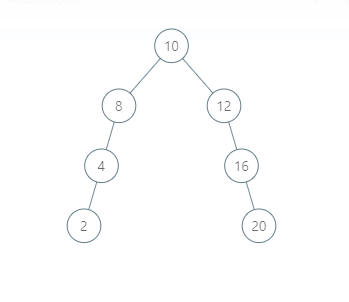
The modified BST will be:
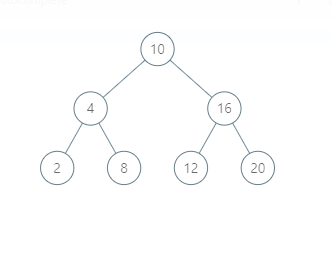


Here's your problem of the day 
Solving this problem will increase your chance to get selected in this company
Skill covered: Programming
How do you remove whitespace from the start of a string?
Choose another skill to practice
Similar interview experiences
SWE Intern
4 rounds | 6 problems
Interviewed by Microsoft
 Selected
2319 views

0 comments

0 upvotes
SWE Intern
5 rounds | 17 problems
Interviewed by Microsoft
 Selected
 1064 views
0 comments
0 upvotes
SWE Intern
3 rounds | 5 problems
Interviewed by Microsoft
Selected 781 views
0 comments
0 upvotes
SDE - 1
4 rounds | 7 problems
Interviewed by Microsoft
Selected 1272 views
0 comments
0 upvotes
Companies with similar interview experiences

SWE Intern
4 rounds | 6 problems
Interviewed by Dunzo
Selected 870 views
0 comments
0 upvotes

SWE Intern
4 rounds | 8 problems
Interviewed by Uber
Selected 0 views
0 comments
0 upvotes