





Microsoft interview experience Real time questions & tips from candidates to crack your interview

Software Engineer
Microsoft


5 rounds | 8 Coding
problems

 Selected
 Interview preparation journey

Preparation
Duration: 3 months
Topics: Data Structures, OOPs, System Design, Algorithms, DBMS, OS

Tip 1 : It's not about how many questions you practice, it's about how many types of questions you can solve. Example do the top questions for Amazon/Microsoft which you can find on leetcode.
Tip 2 : Try to relate everything you do to real life scenarios as software engineering is implementing those real life problems as a software/solution
Tip 3 : Have deep understanding of Computer Engineering fundamentals like OS and DBMS. This will help you in any technical interviews
Application process
Where: Referral
Eligibility: No criteria
Tip 1 : Express only the relevant information to your job in the resume
Tip 2 : The experiences/projects that you write should be explanatory without writing too much of it.

Interview rounds
01
Round
Easy
Online Coding Interview
Duration70 mins
Interview date14 Dec 2021
Coding problem2
There were 3 questions. Difficulty level was easy to medium.
You will get 2-3 days to complete the assessment which can be given at any time according to you.
1. Rock Paper Scissor
Easy
15m average time
70% success

0/40
Asked in companies

Nezuko and Zenitsu were playing Rock Paper Scissors which is a very popular game where each player can do three moves which are: ‘Rock’, ‘Paper’ and ‘Scissor’.
The winner of a game is decided in the following way:
‘Rock’ beats ‘Scissor’.
‘Scissor’ beats ‘Paper’.
‘Paper’ beats ‘Rock’.
If both players make the same move like ‘Rock’ is made by both person then that result in a draw and whose point will not be rewarded to anyone.
Now you have been provided with two strings representing the moves that they will make for ‘NEZUKO’ represents Nezuko’s string and ‘ZENITSU’ represents Zenitsu’s moves.
In the string ‘R’ represents ‘ROCK’ and ‘P’ represents ‘PAPER’ and ‘S’ represents ‘SCISSORS’.
There is a total of ‘K’ games that will be played and the player will play the move by traversing the string provided. If a player reaches the end of the string then his next moves will be played from the start of the string.
You have to tell the number of games won by Nezuko and the number of games won by Zenitsu respectively in order.
Example:
Input: ‘K’ = 3, ‘NEZUKO’ = ‘RP’, ‘ZENITSU’ = ‘R’
Output: 1 0
Game 1: ‘NEZUKO’ = ‘R’, ‘ZENITSU’ =  ‘R’, Result = ‘Draw’.
Game 2: ‘NEZUKO’ = ‘P’, ‘ZENITSU’ = ‘R’, Result = ‘Nezuko won the game’.
Game 3: ‘NEZUKO’ = ‘R’, ‘ZENITSU’ =  ‘R’, Result = ‘Draw’.
Problem approach
Approach: Let length of string a be n and length of string b be m. The observation here is that the games would repeat after n * m moves. So, we can simulate the process for n * m games and then count the number of times it gets repeated. For the remaining games, we can again simulate the process since it would be now smaller than n * m. For example, in the first example above, n = 2 and m = 1. So, the games will repeat after every n * m = 2 * 1 = 2 moves i.e. (Player2, Draw), (Player2, Draw), ….., (Player2, Draw).
2. Construct The String
Moderate
25m average time
70% success
0/80
Asked in companies


Your friend gave you a challenge. He gave you a string ‘S’ of length ‘N’ consisting only of lowercase English alphabets. He asked you to construct the given string using the minimum number of operations. In each operation, you can do one of the steps.
1) Add a lowercase English alphabet at the end of the string.
2) Create a copy of the string and concatenate both of the strings.
Initially, you have an empty string. So if you perform the second operation, you will get an empty string.
For example: If the current string is “abc”, then after performing the second operation, the current string will be “abcabc”.
Problem approach
Approach: If the length of the string is less than 26 then print -1. The Task is to make a sub-string of length 26 that has all the lowercase characters. Thus, the simplest way is to iterate through all sub-strings of length 26 then for each sub-string count the number of occurrences of each alphabet, ignoring the question marks. After that, if there exists a character that occurs twice or more then this sub-string cannot contain all letters of the alphabet, and we process the next sub-string. Otherwise, we can fill in the question marks with the letters that have not appeared in the sub-string and obtain a sub-string of length 26 which contains all letters of the alphabet.
02
Round
Medium
Video Call
Duration60 mins
Interview date23 Dec 2021
Coding problem2
Two questions from LinkedList and Arrays were there in this round. Difficulty level - Medium
1. Delete Kth node From End
Moderate
15m average time
95% success
0/80
Asked in companies



You have been given a singly Linked List of 'N' nodes with integer data and an integer 'K'.
Your task is to remove the 'K'th node from the end of the given Linked List and return the head of the modified linked list.
Example:
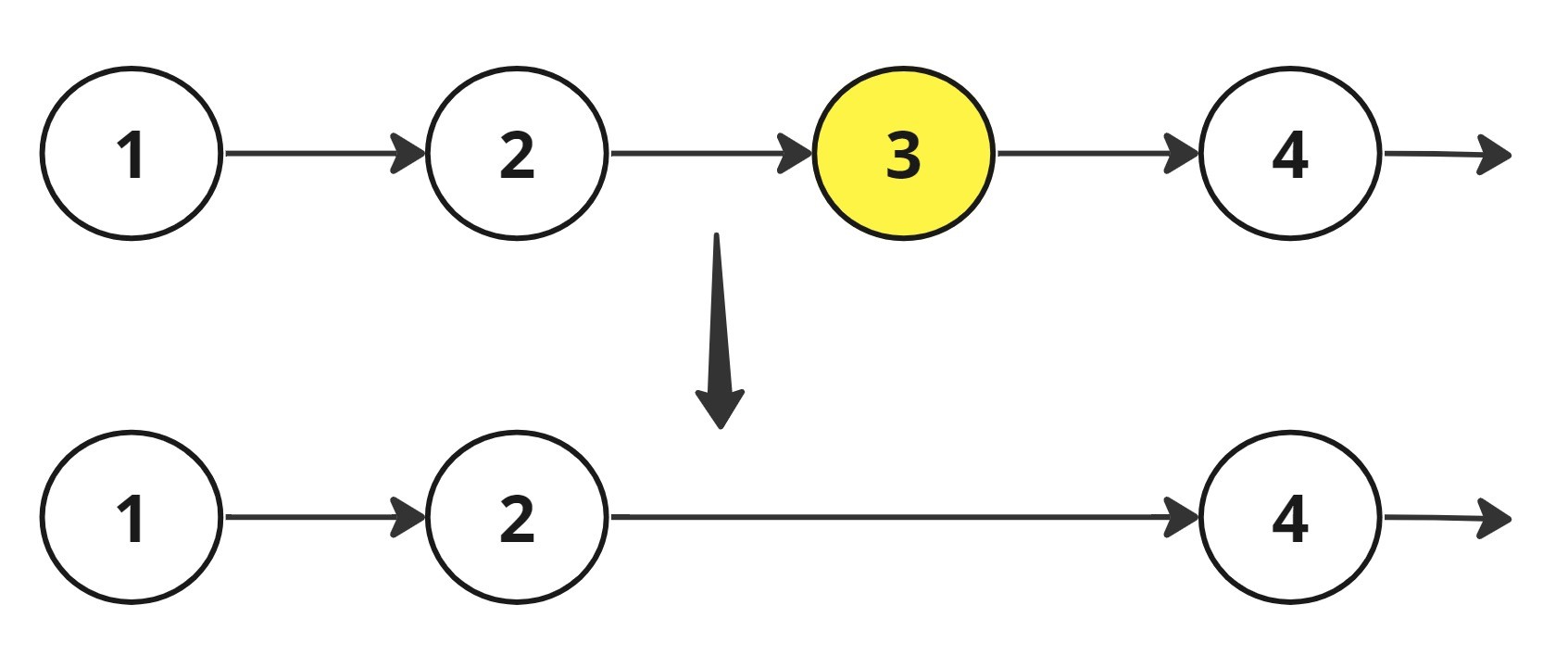
Input : 1 -> 2 -> 3 -> 4 -> 'NULL'  and  'K' = 2
Output: 1 -> 2 -> 4 -> 'NULL'
Explanation:
After removing the second node from the end, the linked list become 1 -> 2 -> 4 -> 'NULL'.
Problem approach
https://leetcode.com/problems/remove-nth-node-from-end-of-list/
2. Trapping Rain Water
Moderate
15m average time
80% success
0/80
Asked in companies



You have been given a long type array/list 'arr’ of size 'n’.
It represents an elevation map wherein 'arr[i]’ denotes the elevation of the 'ith' bar.
Print the total amount of rainwater that can be trapped in these elevations.
Note :
The width of each bar is the same and is equal to 1.
Example:
Input: ‘n’ = 6, ‘arr’ = [3, 0, 0, 2, 0, 4].

Output: 10

Explanation: Refer to the image for better comprehension:

Note :
You don't need to print anything. It has already been taken care of. Just implement the given function.
Problem approach
https://www.geeksforgeeks.org/trapping-rain-water/
03
Round
Medium
Video Call
Duration60 mins
Interview date23 Dec 2021
Coding problem2
Two DS questions again in this round. One from Trees and one from tries. Difficulty level - medium
1. Bottom View Of Binary Tree
Moderate
10m average time
90% success
0/80
Asked in companies

You are given a 'Binary Tree'.
Return the bottom view of the binary tree.
Note :
1. A node will be in the bottom-view if it is the bottom-most node at its horizontal distance from the root.

2. The horizontal distance of the root from itself is 0. The horizontal distance of the right child of the root node is 1 and the horizontal distance of the left child of the root node is -1.

3. The horizontal distance of node 'n' from root = horizontal distance of its parent from root + 1, if node 'n' is the right child of its parent.

4. The horizontal distance of node 'n' from root = horizontal distance of its parent from the root - 1, if node 'n' is the left child of its parent.

5. If more than one node is at the same horizontal distance and is the bottom-most node for that horizontal distance, including the one which is more towards the right.
Example:
Input: Consider the given Binary Tree:
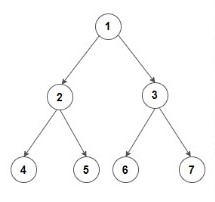
Output: 4 2 6 3 7

Explanation:
Below is the bottom view of the binary tree.

1 is the root node, so its horizontal distance = 0.
Since 2 lies to the left of 0, its horizontal distance = 0-1= -1
3 lies to the right of 0, its horizontal distance = 0+1 = 1
Similarly, horizontal distance of 4 = Horizontal distance of 2 - 1= -1-1=-2
Horizontal distance of 5 = Horizontal distance of 2 + 1=  -1+1 = 0
Horizontal distance of 6 = 1-1 =0
Horizontal distance of 7 = 1+1 = 2

The bottom-most node at a horizontal distance of -2 is 4.
The bottom-most node at a horizontal distance of -1 is 2.
The bottom-most node at a horizontal distance of 0 is 5 and 6. However, 6 is more towards the right, so 6 is included.
The bottom-most node at a horizontal distance of 1 is 3.
The bottom-most node at a horizontal distance of 2 is 7.

Hence, the bottom view would be 4 2 6 3 7
2. Word Ladder
Hard
10m average time
90% success
0/120
Asked in companies



You are given two strings BEGIN and END and an array of strings DICT. Your task is to find the length of the shortest transformation sequence from BEGIN to END such that in every transformation you can change exactly one alphabet and the word formed after each transformation must exist in DICT.
Note:
1. If there is no possible path to change BEGIN to END then just return -1.
2. All the words have the same length and contain only lowercase english alphabets.
3. The beginning word i.e. BEGIN will always be different from the end word i.e. END (BEGIN != END).
04
Round
Hard
Video Call
Duration60 mins
Interview date23 Dec 2021
Coding problem1
This round was a mix of Data Structures, System Design and problem solving. The interview started with one DS question and then I was asked a question to design a system which used the logic solved by me in the DS question. I was drilled down with the basics and in depth working of Data Structures and also some of the theories from Software Development (MVC model, etc.) and also I was asked to design the system for the same so I formulated an approach using JAVA, RDBMS, kafka as my main components in the solution.
1. Rotting Oranges
Moderate
20m average time
78% success
0/80
Asked in companies


You have been given a grid containing some oranges. Each cell of this grid has one of the three integers values:
Every second, any fresh orange that is adjacent(4-directionally) to a rotten orange becomes rotten.
Your task is to find out the minimum time after which no cell has a fresh orange. If it's impossible to rot all the fresh oranges then print -1.
Note:
1. The grid has 0-based indexing.
2. A rotten orange can affect the adjacent oranges 4 directionally i.e. Up, Down, Left, Right.
05
Round
Medium
Video Call
Duration45 mins
Interview date29 Dec 2021
Coding problem1
This round was taken by the Manager and there was a discussion about few of my coding problems I solved in the previous rounds, a little bit of system design, my work in the current company and a few behavioral questions.
1. System Design question
Design Netflix.


Here's your problem of the day 
Solving this problem will increase your chance to get selected in this company
Skill covered: Programming
How do you remove whitespace from the start of a string?
Choose another skill to practice
Similar interview experiences
Software Engineer
5 rounds | 5 problems
Interviewed by Microsoft
 Selected
10148 views

1 comments

0 upvotes
Software Engineer
3 rounds | 2 problems
Interviewed by Microsoft

Rejected
2134 views
0 comments
0 upvotes
Software Engineer
4 rounds | 6 problems
Interviewed by Microsoft
Selected 1693 views
0 comments
0 upvotes
Software Engineer
3 rounds | 5 problems
Interviewed by Microsoft
 Selected
 1116 views
0 comments
0 upvotes
Companies with similar interview experiences

Software Engineer
3 rounds | 7 problems
Interviewed by Optum
 Selected
 7976 views
1 comments
0 upvotes
Software Engineer
2 rounds | 4 problems
Interviewed by Amazon
Selected 4448 views
1 comments
0 upvotes
Software Engineer
3 rounds | 5 problems
Interviewed by Amazon
Selected 3674 views
0 comments
0 upvotes