





Mphasis pvt limited interview experience Real time questions & tips from candidates to crack your interview
SDE - 1
Mphasis pvt limited


3 rounds | 5 Coding
problems

 Selected
 Interview preparation journey

Preparation
Duration: 3 months
Topics: Data Structures, Pointers, OOPS, System Design, Algorithms, Dynamic Programming

Tip 1 : Don’t create panic in any case in the interview , as even if you are not selected you will learn a lot from your interview experience and perform well in the future.
Tip 2 : Also I would recommend you Coding Ninjas as according to me it is a good platform to learn basic coding concepts and to practice coding.
Application process
Where: Campus
Eligibility: No criteria
Tip 1 : Write whatever you are sure about and have actually done that. CGPA plays a good role but not a complete role as it is just eligibility criteria for some companies.
Tip 2 : Have at least 1 or 2 good projects from which you know everything involved in the project.

Interview rounds
01
Round
Medium
Video Call
Duration50 Minutes
Interview date7 Sep 2022
Coding problem2
1. Subset Sum Equal To K
Moderate
30m average time
65% success

0/80
Asked in companies



You are given an array/list ‘ARR’ of ‘N’ positive integers and an integer ‘K’. Your task is to check if there exists a subset in ‘ARR’ with a sum equal to ‘K’.
Note: Return true if there exists a subset with sum equal to ‘K’. Otherwise, return false.
For Example :
If ‘ARR’ is {1,2,3,4} and ‘K’ = 4, then there exists 2 subsets with sum = 4. These are {1,3} and {4}. Hence, return true.
Problem approach
Approach (Using DP) :
1) Create a boolean 2D array/list ‘DP’ of size (‘N+1’)*(‘K+1’) i.e. ‘DP[N+1][K+1]’.
2) If ‘K’ is equal to 0, then the answer should be ‘true’. Hence, run a loop from 0 to ‘N’ (say iterator = ‘i’):
‘DP[i][0]’ = true.
3) If ‘K’ is not zero but ‘ARR’ is empty then the answer should be ‘false’. Hence, run a loop from 1 to ‘K’ (say iterator = ‘i’):
‘DP[0][i]’ = false.
4) To fill the ‘DP’ table, run a loop from 1 to ‘N’ (say iterator = ‘i’):
4.1) Run a loop from 1 to ‘K’ (say iterator = ‘j’):
‘DP[i][j]’ = ‘DP[i-1][j]’.
4.2) If ‘j’ is greater than equal to ‘ARR[i-1]’:
‘DP[i][j]’ = ‘DP[i][j]’ OR ‘DP[i-1][j - ARR[i-1]]’.
5) Finally, return ‘DP[N][K]’.
TC : O(N*K), where N = size of the array and K = required sum
SC : O(N*K)
2. Overlapping Intervals
Easy
24m average time
0/40
Asked in companies


You have been given the start and end times of 'N' intervals. Write a function to check if any two intervals overlap with each other.
Note :
If an interval ends at time T and another interval starts at the same time, they are not considered overlapping intervals.
Problem approach
Approach (Using Sorting) :
1) Sort the list of intervals first on the basis of their start time and then iterate through the array.
2) If the start time of an interval is less than the end of the previous interval, then there is an overlap and we can return true.
3) If we iterate through the entire array without finding an overlap, we can return false.
TC : O(N * logN), where N = total number of intervals.
SC : O(N)
02
Round
Medium
Face to Face
Duration50 minutes
Interview date3 Nov 2022
Coding problem2
1. Reverse Stack Using Recursion
Easy
21m average time
80% success
0/40
Asked in companies



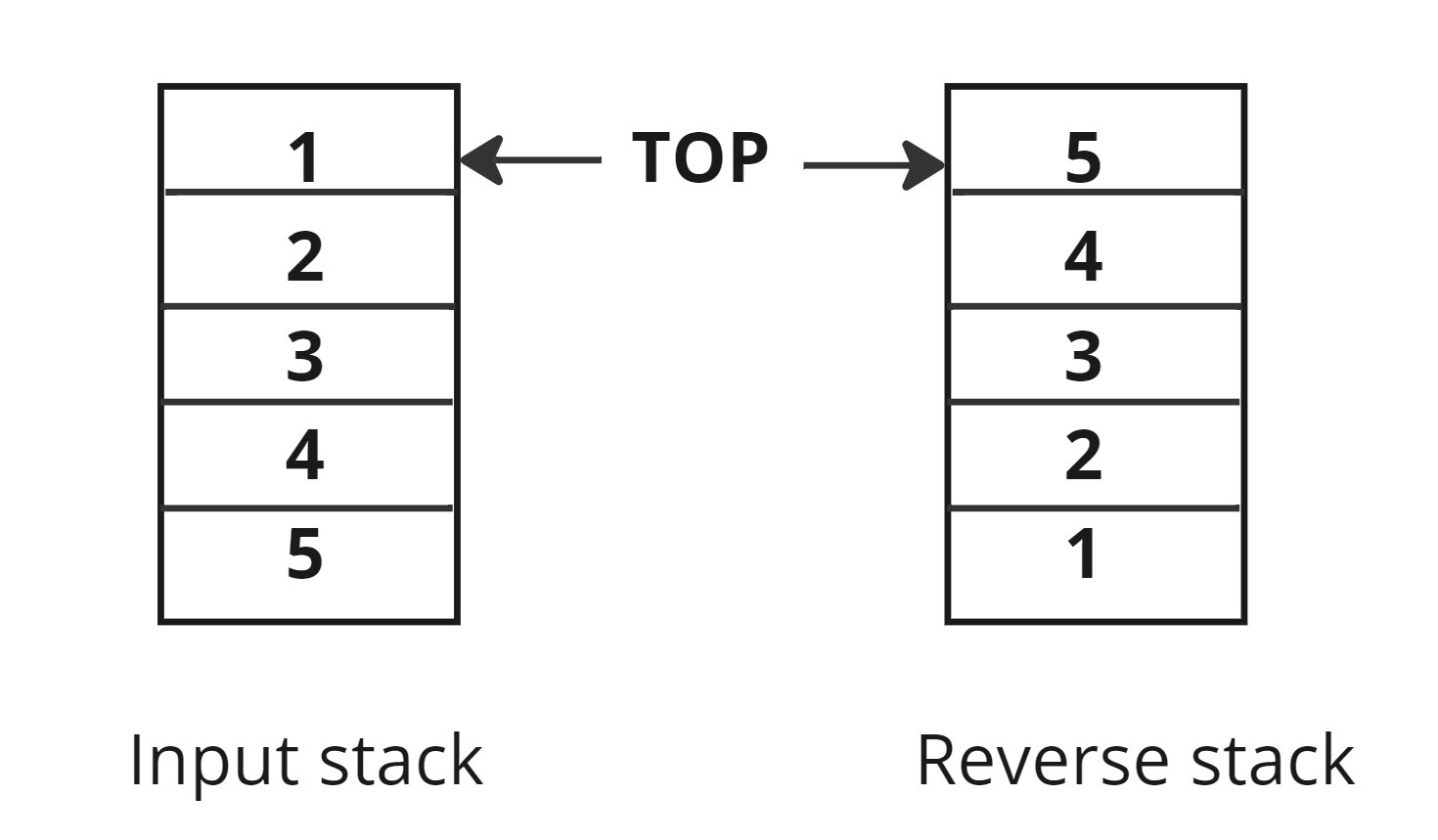
Reverse a given stack of 'N' integers using recursion. You are required to make changes in the input parameter itself.
Note: You are not allowed to use any extra space other than the internal stack space used due to recursion.
Example:
Input: [1,2,3,4,5]
Output: [5,4,3,2,1]
2. Leftmost & Rightmost Nodes of Binary Tree
Easy
20m average time
80% success
0/40
Asked in companies


Given a Binary Tree of 'N' number of total nodes, return the sequence of values of the leftmost and rightmost node at each level.
For example:
For the given binary tree:
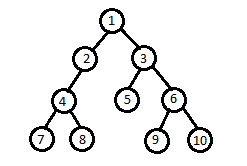
Output: 1 2 3 4 6 7 10

Explanation: The leftmost and rightmost node respectively of each level are
Level 0: 1(only one node is present at 0th level)
Level 1: 2 3
Level 2: 4 6
Level 3: 7 10
Problem approach
s1- I used Level order approach to solve this question
s2- and the interviewer was quite satisfied with my approach and he was happy with my response.
03
Round
Easy
Face to Face
Duration30 Minutes
Interview date5 Nov 2022
Coding problem1
1. Subarrays With Zero Sum
Easy
0/40
Asked in companies

You are given ‘N’ integers in the form of an array ‘ARR’. Count the number of subarrays having their sum as 0.
For example :
Let ‘ARR’ be: [1, 4, -5]
The subarray [1, 4, -5] has a sum equal to 0. So the count is 1.
Problem approach
Step 1: discuss naive approach
Step 2: optimise the approach
Step 3: write code
Step 4: discuss corner cases


Here's your problem of the day 
Solving this problem will increase your chance to get selected in this company
Skill covered: Programming
How do you remove whitespace from the start of a string?
Choose another skill to practice
Similar interview experiences
SDE - 1
3 rounds | 5 problems
Interviewed by Mphasis pvt limited
 Selected
1872 views

0 comments

0 upvotes
SDE - 1
4 rounds | 5 problems
Interviewed by Mphasis pvt limited
 Selected
 1249 views
0 comments
0 upvotes
SDE - 1
3 rounds | 6 problems
Interviewed by Mphasis pvt limited
 Selected
 1430 views
0 comments
0 upvotes
SDE - 1
3 rounds | 5 problems
Interviewed by Mphasis pvt limited
 Selected
 909 views
0 comments
0 upvotes
Companies with similar interview experiences
SDE - 1
5 rounds | 12 problems
Interviewed by Amazon
 Selected
 115097 views
24 comments
0 upvotes
SDE - 1
4 rounds | 5 problems
Interviewed by Microsoft
 Selected
 58238 views
5 comments
0 upvotes
SDE - 1
3 rounds | 7 problems
Interviewed by Amazon
 Selected
 35147 views
7 comments
0 upvotes