





Nagarro Software interview experience Real time questions & tips from candidates to crack your interview

SDE - 1
Nagarro Software


4 rounds | 7 Coding
problems
 Selected
 Interview preparation journey

Preparation
Duration: 1 Month
Topics: Data Structures and Algorithm, Operating Systems, Machine Learning, DBMS, Networking

Tip 1 : Practice DSA as much as you can with Implementation also.
Tip 2 : Try to make Projects related to real-world problems.
Application process
Where: Campus
Eligibility: 7 CGPA
Tip 1 : Keep it Simplified and Precise as 1st Impression is the Last Impression
Tip 2 : Try to highlight things related to the Job description

Interview rounds
01
Round
Medium
Online Coding Interview
Duration210 Minutes
Interview date28 Jan 2022
Coding problem4
It was a 1-hour long Aptitude test. They asked basic aptitude questions covering easy, medium, and hard all types of difficulty lvl questions. If you had a strong grasp of Maths in your school days, you can clear this round very easily.
In the Coding round, we were given 5 coding problems consisting of DP also.
The whole process was online with the condition of the video and the mic should be turned on at all times.
1. NINJA: The Exam Instructor
Moderate
15m average time
85% success

0/80
Asked in companies


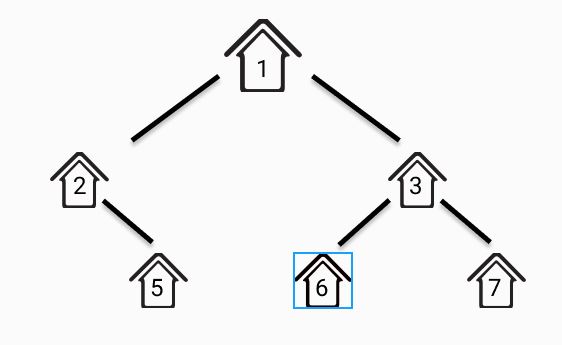
Ninja went to a school as an invigilator for an exam the seats in the room were mentioned with the number and they form a tree-like structure so he started thinking of a solution so that he allocated seats to students in such a way that no students would sit adjacent to each other.
So help our ninja write a code for the problem so he is able to count the maximum number of seats available for the students that no student can sit adjacent to each other.
So your task is to write a code that can find the maximum subset of a node in a given binary tree where there is no edge between any two nodes of the subset.
For example, consider the following binary tree. The largest subset set is {1, 5, 6, 7} and the size of the subset is 4.
Problem approach
I used Brute Force to solve this problem. This whole round was done online on Mettl
2. Count Ways
Easy
24m average time
81% success
0/40
Asked in companies


You have been given a directed graph of 'V' vertices and 'E' edges.
Your task is to count the total number of ways to reach different nodes in the graph from the given source node ‘S’. A way is called as different from others if the destination node or used edges differ.
As the total number of such ways can be large, print the total ways modulo 10 ^ 9 + 7.
Note:
1. Include the source node as a destination also.
2. There are no cycles in the given graph.
3. Boat Journey
Hard
60m average time
40% success
0/120
Asked in companies

There are ‘N’ cities numbered from 0 to ‘N’ - 1 and ‘M’ river connecting two cities in a Starlink Kingdom. The only way to travel from one city to another is by swimming through a river. Ninja is on a vacational journey and wants to do ‘Q’ travel. The energy required to swim against the river is ‘w’ and with the flow of river is zero, it means if the flow of river is from city ‘u’ to ‘v’ then the energy required to swim from ‘v’ to ‘u’ is ‘w’. Ninja has special power to reverse the direction of flow of water in the river. Ninja wants to minimize his energy consumption for this journey. Help Ninja to find the minimum energy required to complete his journey using his special power. He can reverse the direction of flow of any river any number of times before starting his journey( he may not use his power ).
Note : Energy consumption of one journey is equal to the sum of energy of each trip. There can be more than one river between any two cities.
4. Kevin And His Cards
Easy
20m average time
80% success
0/40
Asked in companies


Kevin has two sorted packs of cards. The first pack has N cards and the second one has M cards. Every card has an integer written on it. Now, you have to tell two things. First, how many different types of cards does Kevin have with both packs(union). Second, how many types both the packs have in common(intersection).
Note :
Two cards are said to be of different types if they have different numbers written on them.
02
Round
Medium
Video Call
Duration30 minutes
Interview date7 Feb 2022
Coding problem2
The interviewer asked me questions about DSA.
The questions were started from basic levels like the difference between call by value and call by reference and asked me in-depth questions about DSA.
He asked 2 coding questions, 1st one was how to find the missing element from an array and the 2nd was to find the 2nd greatest number in an array.
His main focus was on DSA.
1. Missing Number
Moderate
30m average time
70% success
0/80
Asked in companies

You are given an array/list ‘BINARYNUMS’ that consists of ‘N’ distinct strings which represent all integers from 0 to N in binary representation except one integer. This integer between 0 to ‘N’ whose binary representation is not present in list ‘BINARYNUMS’ is called ‘Missing Integer’.
Your task is to find the binary representation of that ‘Missing Integer’. You should return a string that represents this ‘Missing Integer’ in binary without leading zeros.
Note
1. There will be no leading zeros in any string in the list ‘BINARYNUMS’.
Example:
Consider N = 5 and the list ‘binaryNums’= [“0”, “01”, “010”, “100”, “101”]. This list consists of the binary representation of numbers [0, 1, 2, 4, 5]. Clearly, the missing number is 3 and its binary representation will be “11”. So you should return string “11”.
Problem approach
1st- Find the sum of numbers from 1 to 100 = S1
2nd- Find the sum of given numbers = S2
3rd - Subtract S2 from S1 i.e., S1-S2. Your required number is found
2. Second largest element in the array
Easy
15m average time
80% success
0/40
Asked in companies

You have been given an array/list 'ARR' of integers. Your task is to find the second largest element present in the 'ARR'.
Note:
a) Duplicate elements may be present.

b) If no such element is present return -1.
Example:
Input: Given a sequence of five numbers 2, 4, 5, 6, 8.

Output:  6

Explanation:
In the given sequence of numbers, number 8 is the largest element, followed by number 6 which is the second-largest element. Hence we return number 6 which is the second-largest element in the sequence.
Problem approach
Using Quick sort
03
Round
Easy
HR Round
Duration30 Minutes
Interview date14 Feb 2022
Coding problem0
The time for the Interview was in the morning at 11 a.m.
1. The Interview asked for my Introduction first.
2. He asked me what are my interests.
3. He then asked me a question, i.e., Why the size of Online games is less than the size of offline games.
4. He then asked me about my projects and what was my motivation to do these projects.
5. In the end, he asked me, do I have any other offers?.
6. I did not have any offers as this was the 1st company for which I was interviewed.
04
Round
Easy
Online Coding Test
Duration60 Minutes
Interview date4 Mar 2022
Coding problem1
It was a Pre-Technology Allocation test. It consisted of 3 coding questions. I did not remember the questions but they were of the same difficulty level as the previous ones. We were allocated technologies on the basis of this test. I was allocated Java Full Stack Developer and my few other friends were allocated .Net technology.
1. Rectangular Numbers
Moderate
30m average time
70% success
0/80
Asked in companies


Ninja has a number ‘N’. He wants to print the pattern in such a way that the outer rectangle is of the number ‘N’ and the number goes on decreasing as we move inside the rectangles.
For example, if ‘N’ = 4, then pattern will be:
4 4 4 4 4 4 4
4 3 3 3 3 3 4
4 3 2 2 2 3 4
4 3 2 1 2 3 4
4 3 2 2 2 3 4
4 3 3 3 3 3 4
4 4 4 4 4 4 4


Here's your problem of the day 
Solving this problem will increase your chance to get selected in this company
Skill covered: Programming
How do you remove whitespace from the start of a string?
Choose another skill to practice
Similar interview experiences
SDE - 1
3 rounds | 3 problems
Interviewed by Nagarro Software
 Selected
0 views

0 comments

0 upvotes
SDE - 1
3 rounds | 7 problems
Interviewed by Nagarro Software
 Selected
 937 views
0 comments
0 upvotes
SDE - 1
2 rounds | 4 problems
Interviewed by Nagarro Software
Rejected
1222 views
0 comments
0 upvotes
SDE - 1
2 rounds | 4 problems
Interviewed by Nagarro Software
Selected 758 views
0 comments
0 upvotes
Companies with similar interview experiences
SDE - 1
5 rounds | 12 problems
Interviewed by Amazon
 Selected
 115097 views
24 comments
0 upvotes

SDE - 1
4 rounds | 5 problems
Interviewed by Microsoft
Selected 58238 views
5 comments
0 upvotes
SDE - 1
3 rounds | 7 problems
Interviewed by Amazon
 Selected
 35147 views
7 comments
0 upvotes