





Nagarro Software interview experience Real time questions & tips from candidates to crack your interview

Assistant System Engineer
Nagarro Software


4 rounds | 7 Coding
problems

 Selected
 Interview preparation journey

Journey
I applied to Nagarro through on-campus Drive. I am fresher and more focused on my Resume which was the Initial most Crucial part to get Shortlisted for Further Rounds. There are 4 Rounds :
1. Aptitude + Technical MCQs.
2. Coding Round.
3. Technical Interview.
4. HR Interview
Application story
It was an on-campus Drive.
Associate Software Engineer @ Nagarro
The Hiring procedure consists of 4 Rounds.
Round 1: In this round. There are some MCQ types of Aptitude and technical questions related to MySQL, algorithm, and basic coding types.
Round 2: This round consists of 3 coding questions. 1 is easy to level 2 is medium-level.. and the medium questions are a little bit tricky. (Questions based on a string, or array).
Why selected/rejected for the role?
I was selected for Associate Software Developer at Nagarro. I focused on my skills, qualifications, and relevant experience to make a robust application. Tailor my resume and cover letter to showcase how I can contribute to the company's goals and meet the requirements of the role of ASE.
Preparation
Duration: 2 months
Topics: Data Structures, Stack, Queue, Linked list, OOPS, Algorithms, MySQL

Tip 1: Focus on mastering data structures, algorithms, and problem-solving to excel in Nagarro's technical interviews.
Tip 2: Showcase your passion for software development through personal projects and contributions to open-source projects
Tip 3: Research Nagarro's services and projects to tailor your interview responses and demonstrate your understanding of their work culture.
Application process
Where: Campus
Eligibility: NA
Tip 1: Highlight your strong programming skills, relevant projects, and contributions to showcase your expertise as a software developer.
Tip 2: Emphasize your problem-solving abilities, teamwork, and adaptability to align with Nagarro's values and requirements for the Associate Software Developer role

Interview rounds
01
Round
Medium
Online Coding Interview
Duration30 minutes
Interview date3 Jul 2022
Coding problem2
1. Online Stock Span
Moderate
30m average time
70% success

0/80
Asked in companies



Ninja Coin is a famous crypto-currency in Ninja Land. Ninja has an array/list ‘PRICE’ of size ’N’ where ‘PRICE[i]’ is the price of a Ninja Coin on an ith day in INR, where 0 <= 'i' <= N-1.
The span of the Ninja Coin price on an ith day is defined as the maximum number of consecutive days (starting from the ith day and going backward) for which the price of a Ninja Coin was less than or equal to its price at ith day.
Your task is to return an array/list of size ‘N’ where the ith integer is the span of Ninja Coin price on an ith day. Go through the example for more clarity.
For Example :
Let the price of Ninja Coin for 5 consecutive days is [4, 2, 3, 3, 7].

Then the span of Ninja Coin on the 0th day is 1 because we cannot move backward from day 0.

The span of Ninja Coin on the 1st day is 1 because the price on day 0 is 4 which is greater than 2, so the only day 1 is counted.

The span of Ninja Coin on the 2nd day is 2 because the price on day 2 and day 1 is less than or equal to 3 and then on day 0 price is 4 which is greater than 3, so we count day 2 and day 1.

The span of Ninja Coin on the 3rd day is 3 because the price on day 3, day 2, and day 1 is less than or equal to 3, and on day 0 price is 4 which is greater than 3, so we count day 3, day 2, and day 1.

The span of Ninja Coin on the 4th day is 5 because its value is higher than all previous days values.

Thus you should return an array/list [1, 1, 2, 3, 5].
2. Duplicate In Array
Easy
15m average time
85% success
0/40
Asked in companies



You are given an array ‘ARR’ of size ‘N’ containing each number between 1 and ‘N’ - 1 at least once. There is a single integer value that is present in the array twice. Your task is to find the duplicate integer value present in the array.
For example:
Consider ARR = [1, 2, 3, 4, 4], the duplicate integer value present in the array is 4. Hence, the answer is 4 in this case.
Note :
A duplicate number is always present in the given array.
02
Round
Easy
Online Coding Test
Duration30 minutes
Interview date22 Jul 2022
Coding problem2
1. Find Nth Prime
Moderate
15m average time
85% success
0/80
Asked in companies



You are given a number 'N'. Your task is to find Nth prime number.
A prime number is a number greater than 1 that is not a product of two smaller natural numbers. Prime numbers have only two factors – 1 and the number itself.
Any number greater than 0 is a natural number i.e. natural numbers N = {1, 2, 3, 4,....}
For example:-
If you are asked to find the 7th prime number, it’ll be 17 because the first 7 prime numbers are 2, 3, 5, 7, 11, 13, 17.
Note: 1 is not a prime number.
Follow Up:
Try to solve the problem in O(N log log N) + O(N).
Problem approach
1. Find the prime numbers up to MAX_SIZE using the Sieve of Eratosthenes.
Store all primes in a vector.
2. For a given number N, return the element at (N-1)th index in a vector.
3. Below is the implementation of the above approach:
2. Count Derangements
Moderate
25m average time
75% success
0/80
Asked in companies


Given a number ‘N', the task is to find the total number of derangements of a set of ‘N’ elements.
A ‘Derangement’ is a permutation of 'N' elements, such that no element appears in its original position. For example, a derangement of {0, 1, 2, 3} is {2, 3, 1, 0}.
For example, 'N' = 2 , {0, 1} and {1, 0} are the only derangement therefore output will be 1.
03
Round
Easy
Face to Face
Duration45 minutes
Interview date28 Jul 2022
Coding problem2
1. Mailing Problem
Easy
0/40
Asked in companies

Dr. Doofenshmirtz is trying to make another big mischief. To prevent this, Major Francis Monogram wants to send mail to Perry the Platypus to inform him about the mischief. He just needs to send a secret message ‘s’ to perry. He has a special keyboard “keyboard” in which all the letters are in a straight line but jumbled. The time taken to move his finger from index ‘i’ to index ‘j’ is |j - i|. He wants to know how much time will it take to send the secret message to Perry.
Note :
Initially, he is at the first letter of the keyboard.

All letters are in lower-case English letters.
For Example :
Let s = “perry”, keyboard = “qwertyuiopasdfghjklzxcvbnm”.

Now In this example, Francis will start from the first index and go to ‘p’, which will take 9 seconds, now from ‘p’ to ‘e’, the distance is of 7 indexes, from ‘e’ to ‘r’ the distance is 1, from ‘r’ to ‘r’ it will be zero, and from ‘r’ to ‘y’ the distance will be 2. Hence the total time taken is 9 + 7 + 1 + 0 + 2 = 19.
Hence the answer is 19.
2. Longest Absolute File Path
Moderate
10m average time
90% success
0/80
Asked in companies

You are given a string, ‘S’, representing the path in the file system. Your task is to find the longest absolute file path.
In a file system, a directory doesn’t have an extension, whereas a file does have an extension. Eg: dir is a directory and file.txt is a file.
Example:
For the below file system, the string S will be:
S = “dir\n\tsubdir1\n\t\tfile1.txt\n\t\tfile2.txt\n\tfile.txt”
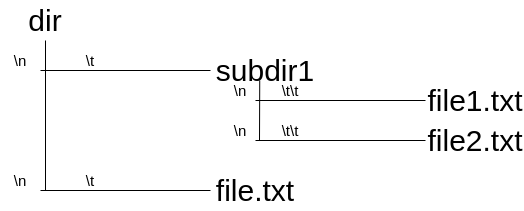
The above string will actually be represented as:
dir
    subdir1
        file1.txt
        file2.txt
    file.txt
Where character \n is the next line, and \t is the tab character i.e in the actual string instead of \t we will have a tab.
Every file has a unique absolute path.
Example:
file2.txt has an absolute path “dir/subdir1/file2.txt” and file.txt has path “dir/file.txt”.
The absolute file path length is the length of this string.
So absolute path length for file file2.txt will be the length of string “dir/subdir1/file2.txt” which is 21.
You need to print the longest of all such possible absolute file path lengths.
Note:
If there is no file in the system, return 0.
04
Round
Medium
HR Round
Duration15 minutes
Interview date8 Aug 2022
Coding problem1
1. Basic HR Questions
- Tell me about yourself.
- Why do you want to work for our company?
- Can you describe a challenging technical problem you've solved?
- What programming languages and technologies are you proficient in?
- Tell me about a project you're particularly proud of.
- How do you approach working in a team?


Here's your problem of the day 
Solving this problem will increase your chance to get selected in this company
Skill covered: Programming
How do you remove whitespace from the start of a string?
Choose another skill to practice
Similar interview experiences
SDE - 1
3 rounds | 3 problems
Interviewed by Nagarro Software
 Selected
0 views

0 comments

0 upvotes
Trainee Technology
3 rounds | 6 problems
Interviewed by Nagarro Software
 Selected
 3763 views
0 comments
0 upvotes
Software Engineer
4 rounds | 4 problems
Interviewed by Nagarro Software
 Selected
 1478 views
0 comments
0 upvotes
Data Engineer
3 rounds | 5 problems
Interviewed by Nagarro Software
Selected 2973 views
0 comments
0 upvotes