





Nagarro Software interview experience Real time questions & tips from candidates to crack your interview

SDE - 1
Nagarro Software


2 rounds | 6 Coding
problems

Rejected
Interview preparation journey

Preparation
Duration: 3 Months
Topics: Data Structures, OOPS, Algorithms, Dynamic Programming, PL/SQL

Tip 1 : Do At least 300 DSA related questions
Tip 2 : Be consistent in learning and implementing
Tip 3 : Be true to yourself
Application process
Where: Campus
Eligibility: Above 7 CGPA
Tip 1 : No false projects should be mentioned
Tip 2 : Links to the projects are favourable

Interview rounds
01
Round
Medium
Online Coding Interview
Duration240 Minutes
Interview date16 Sep 2021
Coding problem4
Aptitude questions + 3 medium level Coding Problem + 2 hard level Coding problem
1. Minimum steps to reach target by a Knight
Moderate
25m average time
60% success

0/80
Asked in companies



You have been given a square chessboard of size ‘N x N’. The position coordinates of the Knight and the position coordinates of the target are also given.
Your task is to find out the minimum steps a Knight will take to reach the target position.
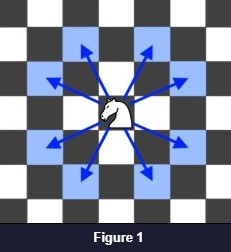
Example:
knightPosition: {3,4}
targetPosition: {2,1}
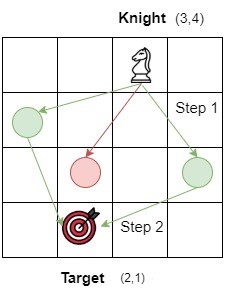
The knight can move from position (3,4) to positions (1,3), (2,2) and (4,2). Position (4,2) is selected and the ‘stepCount’ becomes 1. From position (4,2), the knight can directly jump to the position (2,1) which is the target point and ‘stepCount’ becomes 2 which is the final answer.
Note:
1. The coordinates are 1 indexed. So, the bottom left square is (1,1) and the top right square is (N, N).

2. The knight can make 8 possible moves as given in figure 1.

3. A Knight moves 2 squares in one direction and 1 square in the perpendicular direction (or vice-versa).
2. 0 1 Knapsack
Moderate
0/80
Asked in companies



A thief is robbing a store and can carry a maximum weight of ‘W’ into his knapsack. There are 'N' items available in the store and the weight and value of each item is known to the thief. Considering the constraints of the maximum weight that a knapsack can carry, you have to find the maximum profit that a thief can generate by stealing items.
Note: The thief is not allowed to break the items.
For example, N = 4, W = 10 and the weights and values of items are weights = [6, 1, 5, 3] and values = [3, 6, 1, 4]. Then the best way to fill the knapsack is to choose items with weight 6, 1 and 3. The total value of knapsack = 3 + 6 + 4 = 13.
Problem approach
This question is a type of 0-1 knapsack problem.
In the Dynamic programming we will work considering the same cases as mentioned in the recursive approach. In a DP[][] table let’s consider all the possible weights from ‘1’ to ‘W’ as the columns and weights that can be kept as the rows.
The state DP[i][j] will denote maximum value of ‘j-weight’ considering all values from ‘1 to ith’. So if we consider ‘wi’ (weight in ‘ith’ row) we can fill it in all columns which have ‘weight values > wi’. Now two possibilities can take place:
Fill ‘wi’ in the given column.
Do not fill ‘wi’ in the given column.
Now we have to take a maximum of these two possibilities, formally if we do not fill ‘ith’ weight in ‘jth’ column then DP[i][j] state will be same as DP[i-1][j] but if we fill the weight, DP[i][j] will be equal to the value of ‘wi’+ value of the column weighing ‘j-wi’ in the previous row. So we take the maximum of these two possibilities to fill the current state
3. Word Break
Moderate
15m average time
85% success
0/80
Asked in companies



You are given a list of “N” strings A. Your task is to check whether you can form a given target string using a combination of one or more strings of A.
Note :
You can use any string of A multiple times.
Examples :
A =[“coding”, ”ninjas”, “is”, “awesome”]  target = “codingninjas”
Ans = true as we use “coding” and “ninjas” to form “codingninjas”
Problem approach
The idea is simple, we consider each prefix and search it in dictionary. If the prefix is present in dictionary, we recur for rest of the string (or suffix).
If the recursive call for suffix returns true, we return true, otherwise we try next prefix. If we have tried all prefixes and none of them resulted in a solution, we return false.
4. Reverse List In K Groups
Hard
15m average time
85% success
0/120
Asked in companies


You are given a linked list of 'n' nodes and an integer 'k', where 'k' is less than or equal to 'n'.
Your task is to reverse the order of each group of 'k' consecutive nodes, if 'n' is not divisible by 'k', then the last group of nodes should remain unchanged.
For example, if the linked list is 1->2->3->4->5, and 'k' is 3, we have to reverse the first three elements, and leave the last two elements unchanged. Thus, the final linked list being 3->2->1->4->5.
Implement a function that performs this reversal, and returns the head of the modified linked list.
Example:
Input: 'list' = [1, 2, 3, 4], 'k' = 2

Output: 2 1 4 3

Explanation:
We have to reverse the given list 'k' at a time, which is 2 in this case. So we reverse the first 2 elements then the next 2 elements, giving us 2->1->4->3.
Note:
All the node values will be distinct.
Problem approach
Recursively traverse the linked list. When returning from each recursive call keep track of the node number, considering the last node as number 1, second last as number 2 and so on. This counting could be tracked with the help of a global or pointer variable. With the help of this count variable, print the nodes having a node number less than or equal to k.
02
Round
Easy
Face to Face
Duration30 minutes
Interview date25 Sep 2021
Coding problem2
The interviewer asked DSA related questions and checked my fluency to code in the languages I opted for or I am comfortable in. He asked complexities of various sorting techniques and asked to explain the reason behind the same.
1. Coin game winner where every player has three choices
Moderate
25m average time
75% success
0/80
Asked in companies

Two players 'X' and 'Y', are playing a coin game. Initially, there are 'N' coins. Each player can pick exactly 'A' coins or 'B' coins or 1 coin. A player loses the game if he is not able to pick any coins. 'X' always starts the game, and each player plays optimally. You are supposed to find which player wins the coin game.
Problem approach
The idea is to use a dynamic programming paradigm, and see who wins the game. ‘X’ start’s the game and has 3 options, to choose ‘A’ or ‘B’ or 1 coin. Similarly, ‘Y’ makes a move and so on. The player who is not able to move further loses the coin game. We solve in a bottom-up manner from 0 to 'NO_OF_COINS' coins and calculate our ans.
Let’s say if we have some i coins, and Player ‘X’ is playing the game, ‘X’ will always try to reach a point from where ‘Y’ cannot win. So, we are checking all three options, we can reach a point from where the other player cannot win we return true otherwise we return false.
The algorithm is as follows :
Declare a boolean array ‘DP’, where DP[i] stores the player starting with ‘i’ coins wins the game or not, if the player starting with ‘i’ coins wins it stores true, otherwise false.
Set, DP[0] to false.
Set, DP[1] to true.
Iterate from ‘i’ = 2 to ‘N’,
Set, DP[i] to ans to true if DP[i - 1] is false.
If ‘i’ >= ‘A’, set DP[i] to true if DP[i - A] is false.
If ‘i’ >= ‘B’, set DP[i] to true if DP[i - B] is false.
Return, DP[N].
2. Box Stacking
Hard
25m average time
65% success
0/120
Asked in companies


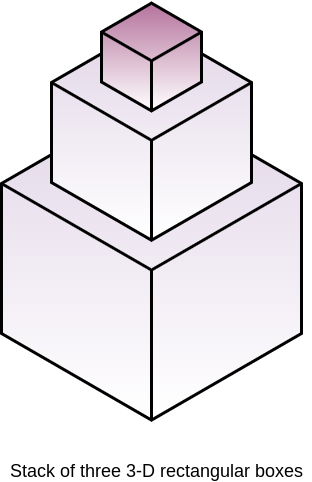
You are given a set of ‘n’ types of rectangular 3-D boxes. The height, width, and length of each type of box are given by arrays, ‘height’, ‘width’, and ‘length’ respectively, each consisting of ‘n’ positive integers. The height, width, length of the i^th type box is given by ‘height[i]’, ‘width[i]’ and ‘length[i]’ respectively.
You need to create a stack of boxes that is as tall as possible using the given set of boxes.
Below are a few allowances:
You can only stack a box on top of another box if the dimensions of the 2-D base of the lower box ( both length and width ) are strictly larger than those of the 2-D base of the higher box.

You can rotate a box so that any side functions as its base. It is also allowed to use multiple instances of the same type of box. This means, a single type of box when rotated, will generate multiple boxes with different dimensions, which may also be included in stack building.
Return the height of the highest possible stack so formed.
Note:
The height, Width, Length of the type of box will interchange after rotation.

No two boxes will have all three dimensions the same.

Don’t print anything, just return the height of the highest possible stack that can be formed.
Problem approach
Following are the key points to note in the problem statement:
1) A box can be placed on top of another box only if both width and depth of the upper placed box are smaller than width and depth of the lower box respectively.
2) We can rotate boxes such that width is smaller than depth. For example, if there is a box with dimensions {1x2x3} where 1 is height, 2×3 is base, then there can be three possibilities, {1x2x3}, {2x1x3} and {3x1x2}
3) We can use multiple instances of boxes. What it means is, we can have two different rotations of a box as part of our maximum height stack.
The steps that can be followed are:
1) Generate all 3 rotations of all boxes. The size of rotation array becomes 3 times the size of the original array. For simplicity, we consider width as always smaller than or equal to depth.
2) Sort the above generated 3n boxes in decreasing order of base area.
3) After sorting the boxes, the problem is same as LIS with following optimal substructure property.
MSH(i) = Maximum possible Stack Height with box i at top of stack
MSH(i) = { Max ( MSH(j) ) + height(i) } where j < i and width(j) > width(i) and depth(j) > depth(i).
If there is no such j then MSH(i) = height(i)
4) To get overall maximum height, we return max(MSH(i)) where 0 < i < n


Here's your problem of the day 
Solving this problem will increase your chance to get selected in this company
Skill covered: Programming
How do you remove whitespace from the start of a string?
Choose another skill to practice
Similar interview experiences
SDE - 1
3 rounds | 3 problems
Interviewed by Nagarro Software

 Selected
0 views

0 comments

0 upvotes
SDE - 1
3 rounds | 7 problems
Interviewed by Nagarro Software
Selected 936 views
0 comments
0 upvotes
SDE - 1
2 rounds | 4 problems
Interviewed by Nagarro Software
Rejected
1221 views
0 comments
0 upvotes
SDE - 1
2 rounds | 4 problems
Interviewed by Nagarro Software
Selected 758 views
0 comments
0 upvotes
Companies with similar interview experiences
SDE - 1
5 rounds | 12 problems
Interviewed by Amazon
 Selected
 115097 views
24 comments
0 upvotes
SDE - 1
4 rounds | 5 problems
Interviewed by Microsoft
Selected 58237 views
5 comments
0 upvotes
SDE - 1
3 rounds | 7 problems
Interviewed by Amazon
 Selected
 35147 views
7 comments
0 upvotes