





Netcore cloud interview experience Real time questions & tips from candidates to crack your interview
Software Development
Netcore cloud


2 rounds | 4 Coding
problems

Rejected
Interview preparation journey

Journey
I started preparation from my first year of the college itself. Then i started practicing the DSA at the regular basic from the coding Ninjas platform CodeStudio
Application story
This is a on-campus opportunity this company visited our campus for the selection where i have applied
Why selected/rejected for the role?
I was rejected for this role because I am not able to give a optimize solution for my one of the questions
Preparation
Duration: 3 months
Topics: Data Structures, Pointers, OOPS, System Design, Algorithms, Dynamic Programming,System Design

Tip 1 - Practice at Atleast 250 Questions
Tip 2 - Ex- Do at least 2 projects
Application process
Where: Campus
Eligibility: Above 7 CGPA
Tip 1 : Have some projects on resume.
Tip 2 : Do not put false things on resume.

Interview rounds
01
Round
Medium
Video Call
Duration60 mins
Interview date23 Mar 2023
Coding problem2
1. Sort An Array According To The Count Of Set Bits
Moderate
25m average time
80% success

0/80
Asked in companies



You are given an array consisting of N positive integers, and your task is to sort the array in decreasing order of count of set bits in the binary representation of the integers present in the array.
In other words, you have to modify the array such that an integer with more number of set bits should appear before the integer which has lesser number of set bits in its binary representation.
The number of set bits is nothing but the number of 1s present in the binary representation of the integer. For example, the number of set bits in 5(0101) is equal to 2.
Note :
1. If any two numbers have the same count of set bits, then in the sorted array they will appear in the order in which they appear in the original array. For example, let the array be { 2, 4, 3}, in this case, both 2 and 4 have the same number of set bits so the answer will be {3, 2, 4} and not {3, 4, 2}, because in the original array 2 appears before 4.

2. The array may contain duplicate elements.
Problem approach
You are given an array consisting of N positive integers, and your task is to sort the array in decreasing order of count of set bits in the binary representation of the integers present in the array.
2. Minimum Number Of Lamps
Easy
10m average time
80% success
0/40
Asked in companies


You are given a string 'S' containing dots(.) and asterisks(*) only, where the dot represents free spaces, and the asterisk denotes lamps. A lamp can lighten up its own cell as well as its immediate neighboring cells. You need to determine the minimum number of extra lamps that have to be installed at some free spaces in the string so that the whole string will be illuminated i.e. all the indices of the string can have access to the light of some lamp.
Note :
If a lamp is present at index 'I', then it illuminates index 'I' - 1, 'I' and 'I' + 1.

If a lamp is present at index 0, then it illuminates only 0 and 1.

Given that the length of the string is greater than or equal to 2.

If a lamp is present at the last index, then it illuminates the last and the second last index, given that the length of the string is greater than or equal to 2.

The length of each string is guaranteed to be at least 1.
Problem approach
You are given a string 'S' containing dots(.) and asterisks(*) only, where the dot represents free spaces, and the asterisk denotes lamps. A lamp can lighten up its own cell as well as its immediate neighboring cells. You need to determine the minimum number of extra lamps that have to be installed at some free spaces in the string so that the whole string will be illuminated i.e. all the indices of the string can have access to the light of some lamp.
02
Round
Medium
Video Call
Duration60
Interview date23 Mar 2023
Coding problem2
1. Validate Binary Tree Nodes
Moderate
15m average time
85% success
0/80
Asked in companies


You are given ‘N’ binary tree nodes numbered from 0 to N - 1 where node ‘i’ has two children LEFT_CHILD[i] and RIGHT_CODE[i]. Return ‘True’ if and only if all the given nodes form exactly one valid binary tree. If node ‘i’ has no left child then 'LEFT_CHILD[i]' will equal -1, similarly for the right child.
Example:
Let’s say we have n=4 nodes, 'LEFT_CHILD' = {1, -1, 3, -1} and
RIGHT_CHILD = {2, -1, -1, -1}. So the resulting tree will look like this:
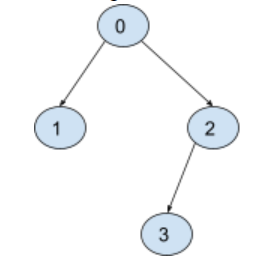
It will return True as there is only one valid binary tree and each node has only one parent and there is only one root.
2. Reverse Linked List
Moderate
15m average time
85% success
0/80
Asked in companies


Given a singly linked list of integers. Your task is to return the head of the reversed linked list.
For example:
The given linked list is 1 -> 2 -> 3 -> 4-> NULL. Then the reverse linked list is 4 -> 3 -> 2 -> 1 -> NULL and the head of the reversed linked list will be 4.
Follow Up :
Can you solve this problem in O(N) time and O(1) space complexity?
Problem approach
I explained from scratch that what will be our algorithm and what all nodes I am gonna make and the purpose of each node.
Bonus Tip: Communicate with interviewer consistently, don't just keep quit all the time
Finally I solved it and interviewer was satisfied with my approach.


Here's your problem of the day 
Solving this problem will increase your chance to get selected in this company
Skill covered: Programming
What is the purpose of the return keyword?
Choose another skill to practice
Similar interview experiences
SDE - 1
2 rounds | 4 problems
Interviewed by Netcore cloud
Rejected

908 views

0 comments

0 upvotes
SDE - 1
2 rounds | 5 problems
Interviewed by Netcore cloud
Rejected
892 views
0 comments
0 upvotes
SDE - 1
3 rounds | 6 problems
Interviewed by Netcore cloud
Rejected
1706 views
0 comments
0 upvotes
Backend Developer
3 rounds | 5 problems
Interviewed by Netcore cloud
Rejected
1473 views
0 comments
0 upvotes
Companies with similar interview experiences

Software Development
3 rounds | 5 problems
Interviewed by PhonePe

 Selected
 12797 views
0 comments
0 upvotes

Software Development
3 rounds | 4 problems
Interviewed by Amdocs
Selected 8365 views
0 comments
0 upvotes

Software Development
3 rounds | 5 problems
Interviewed by Microsoft
 Selected
 1688 views
0 comments
0 upvotes