





Norsk Hydro interview experience Real time questions & tips from candidates to crack your interview
IT Compliance Specialist
Norsk Hydro


3 rounds | 6 Coding
problems

Rejected
Interview preparation journey

Journey
When I joined college, I was unaware of this Data Structure and Algorithm, which complicated my journey to getting an internship. From that point, I started doing coding problems.
Application story
I applied for this opportunity on the Unstop platform; after some days of the test, I got a link for the interview. There were three interviews.
Why selected/rejected for the role?
I was rejected because I was not able to provide a good approach to the DSA questions which were being asked.
Preparation
Duration: 6 months
Topics: Data Structures, Pointers, OOPS, System Design, Algorithms, Dynamic Programming

Tip 1 : Practice medium level problems.
Tip 2 : Brush up computer fundamentals from subjects like OS, DBMS and CN.
Tip 3 : Have a good project or good internship experience and have in-depth knowledge regarding what you have done.
Application process
Where: Other
Eligibility: Above 7 CGPA
1: Clear Formatting:
Use a clean and professional format. Choose a readable font and maintain consistent font sizes (11-12 pt). Use bullet points for easy readability.
2: Contact Information:
Include your full name, phone number, email, and location (city, state). Add your LinkedIn profile (if relevant and professional).
3: Summary/Objective:
Write a concise summary or objective highlighting your skills and goals. Tailor this section to the specific job for which you're applying.

Interview rounds
01
Round
Easy
Video Call
Duration45 minutes
Interview date4 Nov 2022
Coding problem2
It was day time. Interviewer made a comfortable environment
1. Combination Sum
Easy
15m average time
85% success

0/40
Asked in companies



You are given an array 'ARR' of 'N' distinct positive integers. You are also given a non-negative integer 'B'.
Your task is to return all unique combinations in the array whose sum equals 'B'. A number can be chosen any number of times from the array 'ARR'.
Elements in each combination must be in non-decreasing order.
For example:
Let the array 'ARR' be [1, 2, 3] and 'B' = 5. Then all possible valid combinations are-

(1, 1, 1, 1, 1)
(1, 1, 1, 2)
(1, 1, 3)
(1, 2, 2)
(2, 3)
Problem approach
Step 1 : I first used 3 loops.
Step 2 : Interviewer asked me to optimize the solution.
Step 3 : Then I gave solution with sorting the array and using 2 pointer approach.
2. Find Minimum Number Of Coins
Easy
15m average time
85% success
0/40
Asked in companies



Given an infinite supply of Indian currency i.e. [1, 2, 5, 10, 20, 50, 100, 500, 1000] valued coins and an amount 'N'.
Find the minimum coins needed to make the sum equal to 'N'. You have to return the list containing the value of coins required in decreasing order.
For Example
For Amount = 70, the minimum number of coins required is 2 i.e an Rs. 50 coin and a Rs. 20 coin.
Note
It is always possible to find the minimum number of coins for the given amount. So, the answer will always exist.
Problem approach
Step 1 : I first used for loops. It was not good enough.
Step 2 : Interviewer asked me to optimize the solution.
Step 3 : Then I gave dp solution. He asked me to create DP table and explain every value and explain how I reached there.
02
Round
Easy
Video Call
Duration45 minutes
Interview date7 Nov 2022
Coding problem2
2 DSA questions were asked.
1. Rotting Oranges
Moderate
20m average time
78% success
0/80
Asked in companies



You have been given a grid containing some oranges. Each cell of this grid has one of the three integers values:
Every second, any fresh orange that is adjacent(4-directionally) to a rotten orange becomes rotten.
Your task is to find out the minimum time after which no cell has a fresh orange. If it's impossible to rot all the fresh oranges then print -1.
Note:
1. The grid has 0-based indexing.
2. A rotten orange can affect the adjacent oranges 4 directionally i.e. Up, Down, Left, Right.
Problem approach
I gave BFS solution and explained every part .
2. Delete Kth node From End
Moderate
15m average time
95% success
0/80
Asked in companies



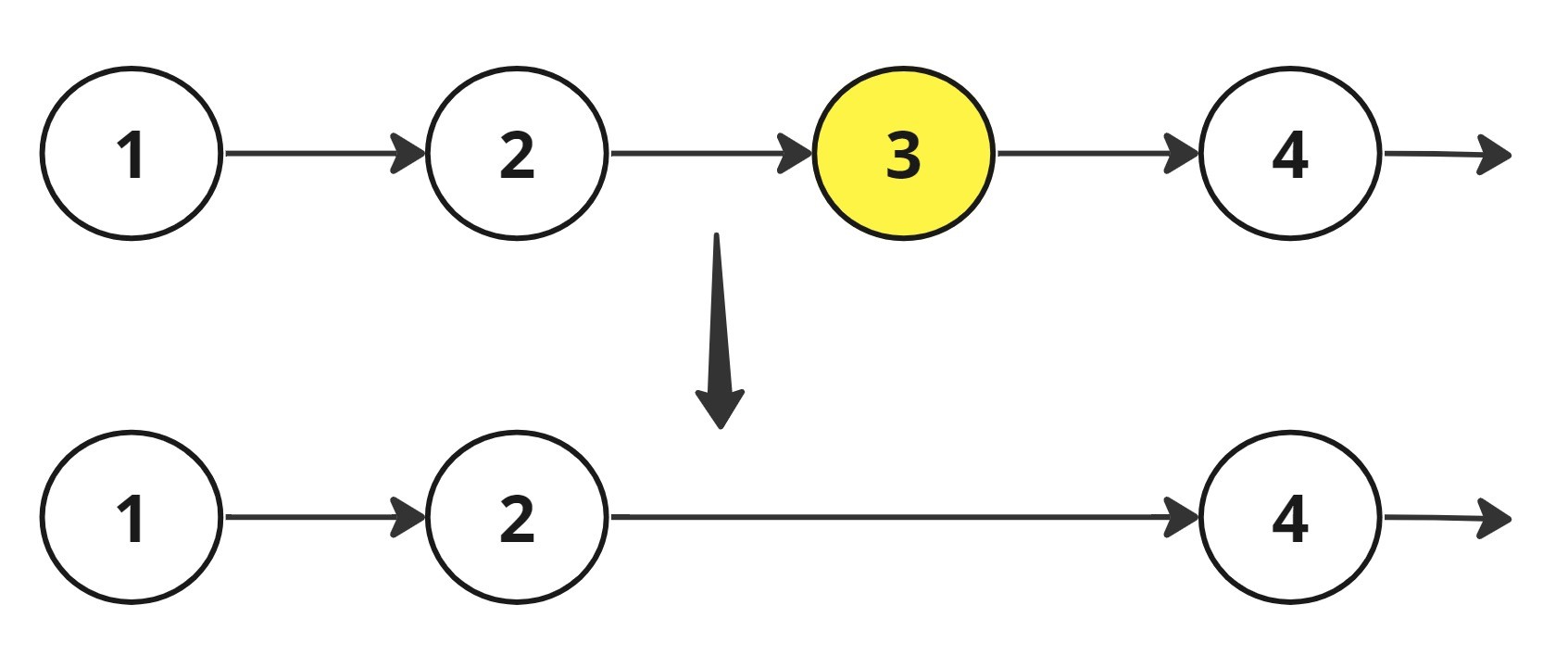
You have been given a singly Linked List of 'N' nodes with integer data and an integer 'K'.
Your task is to remove the 'K'th node from the end of the given Linked List and return the head of the modified linked list.
Example:
Input : 1 -> 2 -> 3 -> 4 -> 'NULL'  and  'K' = 2
Output: 1 -> 2 -> 4 -> 'NULL'
Explanation:
After removing the second node from the end, the linked list become 1 -> 2 -> 4 -> 'NULL'.
Problem approach
Explained the approach by using 2 traversals - First to find the length of list and then to delete the node.
Also, discussed an approach to do it in one traversal.
03
Round
Medium
Video Call
Duration45 minutes
Interview date7 Nov 2022
Coding problem2
1. Check If One String Is A Rotation Of Another String
Moderate
15m average time
85% success
0/80
Asked in companies


You are given two Strings 'P' and 'Q' of equal length.
Your task is to return 1 if String 'P' can be converted into String 'Q' by cyclically rotating it to the right any number of times ( Possibly Zero ), else return 0.
A cyclic rotation to the right on String 'A' consists of taking String 'A' and moving the rightmost character to the leftmost position. For example, if 'A' = "pqrst", then it will be "tpqrs" after one cyclic rotation on 'A'.
For example:
Consider the two strings 'P' = "abfyg" and 'Q' = "gabfy"

If we cyclically rotate String 'P' to the right once. The resulting string P becomes "gabfy" which is equal to String 'Q'.

Therefore it is possible to convert String 'P' to String 'Q'.
Problem approach
Concatenate the string twice and check if the string is a substring of the concatenated one.
2. Minimum Parentheses
Easy
10m average time
90% success
0/40
Asked in companies


Given a string "pattern", which contains only two types of characters ‘(’, ‘)’.
Your task is to find the minimum number of parentheses either ‘(’, ‘)’ we must add the parentheses in string ‘pattern’ and the resulted string is valid.
Condition for valid string-
Every opening parenthesis ‘(’ must have a correct closing parenthesis ‘)’.
Example - ‘(()(()))’, ‘()()()’, ‘((()))’ are valid string, and ‘(((’, ‘(()’, ‘)(())’ are invalid string.
Note:
1. You are not required to print the output explicitly, it has already been taken care of. Just implement the function and return the minimum number of parentheses required to make a string valid.
Problem approach
Use stacks and insert opening parenthesis until it reaches the desired number. Also insert the number to know the number of parentheses already there in the stack. And if there is a number that is smaller than the top of stack, pop elements from the stack until it satisfies the number.


Here's your problem of the day 
Solving this problem will increase your chance to get selected in this company
Skill covered: Programming
How do you remove whitespace from the start of a string?
Choose another skill to practice
Similar interview experiences
SDE - 1
4 rounds | 8 problems
Interviewed by Amazon
 Selected
11211 views

0 comments

0 upvotes
Analytics Consultant
3 rounds | 10 problems
Interviewed by ZS
Selected 1254 views
0 comments
0 upvotes
SDE - Intern
1 rounds | 3 problems
Interviewed by Amazon
Selected 4456 views
0 comments
0 upvotes
SDE - 2
4 rounds | 6 problems
Interviewed by Expedia Group
 Selected
 3373 views
0 comments
0 upvotes