





Optum interview experience Real time questions & tips from candidates to crack your interview

SDE - 1
Optum


3 rounds | 4 Coding
problems

 Selected
 Interview preparation journey

Preparation
Duration: 2 Months
Topics: OOPS, Data Structures, Algorithms, Trees, Dynamic Programming

Tip 1 : Be patient while giving an interview, listen to the question asked by interviewer carefully and after asking needful question, start with the solution. Don't jump right at the solution.
Tip 2 : Do a little research about the organization you are giving interview for as it will be cherry on the cake if you know about the company, how it generates revenue and what tech stack it mainly works on.
Tip 3 : Revise conventional problems thoroughly as the chances of these type of questions to be asked are highest. Ex : N-Queen problem, LCS, Diameter of a tree, etc.
Application process
Where: Campus
Eligibility: 7 CGPA
Tip 1 : Keep it concise, put projects Github link in the resume so that interviewer knows that you are not bluffing.
Tip 2 : Add coding platforms link to your profile, and it will be good if you mention the number of questions solved on such platforms in your resume.

Interview rounds
01
Round
Medium
Online Coding Interview
Duration60 Minutes
Interview date7 Aug 2019
Coding problem2
20 Quantative Aptitude Questions + 20 Logical Reasoning Question + 2 Coding Questions (Total: 60 Minutes)
1. Longest Substring Without Repeating Characters
Moderate
30m average time
65% success

0/80
Asked in companies



Given a string input of length n, find the length of the longest substring without repeating characters i.e return a substring that does not have any repeating characters.
Substring is the continuous sub-part of the string formed by removing zero or more characters from both ends.
Problem approach
I used sliding window approach to solve this problem, as I already practiced that problem a few weeks before the interview.
2. Number Of Triangles In Directed And Undirected Graphs
Moderate
30m average time
70% success
0/80
Asked in companies


Ninja has been given two Graphs: a directed graph ‘DIRGRAPH’ and an undirected graph ‘UNDIRGRAPH’. Ninja has to count the number of triangles in each of the graphs.
Can you help Ninja with finding the number of triangles in ‘DIRGRAPH’ and ‘UNDIRGRAPH’.
For Example :
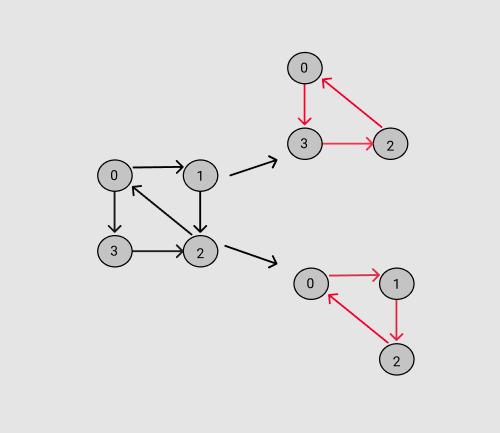
In this example, this graph is directed and there are two triangles possible.
Triangle 1 : (0 3 2)
Triangle 2 : (0 1 2)
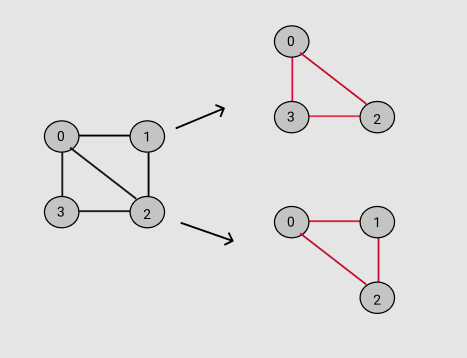
In this example, this graph is undirected and there are two triangles possible.
Triangle 1 : (0 3 2)
Triangle 2 : (0 1 2)
02
Round
Medium
Face to Face
Duration60 Minutes
Interview date7 Aug 2020
Coding problem1
After the results for written round were announced, we headed to technical round interview, which was taken by one of the senior software engineers at Optum. The interview started with my introduction and then moved on to questions from DSA, OOPS and Databases. I was asked to implement tree data structure using OOPS in C++. Also, basic OOPS concepts were asked and then the interviewer gave me the question to find the diameter of the tree which I had practiced earlier and was able to provide a solution in very less amount of time. Also, I was asked about candidate key, Primary key, ACID properties, Normal Forms, etc from DBMS. I was also asked to implement heap sort. And with this the interview ended.
1. Diameter Of Binary Tree
Easy
10m average time
90% success
0/40
Asked in companies


You are given a Binary Tree.
Return the length of the diameter of the tree.
Note :
The diameter of a binary tree is the length of the longest path between any two end nodes in a tree.

The number of edges between two nodes represents the length of the path between them.
Example :
Input: Consider the given binary tree:
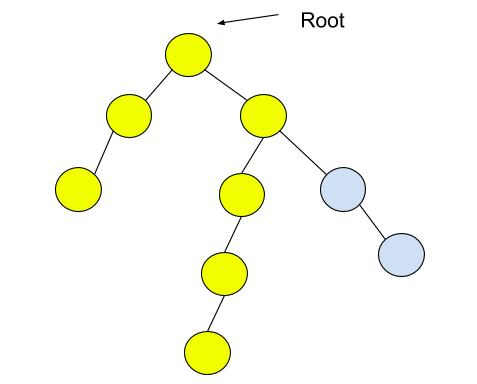
Output: 6

Explanation:
Nodes in the diameter are highlighted. The length of the diameter, i.e., the path length, is 6.
Problem approach
I solved this problem recursively by choosing the solution out of these 3 cases i.e. diameter of tree will be the max of :
1. left subtree's diameter
2. right subtree's diameter
3. longest route which goes through the root of the tree i.e. height of left subtree + height of right subtree + 1
03
Round
Easy
HR Round
Duration30 Minutes
Interview date7 Aug 2020
Coding problem1
This was a normal HR round, where the interviewer asked me about my strengths and weaknesses, where I see myself in 5 years, my hobbies, cocurricular activities, etc. It was just a normal chit-chat round and I don't think it will have any affect on your overall verdict, given that you don't completely mess this round
1. Basic HR Questions
1. What are your strengths and weakness
2. Describe yourself
3. Sports and hobbies
4. Where do you see yourself in 5 years
5. Positions of responsibility
Problem approach
Tip 1 : Be calm and composed in the HR round
Tip 2 : Be confident while talking to the HR, and practice in a mock round before actual interview
Tip 3 : Use your skills to guide the interview course


Here's your problem of the day 
Solving this problem will increase your chance to get selected in this company
Skill covered: Programming
How do you remove whitespace from the start of a string?
Choose another skill to practice
Similar interview experiences
SDE - 1
2 rounds | 7 problems
Interviewed by Optum
Selected 
1449 views

0 comments

0 upvotes
SDE - 1
2 rounds | 2 problems
Interviewed by Optum
 Selected
 0 views
0 comments
0 upvotes
SDE - 1
2 rounds | 4 problems
Interviewed by Optum
Rejected
945 views
0 comments
0 upvotes
SDE - 1
3 rounds | 3 problems
Interviewed by Optum
Rejected
834 views
0 comments
0 upvotes
Companies with similar interview experiences
SDE - 1
5 rounds | 12 problems
Interviewed by Amazon
 Selected
 115097 views
24 comments
0 upvotes

SDE - 1
4 rounds | 5 problems
Interviewed by Microsoft
Selected 58238 views
5 comments
0 upvotes
SDE - 1
3 rounds | 7 problems
Interviewed by Amazon
 Selected
 35147 views
7 comments
0 upvotes