





Optum interview experience Real time questions & tips from candidates to crack your interview

SDE - 1
Optum


3 rounds | 6 Coding
problems

Rejected
Interview preparation journey

Journey
I was advised by my seniors to practice DSA from the very beginning of my B.Tech, but I did not take it seriously. Honestly speaking, I regretted not following their advice. In my third year, I started coding and had to increase my practice hours because I had started late. However, by the end of my third year, I was confident in both DSA and development. Even then, I continued revising the concepts.
Application story
This company visited my campus for placements. We just had to upload our resume and fill in all the details in a form. First, they conducted an online assessment. Later, they called us for the interview rounds.
Why selected/rejected for the role?
The main reason for my rejection was my lack of strong knowledge in core DSA fundamentals, and my problem-solving ability was also not very good.
Preparation
Duration: 3 months
Topics: Data Structures, Algorithms, OOPS, Dynamic Programming

Tip 1: Practice popular questions on Arrays, Binary Trees, and Linked Lists from CodeStudio's Interview Problems.
Tip 2: Make sure you understand how to calculate the time and space complexity for every problem you code.
Tip 3: Prepare through mock interviews to practice explaining your approach while solving problems in an actual interview.
Application process
Where: Campus
Eligibility: Above 6 CGPA
Tip 1: Describe the best of your projects in as few words as possible. Don't forget to include buzzwords like REST APIs, DB Indexing, Benchmarking, etc., if you worked on the backend.
Tip 2: Avoid adding school achievements like Olympiads or being a class topper to your resume.
Tip 3: If you have some work experience, present it as if you're marketing yourself. Use terms like "Created" or "Owned the project through the entire SDLC."
Tip 4: Ensure you highlight how your work experience impacted the company or how your personal project can be genuinely useful to the end user.

Interview rounds
01
Round
Medium
Video Call
Duration60 minutes
Interview date26 Aug 2022
Coding problem2
1. Puzzle
Imagine a group of people meeting each other for the first time, and in keeping with protocol, each person must greet and elbow bump every other person once.
If there were seven people in the group, how many elbow bumps would occur in total?
Also outline, as a short note in the comment section, the process you used to come to this conclusion.
Problem approach
Person 1 had to bump elbows with 6 people. Person 2 had to bump elbows with 5 people, as he had already bumped elbows with Person 1, and so on. Therefore, the total number of elbow bumps will be 6 + 5 + 4 + 3 + 2 + 1, which is n*(n-1)/2, where n is the total number of people present. Hence, the final answer is 21.
2. Merge Two Sorted Arrays
Moderate
15m average time
85% success

0/80
Asked in companies



Ninja has been given two sorted integer arrays/lists ‘ARR1’ and ‘ARR2’ of size ‘M’ and ‘N’. Ninja has to merge these sorted arrays/lists into ‘ARR1’ as one sorted array. You may have to assume that ‘ARR1’ has a size equal to ‘M’ + ‘N’ such that ‘ARR1’ has enough space to add all the elements of ‘ARR2’ in ‘ARR1’.
For example:
‘ARR1’ = [3 6 9 0 0]
‘ARR2’ = [4 10]
After merging the ‘ARR1’ and ‘ARR2’ in ‘ARR1’.
‘ARR1’ = [3 4 6 9 10]
Problem approach
We have been given two sorted arrays that we need to merge.
02
Round
Medium
Video Call
Duration60 minutes
Interview date26 Aug 2022
Coding problem2
1. Check Identical Trees
Moderate
20m average time
85% success
0/80
Asked in companies



You are given two binary trees with 'n' and 'm' nodes respectively.
You need to return true if the two trees are identical. Otherwise, return false.
Example:
For the trees given below:-
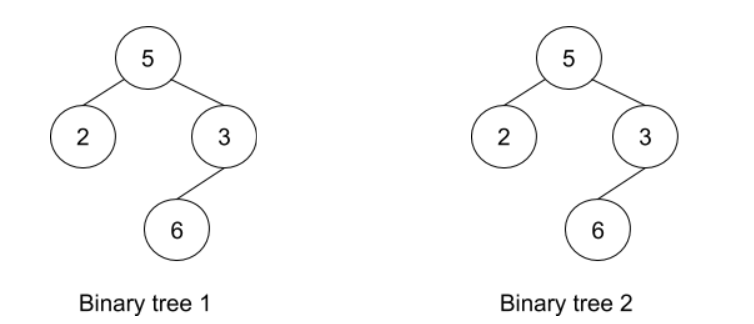
The given trees are identical as:-
1. The number of nodes in both trees is the same.
2. The number of edges in both trees is the same.
3. The data for root for both the trees is the same i.e 5.
4. The data of root -> left (root’s left child) for both the trees is the same i.e 2.
5. The data of root -> right (root’s right child) for both the trees is the same i.e 3.
6. The data of root -> right -> left ( left child of root’s right child) for both the trees is the same i.e 6.
7. Nodes with data 2 and 6 are the leaf nodes for both the binary trees.
2. Day 10 : Minimum Operations
Easy
20m average time
82% success
0/40
Asked in companies



You are given an array 'ARR' of 'N' positive integers. You need to find the minimum number of operations needed to make all elements of the array equal. You can perform addition, multiplication, subtraction or division with any element on an array element.
Addition, Subtraction, Multiplication or Division on any element of the array will be considered as a single operation.
Example:
If the given array is [1,2,3] then the answer would be 2. One of the ways to make all the elements of the given array equal is by adding 1 to the array element with value 1 and subtracting 1 from the array element with value 3. So that final array would become [2,2,2].
Problem approach
You are given an array 'ARR' of 'N' positive integers. You need to find the minimum number of operations required to make all elements of the array equal. You can perform addition, multiplication, subtraction, or division on any element of the array.
03
Round
Easy
Video Call
Duration60 minutes
Interview date26 Aug 2022
Coding problem2
1. Segregate Even And Odd Nodes In a Linked List
Easy
15m average time
85% success
0/40
Asked in companies


You are given the head node of a singly linked list 'head'. Your task is to modify the linked list in such a way that all the even valued nodes appear before the all odd valued node and order of nodes remain the same.
Example :-
The given singly linked list is 6 -> 5 -> 3 -> 4 -> 7 -> 1 -> 2
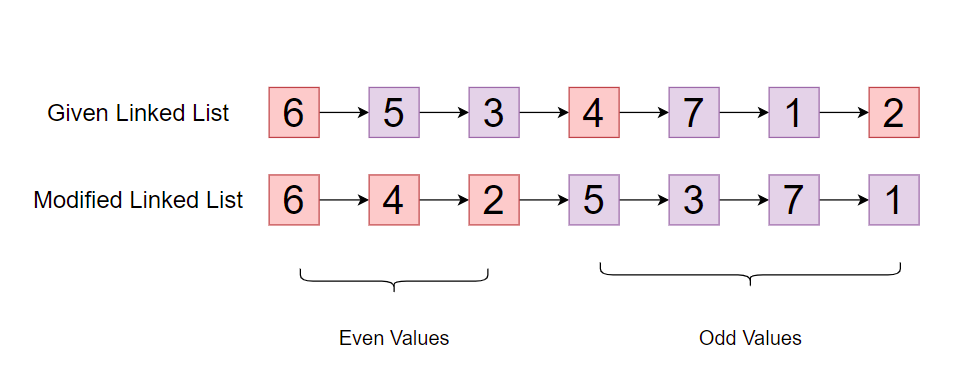
The modified linked list should have all even values in starting and odd values in the end.
2. Tree Traversals
Easy
15m average time
85% success
0/40
Asked in companies


You have been given a Binary Tree of 'N'
nodes, where the nodes have integer values.
Your task is to return the ln-Order, Pre-Order, and Post-Order traversals of the given binary tree.
For example :
For the given binary tree:
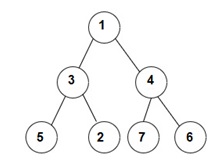
The Inorder traversal will be [5, 3, 2, 1, 7, 4, 6].
The Preorder traversal will be [1, 3, 5, 2, 4, 7, 6].
The Postorder traversal will be [5, 2, 3, 7, 6, 4, 1].


Here's your problem of the day 
Solving this problem will increase your chance to get selected in this company
Skill covered: Programming
How do you remove whitespace from the start of a string?
Choose another skill to practice
Similar interview experiences
SDE - 1
2 rounds | 7 problems
Interviewed by Optum
 Selected
1449 views

0 comments

0 upvotes
SDE - 1
2 rounds | 2 problems
Interviewed by Optum
 Selected
 0 views
0 comments
0 upvotes
SDE - 1
2 rounds | 4 problems
Interviewed by Optum
Rejected
945 views
0 comments
0 upvotes
SDE - 1
3 rounds | 3 problems
Interviewed by Optum
Rejected
835 views
0 comments
0 upvotes
Companies with similar interview experiences
SDE - 1
5 rounds | 12 problems
Interviewed by Amazon
 Selected
 115097 views
24 comments
0 upvotes
SDE - 1
4 rounds | 5 problems
Interviewed by Microsoft
Selected 58238 views
5 comments
0 upvotes
SDE - 1
3 rounds | 7 problems
Interviewed by Amazon
 Selected
 35147 views
7 comments
0 upvotes