





Optum interview experience Real time questions & tips from candidates to crack your interview

SDE - 1
Optum


3 rounds | 3 Coding
problems

Rejected
Interview preparation journey

Journey
Certainly! My personal journey in software development began with a strong foundation in programming basics. I started by learning fundamental concepts such as data structures, algorithms, and programming languages.
I then expanded my knowledge through online courses, tutorials, and practice projects. This hands-on experience helped me gain a deeper understanding of software development principles and build a strong portfolio of projects.
To further enhance my skills, I actively participated in coding competitions and engaged in open-source contributions. This allowed me to collaborate with other developers, learn from their expertise, and refine my problem-solving abilities.
In parallel, I pursued internships and worked on real-world projects, which provided valuable industry exposure and practical experience. These opportunities helped me develop a professional mindset and learn how to work effectively in a team environment.
Throughout my journey, I constantly sought self-improvement by staying updated with the latest technologies and industry trends. I actively sought feedback from mentors, attended workshops and conferences, and engaged in continuous learning.
Cracking this job interview at Optum was the culmination of my efforts. By showcasing my technical skills, practical experience, and passion for software development, I impressed the interviewers and demonstrated my potential to contribute effectively to the company's goals.
My journey from the basics to cracking this job interview has taught me the importance of continuous learning, perseverance, and the practical application of knowledge. I believe that sharing this experience can inspire others to embark on their own learning journeys and strive for success in the field of software development.
Application story
I applied for the SDE role at Optum through their official career website. After submitting my application and tailored resume, I underwent an initial screening process by the HR team. Upon passing the screening, I completed a technical assessment to evaluate my skills. Subsequently, I participated in multiple interview rounds, including technical and behavioral interviews. Finally, based on the evaluation of my performance in the interview process, Optum decided to select me for the SDE role. The application journey involved careful preparation, successful completion of assessments, and engaging in interviews to demonstrate my suitability for the role.
Why selected/rejected for the role?
I was selected for this role because of several key factors: technical proficiency, problem-solving abilities, relevant experience, cultural fit, and strong communication skills.
Preparation
Duration: 6 months
Topics: Data Structures and Algorithms, Object-Oriented Programming (OOP) and Design Patterns, Database Management Systems (DBMS), System Design, Operating Systems

Tip 1: Practice at least 250 questions in Array and Linked List.
Tip 2: Do keep practicing Interview Experience questions from Coding Ninjas.
Application process
Where: Campus
Eligibility: 7.5 CGPA
Tip 1: Be real about everything you have mentioned in your resume.
Tip 2: Know your projects.

Interview rounds
01
Round
Easy
Group Discussion
Duration15 minutes
Interview date1 Aug 2022
Coding problem0
Total 5 participants were present. A topic was given to present your thoughts about it.
02
Round
Hard
Online Coding Interview
Duration120 minutes
Interview date8 Aug 2022
Coding problem2
1. Median of two sorted arrays
Hard
25m average time
65% success

0/120
Asked in companies



Given two sorted arrays 'a' and 'b' of size 'n' and 'm' respectively.
Find the median of the two sorted arrays.
Median is defined as the middle value of a sorted list of numbers. In case the length of list is even, median is the average of the two middle elements.
The expected time complexity is O(min(logn, logm)), where 'n' and 'm' are the sizes of arrays 'a' and 'b', respectively, and the expected space complexity is O(1).
Example:
Input: 'a' = [2, 4, 6] and 'b' = [1, 3, 5]

Output: 3.5

Explanation: The array after merging 'a' and 'b' will be { 1, 2, 3, 4, 5, 6 }. Here two medians are 3 and 4. So the median will be the average of 3 and 4, which is 3.5.
Problem approach
Step 1: Merge the Arrays: First, I merged the two sorted arrays into a single sorted array. This can be done by creating a new array or using an in-place merging technique. The merged array will contain all the elements from both arrays in sorted order.
Step 2: Find the Median: Once the arrays are merged, I determined the length of the merged array. If the length is odd, the median will be the middle element. If the length is even, the median will be the average of the two middle elements. For an odd-length array, I accessed the element at the index (length - 1) / 2. For an even-length array, I accessed the elements at indices length / 2 and length / 2 - 1, and then calculated their average.
Step 3: Return the Median: Finally, I returned the calculated median as the result of the function or as the output of the algorithm.
2. Cycle Detection In Undirected Graph
Moderate
0/80
Asked in companies



You have been given an undirected graph with 'N' vertices and 'M' edges. The vertices are labelled from 1 to 'N'.
Your task is to find if the graph contains a cycle or not.
A path that starts from a given vertex and ends at the same vertex traversing the edges only once is called a cycle.
Example :
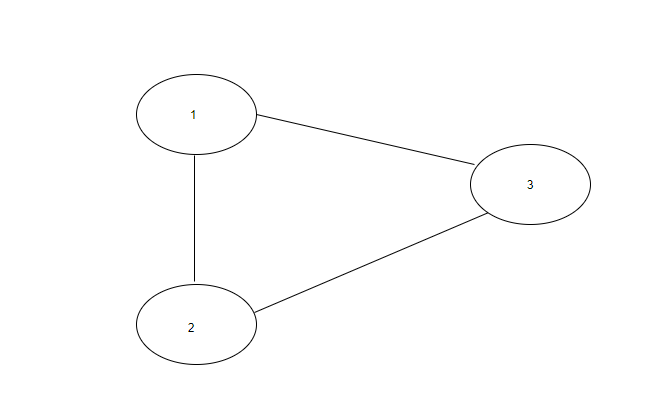
In the below graph, there exists a cycle between vertex 1, 2 and 3.
Note:
1. There are no parallel edges between two vertices.

2. There are no self-loops(an edge connecting the vertex to itself) in the graph.

3. The graph can be disconnected.
For Example :
Input: N = 3 , Edges =  [[1, 2], [2, 3], [1, 3]].
Output: Yes

Explanation : There are a total of 3 vertices in the graph. There is an edge between vertex 1 and 2, vertex 2 and 3 and vertex 1 and 3. So, there exists a cycle in the graph.
Problem approach
Step 1: Depth-First Search (DFS): I used a Depth-First Search algorithm to traverse the graph and detect cycles. Starting from a given node, I explored its adjacent nodes and continued the traversal until all nodes were visited or a cycle was detected.
Step 2: Tracking Visited Nodes: During the DFS traversal, I maintained a visited array or set to keep track of the visited nodes. This helped me avoid revisiting nodes and also assisted in identifying cycles. If I encountered a node that was already visited and not the parent of the current node, it indicated the presence of a cycle in the graph.
Step 3: Recursive Approach: To implement the DFS algorithm, I used a recursive approach. I recursively explored the adjacent nodes of each unvisited node, updating the visited array and checking for cycles at each step. If I found a cycle, I stopped the traversal and returned the result.
03
Round
Easy
HR Round
Duration10 minutes
Interview date17 Aug 2022
Coding problem1
1. Basic HR Questions
Tell me about a time when you faced failure or made a mistake. How did you handle it?
How do you handle work-life balance?
Tell me about a time when you demonstrated leadership skills.
Why are you interested in this role/company?
How do you handle conflicts or disagreements within a team?


Here's your problem of the day 
Solving this problem will increase your chance to get selected in this company
Skill covered: Programming
How do you remove whitespace from the start of a string?
Choose another skill to practice
Similar interview experiences
SDE - 1
2 rounds | 7 problems
Interviewed by Optum
 Selected
1449 views

0 comments

0 upvotes
SDE - 1
2 rounds | 2 problems
Interviewed by Optum
 Selected
 0 views
0 comments
0 upvotes
SDE - 1
2 rounds | 4 problems
Interviewed by Optum
Rejected
945 views
0 comments
0 upvotes
SDE - 1
2 rounds | 5 problems
Interviewed by Optum
Rejected
1340 views
0 comments
0 upvotes
Companies with similar interview experiences
SDE - 1
5 rounds | 12 problems
Interviewed by Amazon
 Selected
 115097 views
24 comments
0 upvotes
SDE - 1
4 rounds | 5 problems
Interviewed by Microsoft
Selected 58238 views
5 comments
0 upvotes
SDE - 1
3 rounds | 7 problems
Interviewed by Amazon
 Selected
 35147 views
7 comments
0 upvotes