





Oracle interview experience Real time questions & tips from candidates to crack your interview

SDE - Intern
Oracle


4 rounds | 5 Coding
problems

 Selected
 Interview preparation journey

Journey
My journey toward the interview at Oracle started with focusing on strong fundamentals in data structures, databases, and system concepts, while also building practical projects. I believe that working on real projects helped me understand how theoretical concepts are applied in actual software systems.
During college, I built several applications and also completed a two-month internship at a startup called Cograd. During this internship, I developed an application that was later used by the company while raising funding from Sharp Thing India. This experience helped me understand development workflows, teamwork, and decision-making in real projects.
During the interview process, the interviewers focused heavily on my projects, asking about the choices I made while building them and how I implemented the AI components. They also evaluated my problem-solving skills through a challenging tree-based coding question.
Overall, my preparation focused on combining DSA practice with project development, which helped me confidently approach the interview and eventually receive the offer.
Application story
I applied for the role through the on-campus placement process at my college. The process started with resume-based shortlisting of eligible candidates. After that, the company conducted a Pre-Placement Talk where they explained the role, expectations, and company culture. The next stage was an online assessment to evaluate problem-solving and technical skills. Candidates who cleared the online test were invited for the interview rounds conducted by the company.
The entire process was well-structured and focused on evaluating both technical fundamentals and overall suitability for the role.
Why selected/rejected for the role?
I believe I was selected because I had a good balance of strong fundamentals in data structures and practical project experience. I was able to clearly explain the design choices and implementation details of the projects mentioned in my resume. Along with technical knowledge, communicating my thought process clearly during discussions also helped in the selection process.
Preparation
Duration: 6 months
Topics: Data Structures and Algorithms, Databases, Object Oriented Programming, System Design, Operating System

Tip 1: Always focus on quality questions, not quantity. Solving too many questions of the same type will only satisfy your pseudo ego.
Tip 2: While solving a DSA question, make it a habit to speak your thoughts out loud. Imagine that you are explaining your approach to the interviewer. This helps you structure your thoughts clearly during real interviews.
Tip 3: Make it a habit to solve questions within 20 minutes. If you are completely stuck after 20 minutes, you can look at hints. However, don’t spend too much time on each question—limit it to a maximum of 40 minutes. Avoid spending the entire day on a single question.
Application process
Where: Campus
Eligibility: Courses allowed: B.Tech – CSE, ECE, EE, ECM, CE, CHE, ME Eligibility: 1) 6 CPI or above 2) No active backlogs (Salary Package: 64 LPA)
Tip 1: Only include projects that you have actually built and understand completely, as interviewers usually ask detailed questions about them.
Tip 2: Keep your resume clear and concise (preferably one page) and highlight the impact of your projects rather than just listing technologies.

Interview rounds
01
Round
Hard
Online Coding Interview
Duration120 minutes
Interview date7 Aug 2025
Coding problem2
The online assessment was conducted in the evening, and the overall process was smooth.
1. Minimize The Maximum
Easy
15m average time
85% success

0/40
Asked in companies



You are given an array of N integers and an integer K. For each array element, you are allowed to increase or decrease it by a value k. The task is to minimize the difference between the maximum element and the minimum element after modifications.
Problem approach
I analyzed the operation and realized that it effectively allows transferring values from the right side of the array to the left to balance the values. To solve the problem efficiently, I applied binary search on the answer, where the search space represented the possible minimum and maximum value. For each candidate value, I checked whether it was feasible to redistribute the elements without exceeding that maximum. Using this feasibility check with binary search allowed me to determine the minimum possible maximum value achievable.
2. Execution Time
Moderate
15m average time
85% success
0/80
Asked in companies


This time we are executing a program containing ‘N’ functions on a single-threaded CPU. Each function has a unique ‘ID’ between 0 and (N-1) and each time it starts or ends, we write a log with the ID, whether it started or ended, and the TIMESTAMP.
You are given a 2D array of integers containing information about ‘L’ logs where ith column represents the ith log message. Each column contains 3 rows to describe the ith log where,
1st Row - represents the ID of the function.

2nd Row - represents whether the function has started or ended where 1 denotes the start and -1 denotes the end.

3rd Row - represents the TIMESTAMP of the log.
You are required to return an array where the value at the ith index represents the exclusive time for the function with ID ‘i’.
Note:
1. The exclusive time of a function is the sum of execution times for all calls of that function.

2. A function can be called multiple times, possibly recursively.

3. No two events will happen at the same time where an event denotes either a start or end of a function call. This basically means no two logs have the same timestamp.

4. Each function has an end log for each start log.
For Example:
Consider the following input
0 1 1 1 2 2 1 0
1 1 1 -1 1 -1 -1 -1
0 2 5 7 8 10 11 14
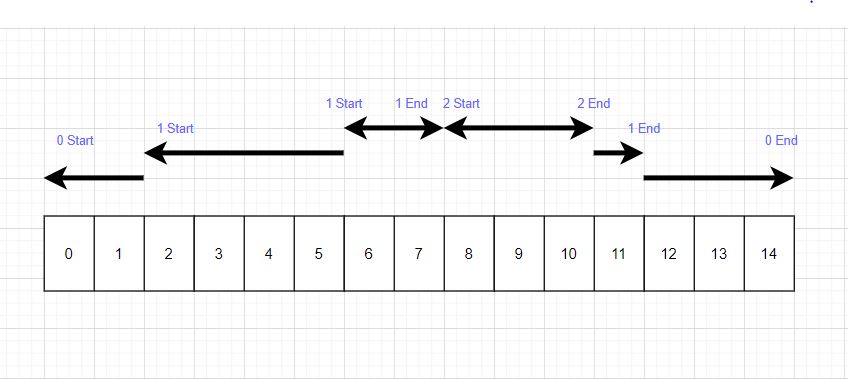
Thus, we return [5, 7, 3] as a process with ID 0 has taken 5 units of time and process with ID 1 has taken 7 units of time and process ID 2 has taken 3 units of time. A process’s exclusive time is the sum of exclusive times for all function calls in the program. As process Id 1 has called itself so exclusive time is the sum of exclusive times(5 + 2).
Problem approach
I processed the logs chronologically and maintained the active session count for each user. I used a HashMap to store the current session count of each user and updated it based on login or logout actions. Whenever a user's session count exceeded M, I added their user ID to a set to ensure uniqueness. Finally, I converted the set into a sorted list of user IDs for the output.
02
Round
Medium
Face to Face
Duration30 minutes
Interview date12 Aug 2025
Coding problem1
1. Bellman Ford
Moderate
30m average time
70% success
0/80
Asked in companies



You have been given a directed weighted graph of ‘N’ vertices labeled from 1 to 'N' and ‘M’ edges. Each edge connecting two nodes 'u' and 'v' has a weight 'w' denoting the distance between them.
Your task is to calculate the shortest distance of all vertices from the source vertex 'src'.
Note:
If there is no path between 'src' and 'ith' vertex, the value at 'ith' index in the answer array will be 10^8.
Example :
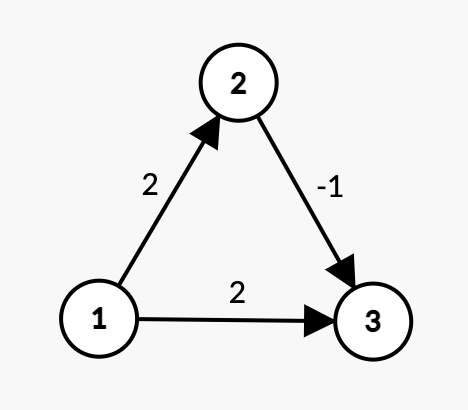
3 3 1
1 2 2
1 3 2
2 3 -1

In the above graph:

The length of the shortest path between vertex 1 and vertex 1 is 1->1 and the cost is 0.

The length of the shortest path between vertex 1 and vertex 2 is 1->2 and the cost is 2.

The length of the shortest path between vertex 1 and vertex 3 is 1->2->3 and the cost is 1.

Hence we return [0, 2, 1].
Note :
It's guaranteed that the graph doesn't contain self-loops and multiple edges. Also, the graph does not contain negative weight cycles.
Problem approach
Step 1: I first clarified the problem constraints, such as whether the graph contained negative edge weights and whether it was directed or undirected.
Step 2: I explained that if all edge weights are non-negative, the most efficient approach is Dijkstra’s algorithm using a priority queue to compute shortest paths.
Step 3: I discussed that if the graph contains negative edge weights, then the Bellman–Ford algorithm should be used because Dijkstra’s algorithm does not work correctly with negative weights.
Step 4: I described the implementation of Dijkstra’s algorithm using an adjacency list and a min-heap priority queue to always process the node with the smallest distance.
Step 5: I also explained how the Bellman–Ford algorithm relaxes all edges N−1 times and can additionally detect negative-weight cycles in the graph.
03
Round
Easy
HR Round
Duration30 minutes
Interview date12 Aug 2025
Coding problem1
1. HR Round
In this round, the interviewer mainly focused on behavioral and experience-based questions. I was asked to explain my internship experience at the startup Cograd and the application I built during that time. The interviewer also asked how the project helped the company and what my role was in the development process.
There were questions about how I handle conflicts within a team, how I collaborate with seniors and juniors while working on projects, and some general HR questions about my strengths, motivations, and career goals.
Problem approach
Tip 1:Be honest and clear while explaining your past experiences, especially internships and projects mentioned in your resume. Interviewers often look for how you handled responsibilities and challenges.
Tip 2:Structure your answers with real examples from your work or projects, as practical experiences make your answers more convincing and easier for interviewers to understand.
Tip 3:Also they will ask for your weakness, so don't tell anything absurd about you. Just frame something like, that you are that type of person, who can't go home without completing the task assigned to me, something like this. At the end of the day, you have to please a human only.
04
Round
Easy
HR Round
Duration10 minutes
Interview date12 Aug 2025
Coding problem1
1. HR Interaction
The final round was more of an interaction with a senior HR representative. The discussion was informal and focused on understanding my personality, interests, and cultural fit for the company. We talked about my interests outside academics, including my interest in Formula 1 racing. I also discussed how I admire the long-term partnership between Oracle and Formula 1 teams.
The conversation mainly revolved around my interests, my motivation to work at Oracle, and a general discussion about the company and my future goals.
Problem approach
Tip 1: Be natural and confident in such rounds. The interviewer mainly evaluates personality and communication skills.
Tip 2: Try to connect your interests with the company or role whenever possible, as it shows genuine enthusiasm and awareness about the organization.


Here's your problem of the day 
Solving this problem will increase your chance to get selected in this company
Skill covered: Programming
What's the main risk of a "Chat with Your Codebase" public API tool?
Choose another skill to practice
Similar interview experiences
SDE - Intern
3 rounds | 1 problems
Interviewed by Oracle

Rejected

1430 views

0 comments

0 upvotes
SDE - Intern
4 rounds | 4 problems
Interviewed by Oracle
 Selected
 2627 views
0 comments
0 upvotes
Server Technology Engineer
2 rounds | 3 problems
Interviewed by Oracle
 Selected
 2095 views
0 comments
0 upvotes
SDE - 1
3 rounds | 5 problems
Interviewed by Oracle

Rejected
1879 views
0 comments
0 upvotes
Companies with similar interview experiences

SDE - Intern
3 rounds | 6 problems
Interviewed by Amazon

Rejected
16243 views
4 comments
0 upvotes
SDE - Intern
4 rounds | 7 problems
Interviewed by Microsoft
Selected 16273 views
1 comments
0 upvotes
SDE - Intern
2 rounds | 4 problems
Interviewed by Amazon
Selected 10564 views
2 comments
0 upvotes