





OYO interview experience Real time questions & tips from candidates to crack your interview

SDE - 1
OYO


3 rounds | 5 Coding
problems

 Selected
 Interview preparation journey

Preparation
Duration: 6 months
Topics: Data Structures, Pointers, OOPS, System Design, Algorithms, Dynamic Programming, java

Tip 1 : Practice Atleast 250 Questions from internet
Tip 2 : Do atleast 2 good projects
Application process
Where: Hackerrank
Eligibility: Above 7 CGPA
Tip 1 : Have some projects on resume.
Tip 2 : Do not put false things on resume and be confident.

Interview rounds
01
Round
Easy
Online Coding Interview
Duration75 minutes
Interview date1 May 2022
Coding problem2
The online test was on the HackerEarth platform which consisted of 10 MCQs based on OS, DBMS, and Data Structures followed by 2 programming questions.
1. Count Ways To Travel Triangular Pyramid
Moderate
20m average time
80% success

0/80
Asked in companies


Bob has been given a triangular pyramid with its vertices marked as ‘O’, ‘X’, ‘Y’ and ‘Z’ and provided with another integer ‘N’. In a single step, Bob can go to any adjacent vertices. Bob will always start from ‘O’ and has to return to ‘O’ after making exactly ‘N’ steps.
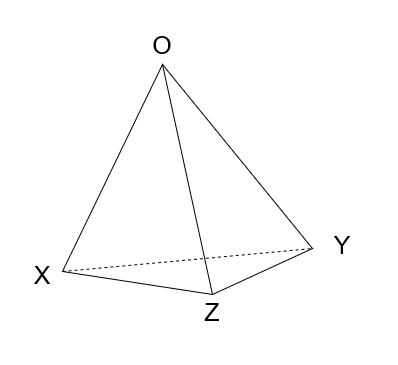
Your task is to find out the number of ways he can take to complete his journey.
Note :
As the answer can be very large, return the answer by taking modulo with 1000000007.
For example :
If ‘N’=1
So in 1 step we can reach either to ‘X’ , ‘Y’ or ‘Z’ and can not travel back to ‘O’.
Thus there are 0 ways.

If ‘N’ =2
So there are total three ways :
(i)  O->X->O
(ii) O->Y->O
(iii) O->Z->O

If ‘N’ = 3
So there are total 6 ways :
(i) O->X->Y->O
(ii) O->X->Z->O
(iii) O->Y->X->O
(iv) O->Y->Z->O
(v) O->Z->X->O
(vi) O->Z->Y->O
Problem approach
A table T[][] is created where the row represents the number of ways and the column represents the position.
In order to fill the table, one observation needs to be made. That is, we can go back to the position O if we are not at O in the previous step.
Therefore, the number of ways to reach the origin O in the current step is equal to the sum of the number of ways the person is not at the origin O in the previous steps.
2. Reverse Nodes in k-Group
Hard
56m average time
30% success
0/120
Asked in companies



You are given a Singly Linked List of integers and an integer array 'B' of size 'N'. Each element in the array 'B' represents a block size. Modify the linked list by reversing the nodes in each block whose sizes are given by the array 'B'.
Note:
1. If you encounter a situation when 'B[i]' is greater than the number of remaining nodes in the list, then simply reverse the remaining nodes as a block and ignore all the block sizes from 'B[i]'.

2. All block sizes are contiguous i.e. suppose that block 'B[i]' ends at a node cur, then the block 'B[i+1]' starts from the node just after the node cur.
Example
Linked list: 1->2->3->4->5
Array B: 3 3 5

Output: 3->2->1->5->4

We reverse the first block of size 3 and then move to block 2. Now, since the number of nodes remaining in the list (2) is less than the block size (3), we reverse the remaining nodes (4 and 5) as a block and ignore all the block sizes that follow.
Problem approach
Reverse the first sub-list of size k. While reversing keep track of the next node and previous node. Let the pointer to the next node be next and pointer to the previous node be prev.
Recursively call for rest of the list and link the two sub-lists
02
Round
Medium
Face to Face
Duration60 minutes
Interview date6 May 2022
Coding problem1
This round was also based on your knowledge of DSA. I was asked 2 coding questions.
1. Search In A Row Wise And Column Wise Sorted Matrix
Moderate
15m average time
80% success
0/80
Asked in companies



You are given an 'N * N' matrix of integers where each row and each column is sorted in increasing order. You are given a target integer 'X'.
Find the position of 'X' in the matrix. If it exists then return the pair {i, j} where 'i' represents the row and 'j' represents the column of the array, otherwise return {-1,-1}
For example:
If the given matrix is:
[ [1, 2, 5],
  [3, 4, 9],
  [6, 7, 10]]
We have to find the position of 4. We will return {1,1} since A[1][1] = 4.
Problem approach
Run a nested loop, outer loop for row and inner loop for the column
Check every element with x and if the element is found then print “element found”
If the element is not found, then print “element not found”.
03
Round
Easy
Face to Face
Duration60 minutes
Interview date12 May 2022
Coding problem2
This round also focused on DSA concepts. I was asked 2 coding questions.
1. Remove BST keys outside the given range
Easy
15m average time
85% success
0/40
Asked in companies



Given a Binary Search Tree (BST) and a range [min, max], remove all keys which are outside the given range. The modified tree should also be BST.
Problem approach
The idea is to fix the tree in a Post-order fashion. When we visit a node, we make sure that its left and right sub-trees are already fixed. In case 1.a), we simply remove the root and return the right sub-tree as a new root. In case 1.b), we remove the root and return the left sub-tree as a new root.
2. Count Ways To Reach The N-th Stairs
Moderate
30m average time
80% success
0/80
Asked in companies


You have been given a number of stairs. Initially, you are at the 0th stair, and you need to reach the Nth stair.
Each time, you can climb either one step or two steps.
You are supposed to return the number of distinct ways you can climb from the 0th step to the Nth step.
Note:
Note: Since the number of ways can be very large, return the answer modulo 1000000007.
Example :
N=3
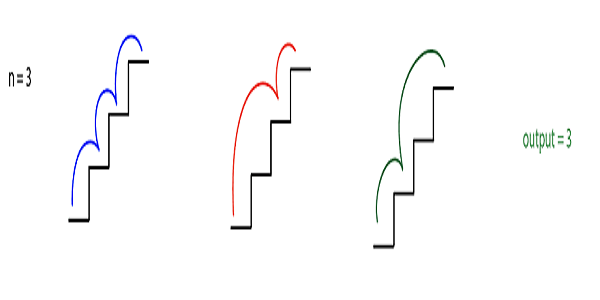
We can climb one step at a time i.e. {(0, 1) ,(1, 2),(2,3)} or we can climb the first two-step and then one step i.e. {(0,2),(1, 3)} or we can climb first one step and then two step i.e. {(0,1), (1,3)}.
Problem approach
We can easily find the recursive nature in the above problem. The person can reach nth stair from either (n-1)th stair or from (n-2)th stair. Hence, for each stair n, we try to find out the number of ways to reach n-1th stair and n-2th stair and add them to give the answer for the nth stair.


Here's your problem of the day 
Solving this problem will increase your chance to get selected in this company
Skill covered: Programming
How do you remove whitespace from the start of a string?
Choose another skill to practice
Similar interview experiences
SDE - 1
3 rounds | 7 problems
Interviewed by OYO
Selected 
4898 views

0 comments

0 upvotes
SDE - 1
3 rounds | 9 problems
Interviewed by OYO
Selected 0 views
0 comments
0 upvotes
SDE - 1
2 rounds | 4 problems
Interviewed by OYO
Rejected
1064 views
0 comments
0 upvotes
SDE - 1
2 rounds | 5 problems
Interviewed by OYO
Rejected
838 views
0 comments
0 upvotes
Companies with similar interview experiences

SDE - 1
5 rounds | 12 problems
Interviewed by Amazon
 Selected
 115097 views
24 comments
0 upvotes
SDE - 1
4 rounds | 5 problems
Interviewed by Microsoft
Selected 58238 views
5 comments
0 upvotes
SDE - 1
3 rounds | 7 problems
Interviewed by Amazon
 Selected
 35147 views
7 comments
0 upvotes