





PayPal interview experience Real time questions & tips from candidates to crack your interview

SDE - 1
PayPal


4 rounds | 7 Coding
problems
 Selected
 Interview preparation journey

Preparation
Duration: 3 months
Topics: Data Structures, Algorithms, System Design, Aptitude, OOPS

Tip 1 : Must do Previously asked Interview as well as Online Test Questions.
Tip 2 : Go through all the previous interview experiences from Codestudio and Leetcode.
Tip 3 : Do at-least 2 good projects and you must know every bit of them.
Application process
Where: Other
Eligibility: Above 7 CGPA
Tip 1 : Have at least 2 good projects explained in short with all important points covered.
Tip 2 : Every skill must be mentioned.
Tip 3 : Focus on skills, projects and experiences more.

Interview rounds
01
Round
Easy
Online Coding Interview
Duration90 minutes
Interview date13 Mar 2021
Coding problem2
This was an online assessment round and had 2 questions to solve
1. Row with Maximum 1's
Easy
10m average time
90% success

0/40
Asked in companies



You have been given a non-empty grid ‘mat’ with 'n' rows and 'm' columns consisting of only 0s and 1s. All the rows are sorted in ascending order.
Your task is to find the index of the row with the maximum number of ones.
Note: If two rows have the same number of ones, consider the one with a smaller index. If there's no row with at least 1 zero, return -1.
Example:
Input: 'n' = 3, 'm' = 3, 'mat' = [[1, 1, 1], [0, 0, 1], [0, 0, 0]]

Output: 0

Explanation: The row with the maximum number of ones is 0 (0 - indexed).
Problem approach
The main observation here is that instead of doing binary search in every row, we first check whether the row has more 1s than max so far. If the row has more 1s, then move until a zero is found.
2. Line Reflection
Moderate
10m average time
90% success
0/80
Asked in companies

Ninja found ‘N’ points on a 2D plane. The points are given in the form of a “N ✕ 2” size array “POINTS”. Ninja wants to find if there is a line such that it is parallel to the Y-axis and it reflects the given set of points. Your task is to help Ninja in this process.
Problem approach
First, find the appropriate reflection line parallel to the Y-axis. The observation is that the average of X coordinates of the symmetry pair will lie on the reflection line.
For example, consider points ‘P1’ and ‘P2’, the symmetry pairs, and ‘X1’ and ‘X2’ are their respective X coordinates, so point (X1 + X2) / 2 will lie on the reflection line. So we can find this point by finding the minimum and maximum values of the X coordinate of all the points, then take an average of minimum and maximum value.
02
Round
Medium
Video Call
Duration60 minutes
Interview date21 Mar 2021
Coding problem2
This round was conducted on MS Teams and I was majorly asked about coding problems in this round
1. Special Numbers
Moderate
15m average time
85% success
0/80
Asked in companies


You are given an integer, ‘MAXVAL’. Your task is to determine the total number of special numbers present in the range, 1 to ‘MAXVAL’.
Note:
A special number is a number, which when rotated 180 degrees, resembles some other number in the same range. Every digit of a special number must be a valid digit.

The digits, 0,1,6,8,9, when rotated 180 degrees, become 0,1,9,8,6 respectively. While the digits, 2,3,4,5,7, when rotated do not become any valid digit.
For example:
‘8196’, when rotated 180 degrees, will become ‘9618’. We can observe that all the digits of this number are valid. So, this is a special number.
Problem approach
The approach is to observe the fact that any special number will only have special digits in it. So, instead of checking all the numbers in the range, 1 to ‘MAXVAL’ independently, we can only check numbers that are made up of special digits only. For any special number, we can get more special numbers by appending one of the digits from 0,1,6,8,9 one by one at the end of the special number and check for the new number.
2. Postorder Traversal without recursion
Easy
15m average time
85% success
0/40
Asked in companies

You have been given a Binary Tree of 'n' nodes, where the nodes have integer values. Your task is to return its postorder traversal.
For Example:
For the given tree below,
Postorder traversal for the given tree will be [4, 5, 2, 3, 1]. Hence, the answer is [4, 5, 2, 3, 1].

Problem approach
Solved using stack
03
Round
Medium
Face to Face
Duration60 minutes
Interview date11 Apr 2021
Coding problem2
Standard DS/Algo round with 2 questions
1. Left View Of Binary Tree
Moderate
30m average time
60% success
0/80
Asked in companies



You have been given a Binary Tree of 'n' nodes, where the nodes have integer values
Print the left view of the binary tree.
Example :
If the input tree is as depicted in the picture:
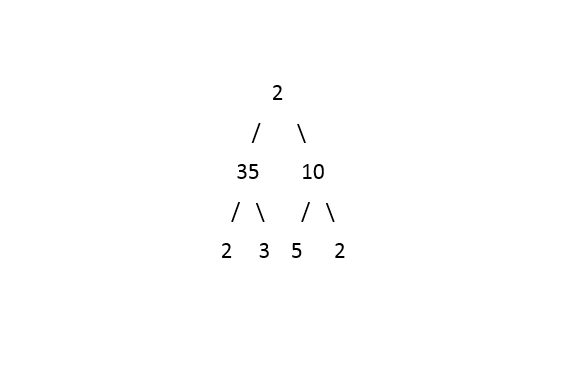
The Left View of the tree will be: 2 35 2
2. 2’s Complement
Easy
20m average time
80% success
0/40
Asked in companies

Given a binary string of length ‘N’, find its 2’s complement.
A binary string contains only ‘0’ or ‘1’.
2’s complement is 1’s complement + 1.
For example, 2’s complement of 00000101 is 11111011.
04
Round
Easy
Face to Face
Duration30 minutes
Interview date25 Apr 2021
Coding problem1
This round was conducted on MS Teams and the interviewer was a Senior Software Engineer having around 5+ years of experience. We basically had a discussion on my past projects and the tech stacks that I was familiar with.
1. Project Discussion
The interviewer asked me to explain my projects and then he asked some questions about ML as it was there in my resume. Later he asked how can I improve one of my projects if I had to do it today.
Problem approach
I have explained how I created the projects and what were the problems that I faced.
For ML projects, I discussed how I could use transfer learning to improve the then trained CNN


Here's your problem of the day 
Solving this problem will increase your chance to get selected in this company
Skill covered: Programming
How do you remove whitespace from the start of a string?
Choose another skill to practice
Similar interview experiences
SDE - 1
4 rounds | 6 problems
Interviewed by PayPal
Selected 
4912 views

1 comments

0 upvotes
SDE - 1
4 rounds | 4 problems
Interviewed by PayPal
 Selected
 1833 views
0 comments
0 upvotes
SDE - 1
2 rounds | 4 problems
Interviewed by PayPal
Rejected
1709 views
0 comments
0 upvotes
SDE - 1
4 rounds | 6 problems
Interviewed by PayPal
Selected 2783 views
0 comments
0 upvotes
Companies with similar interview experiences
SDE - 1
5 rounds | 12 problems
Interviewed by Amazon
 Selected
 115097 views
24 comments
0 upvotes
SDE - 1
4 rounds | 5 problems
Interviewed by Microsoft
Selected 58237 views
5 comments
0 upvotes
SDE - 1
3 rounds | 7 problems
Interviewed by Amazon
 Selected
 35147 views
7 comments
0 upvotes