





Paytm (One97 Communications Limited) interview experience Real time questions & tips from candidates to crack your interview

SDE - 1
Paytm (One97 Communications Limited)


3 rounds | 5 Coding
problems

Rejected
Interview preparation journey

Journey
When I joined college, I was unaware of this Data Structure and Algorithm, which made my journey to getting an internship way more complicated. From that point, I started doing questions on leetcode and code studio.
Application story
This company visited for the placement to my college I get to know about this company from my college placement cell.
Why selected/rejected for the role?
I was rejected because i was not able to provide a good approach to the DSA question which are being asked
Preparation
Duration: 6 months
Topics: Data Structures, Pointers, OOPS, System Design, Algorithms, Dynamic Programming

Tip 1 : Practice from Leetcode, solve Leetcode medium level problems.
Tip 2 : Brush up computer fundamentals from subjects like OS, DBMS and CN.
Tip 3 : Have a good project or good internship experience and have in-depth knowledge regarding what you have done.
Application process
Where: Campus
Eligibility: Above 7 CGPA
Tip 1 : Have some projects on resume.
Tip 2 : Do not put false things on resume.
Interview rounds
01
Round
Easy
Video Call
Duration60 minutes
Interview date23 Dec 2022
Coding problem2
1. Cycle Detection in a Singly Linked List
Moderate
15m average time
80% success

0/80
Asked in companies



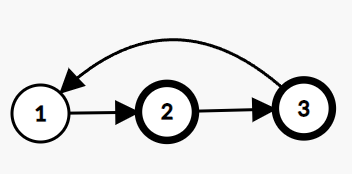
You are given a Singly Linked List of integers. Return true if it has a cycle, else return false.
A cycle occurs when a node's next points back to a previous node in the list.
Example:
In the given linked list, there is a cycle, hence we return true.
Problem approach
You have given a Singly Linked List of integers, determine if it forms a cycle or not.
A cycle occurs when a node's next points back to a previous node in the list. The linked list is no longer linear with a beginning and end—instead, it cycles through a loop of nodes.
Note: Since, it is binary problem, there is no partial marking. Marks will only be awarded if you get all the test cases correct.
2. Count Ways To Reach The N-th Stairs
Moderate
30m average time
80% success
0/80
Asked in companies



You have been given a number of stairs. Initially, you are at the 0th stair, and you need to reach the Nth stair.
Each time, you can climb either one step or two steps.
You are supposed to return the number of distinct ways you can climb from the 0th step to the Nth step.
Note:
Note: Since the number of ways can be very large, return the answer modulo 1000000007.
Example :
N=3
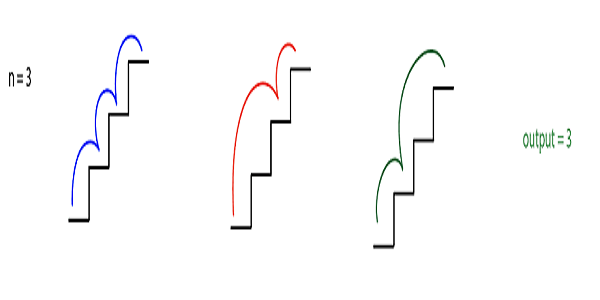
We can climb one step at a time i.e. {(0, 1) ,(1, 2),(2,3)} or we can climb the first two-step and then one step i.e. {(0,2),(1, 3)} or we can climb first one step and then two step i.e. {(0,1), (1,3)}.
Problem approach
You have been given a number of stairs. Initially, you are at the 0th stair, and you need to reach the Nth stair. Each time you can either climb one step or two steps. You are supposed to return the number of distinct ways in which you can climb from the 0th step to Nth step.
02
Round
Easy
Video Call
Duration60 minutes
Interview date23 Dec 2022
Coding problem2
1. Left view of binary tree
Moderate
30m average time
60% success
0/80
Asked in companies


You have been given a Binary Tree of 'n' nodes, where the nodes have integer values
Print the left view of the binary tree.
Example :
If the input tree is as depicted in the picture:
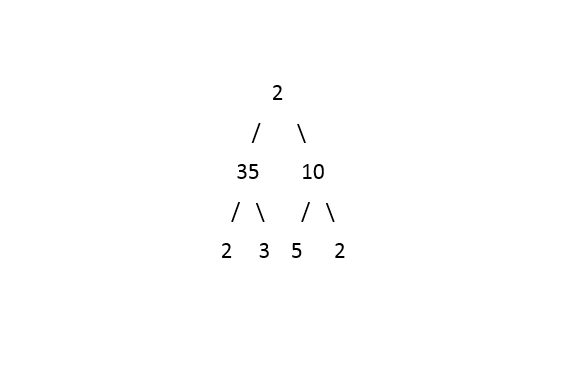
The Left View of the tree will be: 2 35 2
2. Top view of binary tree
Moderate
25m average time
70% success
0/80
Asked in companies


You are given a Binary Tree of 'n' nodes.
The Top view of the binary tree is the set of nodes visible when we see the tree from the top.
Find the top view of the given binary tree, from left to right.
Example :
Input: Let the binary tree be:
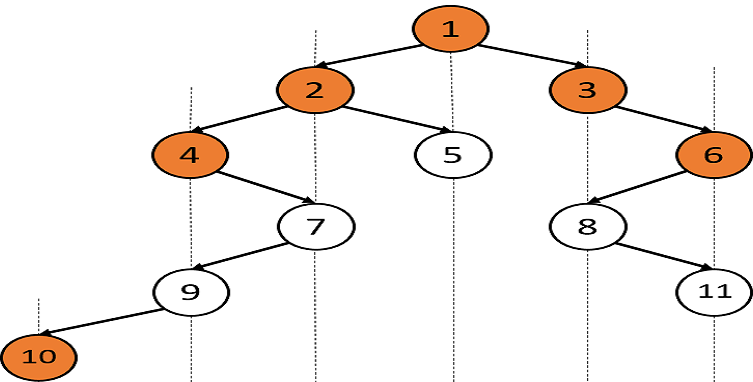
Output: [10, 4, 2, 1, 3, 6]

Explanation: Consider the vertical lines in the figure. The top view contains the topmost node from each vertical line.
03
Round
Easy
HR Round
Duration30 minutes
Interview date23 Dec 2022
Coding problem1
1. Basic HR Questions
Why should we hire you?
Are you willing to relocate?
What are your weakness?


Here's your problem of the day 
Solving this problem will increase your chance to get selected in this company
Skill covered: Programming
To make an AI less repetitive in a long paragraph, you should increase:
Choose another skill to practice
Similar interview experiences
SDE - 1
2 rounds | 3 problems
Interviewed by Paytm (One97 Communications Limited)
 Selected
923 views

0 comments

0 upvotes
SDE - 1
2 rounds | 5 problems
Interviewed by Paytm (One97 Communications Limited)
Rejected
716 views
0 comments
0 upvotes
SDE - 1
3 rounds | 10 problems
Interviewed by Paytm (One97 Communications Limited)
Rejected
541 views
0 comments
0 upvotes
SDE - 1
3 rounds | 8 problems
Interviewed by Paytm (One97 Communications Limited)
Selected 522 views
0 comments
0 upvotes
Companies with similar interview experiences

SDE - 1
5 rounds | 12 problems
Interviewed by Amazon
 Selected
 114453 views
24 comments
0 upvotes
SDE - 1
4 rounds | 5 problems
Interviewed by Microsoft
Selected 57719 views
5 comments
0 upvotes
SDE - 1
3 rounds | 7 problems
Interviewed by Amazon
 Selected
 34914 views
7 comments
0 upvotes