





Paytm (One97 Communications Limited) interview experience Real time questions & tips from candidates to crack your interview

SDE - 1
Paytm (One97 Communications Limited)


2 rounds | 4 Coding
problems

Rejected
Interview preparation journey

Preparation
Duration: 3 months
Topics: Data Structures, Pointers, OOPS, System Design, Algorithms, Dynamic Programming

Tip 1 : Regarding DSA preparation, I have a theory. 20 percent of the questions will be asked in 80 percent of the interview and 80 percent of the questions will be asked in 20 percent of the interviews. In short, some questions have a very high chance of coming up during the interviews and some have very low chance. We should focus more on the questions that have more chance of coming up in the interview. You can find these questions on Striver SDE Sheet, InterviewBit, Leetcode 100 most liked, Leetcode 100 most important.
Tip 2 : Try to find patterns in the questions. Group them according to a pattern for better understanding. Make notes in Excel, word or hand written and revise them.
Tip 3 : Try to solve the questions that have more chance of coming up in the interview with many different approaches.
Application process
Where: Campus
Eligibility: Above 7 CGPA
Tip 1 : Make Sure that your resume is simple and also try to fit all the information in only one page.
Tip 2 : Have at least 2 projects with the latest technologies,Github link of projects should be provided
Interview rounds
01
Round
Medium
Video Call
Duration45 minutes
Interview date8 Oct 2021
Coding problem2
1. Add Two Numbers As Linked Lists
Moderate
20m average time
80% success

0/80
Asked in companies



You are given two non-negative numbers 'num1' and 'num2' represented in the form of linked lists.
The digits in the linked lists are stored in reverse order, i.e. starting from least significant digit (LSD) to the most significant digit (MSD), and each of their nodes contains a single digit.
Calculate the sum of the two numbers and return the head of the sum list.
Example :
Input:
'num1' : 1 -> 2 -> 3 -> NULL
'num2' : 4 -> 5 -> 6 -> NULL

Output: 5 -> 7 -> 9 -> NULL

Explanation: 'num1' represents the number 321 and 'num2' represents 654. Their sum is 975.
Problem approach
You are given two linked lists representing two non-negative numbers. The digits in the linked list are stored in reverse order, i.e. starting from least significant digit (LSD) to the most significant digit (MSD), and each of their nodes contains a single digit. Your task is to find the sum list and return the head of the sum list where the sum list is a linked list representation of the addition of two numbers.
2. Maximum sum path from the leaf to root
Easy
10m average time
90% success
0/40
Asked in companies



You are given a binary tree of 'N' nodes.
Your task is to find the path from the leaf node to the root node which has the maximum path sum among all the root to leaf paths.
For Example:
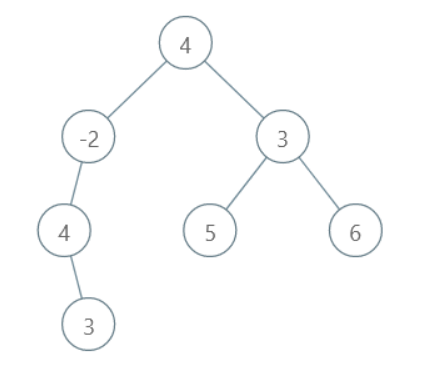
All the possible root to leaf paths are:
3, 4, -2, 4 with sum 9
5, 3, 4 with sum 12
6, 3, 4 with sum 13
Here, the maximum sum is 13. Thus, the output path will be 6, 3, 4.
Note:
There will be only 1 path with max sum.
Problem approach
You are given a binary tree of 'N' nodes.
Your task is to find the path from the leaf node to the root node which has the maximum path sum among all the root to leaf paths
02
Round
Hard
Face to Face
Duration45 minutes
Interview date8 Oct 2021
Coding problem2
1. Rearrange the array
Moderate
15m average time
90% success
0/80
Asked in companies


You are given an array/list 'NUM' of integers. You are supposed to rearrange the elements of the given 'NUM' so that after rearranging the given array/list there are no two adjacent elements present in the rearranged 'NUM' which will be the same.
For example:
Input: NUM[] = {1,1,1,2,2,2}
Output: {1,2,1,2,1,2}
Note: {2,1,2,1,2,1} is also valid because there are no two adjacent which are the same.
Problem approach
You are given an array/list 'NUM' of integers. You are supposed to rearrange the elements of the given 'NUM' so that after rearranging the given array/list there are no two adjacent elements present in the rearranged 'NUM' which will be the same.
2. Maximum Sum
Moderate
35m average time
70% success
0/80
Asked in companies



You are given an array “ARR” of N integers. You are required to perform an operation on the array each time until it becomes empty. The operation is to select an element from the array(let’s say at ith index i.e ARR[i]) and remove one occurrence of the selected element from the array and remove all the occurrences of (ARR[i]-1) and (ARR[i]+1) from the array(if present). Your task is to maximize the sum of selected elements from the array.
For example, let’s say the given array is [2, 3, 3, 3, 4, 5].
The maximum possible sum for the given array would be 14. Because if we select one of the 3’s from the array, then one 3 and all occurrences of (3-1) and (3+1) i.e 2 and 4 will be deleted from the array. Now we left with {3,3,5} elements in the array. Then again we select 3 in the next two steps and in both steps 3 will be deleted also (3-1) and (3+1) doesn't exist in the array so nothing extra to delete in both steps. Now we left with only {5} and in the next step, we select the 5 and delete it. Then the array becomes empty. Thus the sum of selected elements will be 3+3+3+5 = 14.
Problem approach
You are given an array “ARR” of N integers. You are required to perform an operation on the array each time until it becomes empty. The operation is to select an element from the array(let’s say at ith index i.e ARR[i]) and remove one occurrence of the selected element from the array and remove all the occurrences of (ARR[i]-1) and (ARR[i]+1) from the array(if present). Your task is to maximize the sum of selected elements from the array.
For example, let’s say the given array is [2, 3, 3, 3, 4, 5].
The maximum possible sum for the given array would be 14. Because if we select one of the 3’s from the array, then one 3 and all occurrences of (3-1) and (3+1) i.e 2 and 4 will be deleted from the array. Now we left with {3,3,5} elements in the array. Then again we select 3 in the next two steps and in both steps 3 will be deleted also (3-1) and (3+1) doesn't exist in the array so nothing extra to delete in both steps. Now we left with only {5} and in the next step, we select the 5 and delete it. Then the array becomes empty. Thus the sum of selected elements will be 3+3+3+5 = 14.


Here's your problem of the day 
Solving this problem will increase your chance to get selected in this company
Skill covered: Programming
To make an AI less repetitive in a long paragraph, you should increase:
Choose another skill to practice
Similar interview experiences
SDE - 1
2 rounds | 3 problems
Interviewed by Paytm (One97 Communications Limited)
 Selected
923 views

0 comments

0 upvotes
SDE - 1
2 rounds | 5 problems
Interviewed by Paytm (One97 Communications Limited)
Rejected
716 views
0 comments
0 upvotes
SDE - 1
3 rounds | 10 problems
Interviewed by Paytm (One97 Communications Limited)
Rejected
542 views
0 comments
0 upvotes
SDE - 1
3 rounds | 8 problems
Interviewed by Paytm (One97 Communications Limited)
Selected 522 views
0 comments
0 upvotes
Companies with similar interview experiences

SDE - 1
5 rounds | 12 problems
Interviewed by Amazon
 Selected
 114453 views
24 comments
0 upvotes
SDE - 1
4 rounds | 5 problems
Interviewed by Microsoft
Selected 57719 views
5 comments
0 upvotes
SDE - 1
3 rounds | 7 problems
Interviewed by Amazon
 Selected
 34914 views
7 comments
0 upvotes