





Paytm (One97 Communications Limited) interview experience Real time questions & tips from candidates to crack your interview

SDE - 1
Paytm (One97 Communications Limited)


3 rounds | 6 Coding
problems

Rejected
Interview preparation journey

Journey
I was advised by my seniors to practice DSA from the very starting of B.Tech but I did not took that seriously. Honestly speaking, I regretted not taking their advice and in third year I started doing coding and I had to increase practice hours because I started late. But by the end of Third year, I was confident in both DSA and development but even then, I kept on revising the concepts.
Application story
This company visited to my campus for the placement. We just had to upload resume and fill all details in the form. First, they took the online assessment. Later, they called us for the interview rounds.
Why selected/rejected for the role?
The basic reason for my rejection was my not that much strong knowledge of core DSA fundamentals and my problem-solving ability is also not that much good.
Preparation
Duration: 6 months
Topics: Data Structures, Algorithms, OOPS, Dynamic Programming

Tip 1 : Practice popular questions from Arrays, Binary Trees, LinkedLists from CodeStudio's Interview Problems
Tip 2 : Make sure you are aware of calculating the time and space complexity for every problem you're coding.
Tip 3 : Prepare through Mock Interviews to practice explaining your approach while solving in an actual interview.
Application process
Where: Campus
Eligibility: Above 6 CGPA
Tip 1 : Describe best of your projects in minimum words. Don't forget to add buzz words like REST APIs/ DB Indexing/ Benchmarking etc if you worked on backend.
Tip 2 : Don't add school achievements like Olympiads or Class Topper in your resume.
Tip 3 : If you've some work experience, put it in a way ,you're marketing yourself. Add terms like 'Created/Owned the Project through entire SDLC'
Tip 4 : Make sure you mention how your work experience actually impacted the company. Or how your self project can be actually useful to end user.
Interview rounds
01
Round
Easy
Face to Face
Duration60 minutes
Interview date28 Oct 2022
Coding problem2
1. Leftmost and rightmost nodes in a binary tree
Easy
20m average time
80% success

0/40
Asked in companies


You are given an arbitrary binary tree with N nodes, whose nodes have their values in the range of integers. You have to print the values of leftmost and rightmost nodes at each level of the given tree. In other words, for every level in the given tree, print the values of corner nodes.
Two nodes are said to be at the same level if they are at the same distance from the root node.
Note:
1. For all such levels where there is only one corner node the leftmost and the rightmost nodes are the same.
2. In the output, you have to print the leftmost and rightmost values in level order fashion i.e, the leftmost node of level1 followed by the rightmost node of level1 followed by the leftmost node of level2 followed by the rightmost node of level2 and so on.
Problem approach
Given a Binary Tree, Print the corner nodes at each level. The node at the leftmost and the node at the rightmost.
2. Reverse Stack Using Recursion
Easy
21m average time
80% success
0/40
Asked in companies



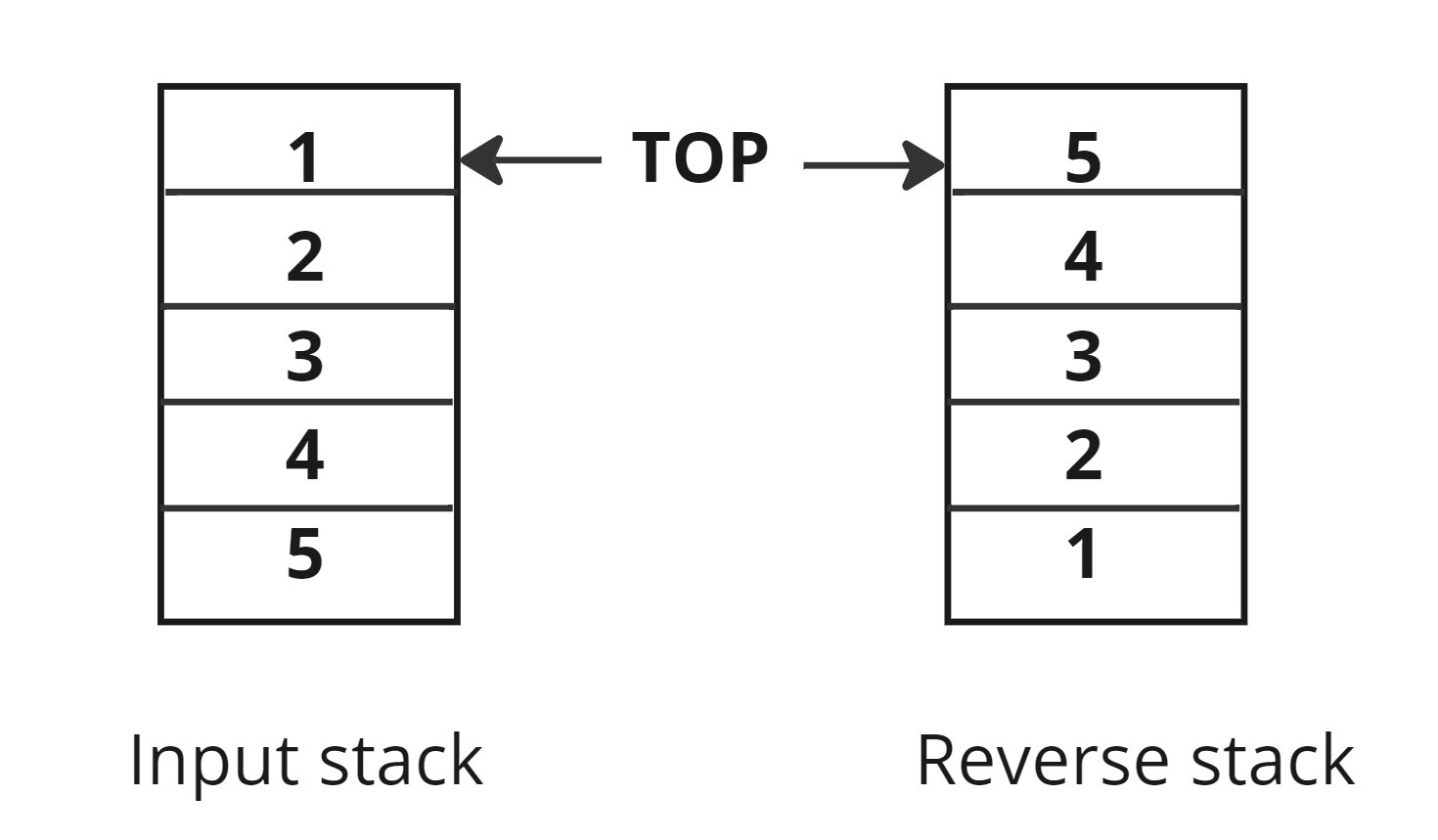
Reverse a given stack of 'N' integers using recursion. You are required to make changes in the input parameter itself.
Note: You are not allowed to use any extra space other than the internal stack space used due to recursion.
Example:
Input: [1,2,3,4,5]
Output: [5,4,3,2,1]
02
Round
Medium
Video Call
Duration60 minutes
Interview date28 Oct 2022
Coding problem2
1. Maximum Subarray Sum
Moderate
25m average time
75% success
0/80
Asked in companies



Given an array of numbers, find the maximum sum of any contiguous subarray of the array.
For example, given the array [34, -50, 42, 14, -5, 86], the maximum sum would be 137, since we would take elements 42, 14, -5, and 86.
Given the array [-5, -1, -8, -9], the maximum sum would be -1.
Follow up: Do this in O(N) time.
Problem approach
You are given an array of length N, consisting of integers. You have to find the sum of the subarray having maximum sum among all subarrays.
A subarray is a contiguous segment of an array. In other words, a subarray can be formed by removing 0 or more integers from the beginning, and 0 or more integers from the end of an array.
2. Connect n ropes with minimum cost
Easy
20m average time
80% success
0/40
Asked in companies


You have been given 'N' ropes of different lengths, we need to connect these ropes into one rope. The cost to connect two ropes is equal to sum of their lengths. We need to connect the ropes with minimum cost.
The test-data is such that the result will fit into a 32-bit integer.
Problem approach
You have been given N ropes of different lengths, we need to connect these ropes into one rope. The cost to connect two ropes is equal to sum of their lengths. We need to connect the ropes with minimum cost.
03
Round
Medium
Video Call
Duration60 minutes
Interview date28 Oct 2022
Coding problem2
1. Left View of Binary Tree
Moderate
30m average time
60% success
0/80
Asked in companies



You have been given a Binary Tree of 'n' nodes, where the nodes have integer values
Print the left view of the binary tree.
Example :
If the input tree is as depicted in the picture:
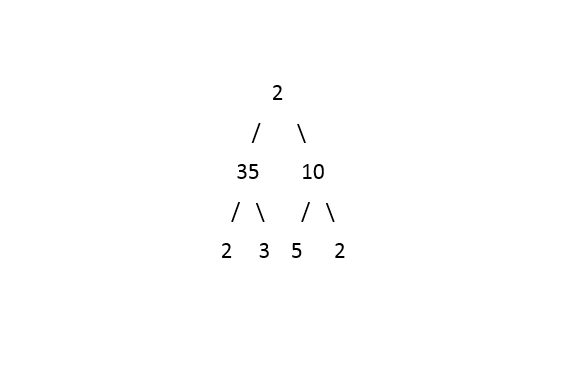
The Left View of the tree will be: 2 35 2
Problem approach
Given a binary tree. Print the Left View of the Tree.
2. Triplets in Binary Tree
Easy
15m average time
85% success
0/40
Asked in companies
You have been given a Binary Tree of integers and an integer 'X'. Find all the triplets in the tree whose sum is strictly greater than 'X'. The nodes in the triplet must hold the relationship of grandparent-parent-child.
For example:
For the given binary tree and X = 9
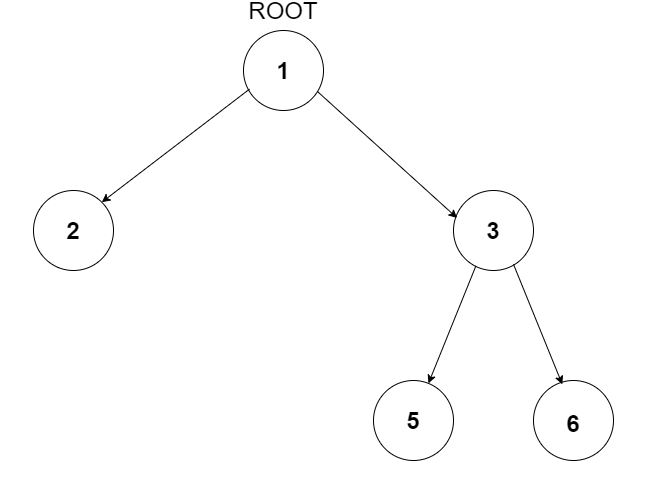
{1, 3, 6} is a valid triplet because 6 is a node whose parent is 3 and grand-parent is 1. Also, the sum of these nodes is 1 + 3 + 6 = 10 which is strictly greater than X = 9.
Problem approach
You have been given a Binary Tree of integers and an integer 'X'. Find all the triplets in the tree whose sum is strictly greater than 'X'. The nodes in the triplet must hold the relationship of grandparent-parent-child.


Here's your problem of the day 
Solving this problem will increase your chance to get selected in this company
Skill covered: Programming
To make an AI less repetitive in a long paragraph, you should increase:
Choose another skill to practice
Similar interview experiences
SDE - 1
2 rounds | 3 problems
Interviewed by Paytm (One97 Communications Limited)
 Selected
922 views

0 comments

0 upvotes
SDE - 1
2 rounds | 5 problems
Interviewed by Paytm (One97 Communications Limited)
Rejected
715 views
0 comments
0 upvotes
SDE - 1
3 rounds | 10 problems
Interviewed by Paytm (One97 Communications Limited)
Rejected
541 views
0 comments
0 upvotes
SDE - 1
3 rounds | 8 problems
Interviewed by Paytm (One97 Communications Limited)
Selected 521 views
0 comments
0 upvotes
Companies with similar interview experiences
SDE - 1
5 rounds | 12 problems
Interviewed by Amazon
 Selected
 114452 views
24 comments
0 upvotes
SDE - 1
4 rounds | 5 problems
Interviewed by Microsoft
Selected 57718 views
5 comments
0 upvotes
SDE - 1
3 rounds | 7 problems
Interviewed by Amazon
 Selected
 34913 views
7 comments
0 upvotes