





PplWork interview experience Real time questions & tips from candidates to crack your interview
SDE
PplWork


2 rounds | 4 Coding
problems

Rejected
Interview preparation journey

Journey
First of all, I got selected for a Tier 1 college from there, my journey in coding started. I have done most of my coding in my final years only, but I till now regret that I should have started a little bit earlier
Application story
This is a campus opportunity this company visited our college and take OA, which is a little bit harder.
Why selected/rejected for the role?
I was rejected because i do not have some decent projects in my resume and i was not confirtable in answering all the questions answers
Preparation
Duration: 4 months
Topics: Data Structures, Computer Network, DevOps, OOPS, System Design, Algorithms, Dynamic Programming

Tip 1 : Do 500 good quality questions
Tip 2 : Have some decent project in your resume
Application process
Where: Campus
Eligibility: Above 7 CGPA
Tip 1 : Have some projects on resume.
Tip 2 : Do not put false things on resume.

Interview rounds
01
Round
Medium
Video Call
Duration45 minutes
Interview date15 Dec 2022
Coding problem2
1. Minimum and Maximum Cost to buy N Candies
Hard
10m average time
90% success

0/120
Asked in companies



Ram went to a specialty candy store in Ninjaland which has 'N' candies with different costs.
The Candy shop gives a special offer to its customers. A customer can buy a single candy from the store and get at most 'K' different candies for free. Now, Ram is interested in knowing the maximum and the minimum amount he needs to spend for buying all the candies available in the store.
Note: In both cases, Ram must utilize the offer i.e. if 'K' or more candies are available, he must take 'K' candies for every candy purchase. If less than K candies are available, he must take all candies for a candy purchase.
For Example :
For 'N' =  5 and 'K' = 2

Let the cost of different candies in the store be: [9 8 2 6 4]

For the minimum amount:
Ram can buy a candy with cost 2 and take candies with costs 9 and 8 for free.
Then, he can buy a candy with cost 4 and take candy with cost 7 for free.
Thus, the minimum cost will be 6 i.e. 2 + 4.

For the maximum amount:
Ram can buy a candy with cost 9 and take candies with costs 2 and 6 for free.
Then, he can buy candy at cost 8 and take candy at cost 4 for free.
Thus, the minimum cost will be 17 i.e. 9 + 8.

Thus, Minimum = 6 and Maximum = 17.
Problem approach
Ram went to a specialty candy store in Ninjaland which has 'N' candies with different costs.
The Candy shop gives a special offer to its customers. A customer can buy a single candy from the store and get at most 'K' different candies for free. Now, Ram is interested in knowing the maximum and the minimum amount he needs to spend for buying all the candies available in the store.
Note: In both cases, Ram must utilize the offer i.e. if 'K' or more candies are available, he must take 'K' candies for every candy purchase. If less than K candies are available, he must take all candies for a candy purchase.
2. Minimum Cost
Easy
15m average time
85% success
0/40
Asked in companies



There are ‘N’ numbers of balls in a room that are placed in a row. You are given an array ‘location’ where location[ i ] denotes the location of the ‘i-th’ ball.
You have to move all the balls at the same location, and it is given that you can move a ball from position [ i ] to
1. position[i] + 2 with cost = 0.
2. position[i] + 1 with cost = 1.
Your task is to find the minimum cost required to move all the balls at the same location.
For Example :
If we have three balls placed at [ 1, 3, 4 ]
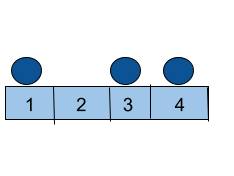
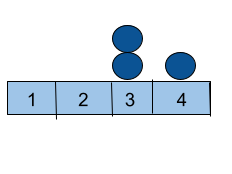
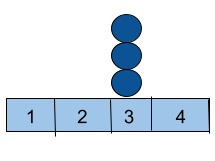
At first, move the ball from position ‘1’ to position ‘3’ with cost = 0.
Then move the ball from position ‘4’ to position ‘3’ with cost =1.
As the minimum cost = 1, so you need to print 1.
Problem approach
You have given two strings 'str1' and 'str2'. Find the minimum operations required to convert str1 into str2.
02
Round
Easy
Video Call
Duration60 minutes
Interview date15 Dec 2022
Coding problem2
1. Connect N Ropes With Minimum Cost
Easy
20m average time
80% success
0/40
Asked in companies


You have been given 'N' ropes of different lengths, we need to connect these ropes into one rope. The cost to connect two ropes is equal to sum of their lengths. We need to connect the ropes with minimum cost.
The test-data is such that the result will fit into a 32-bit integer.
Problem approach
You have been given 'N' ropes of different lengths, we need to connect these ropes into one rope. The cost to connect two ropes is equal to sum of their lengths. We need to connect the ropes with minimum cost.
The test-data is such that the result will fit into a 32-bit integer.
2. Cycle Detection In Undirected Graph
Moderate
0/80
Asked in companies


You have been given an undirected graph with 'N' vertices and 'M' edges. The vertices are labelled from 1 to 'N'.
Your task is to find if the graph contains a cycle or not.
A path that starts from a given vertex and ends at the same vertex traversing the edges only once is called a cycle.
Example :
In the below graph, there exists a cycle between vertex 1, 2 and 3.
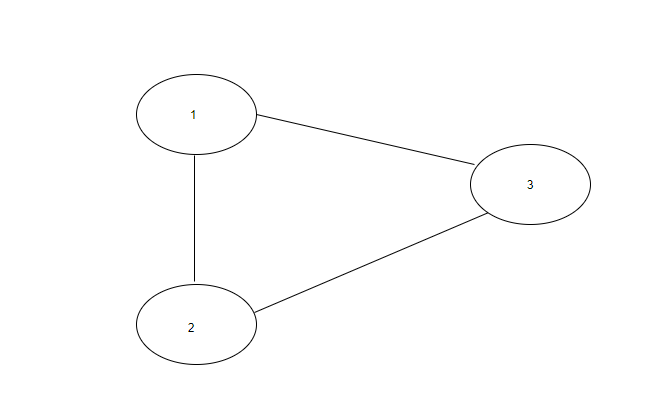
Note:
1. There are no parallel edges between two vertices.

2. There are no self-loops(an edge connecting the vertex to itself) in the graph.

3. The graph can be disconnected.
For Example :
Input: N = 3 , Edges =  [[1, 2], [2, 3], [1, 3]].
Output: Yes

Explanation : There are a total of 3 vertices in the graph. There is an edge between vertex 1 and 2, vertex 2 and 3 and vertex 1 and 3. So, there exists a cycle in the graph.


Here's your problem of the day 
Solving this problem will increase your chance to get selected in this company
Skill covered: Programming
How do you remove whitespace from the start of a string?
Choose another skill to practice
Similar interview experiences

SDE - 1
3 rounds | 7 problems
Interviewed by OYO
 Selected
6182 views

0 comments

0 upvotes
Software Engineer
3 rounds | 5 problems
Interviewed by PplWork
Rejected
479 views
0 comments
0 upvotes

SDE - 1
2 rounds | 5 problems
Interviewed by Meesho
Rejected
7245 views
0 comments
0 upvotes

SDE - 1
3 rounds | 9 problems
Interviewed by Salesforce
 Selected
 4552 views
0 comments
0 upvotes
Companies with similar interview experiences

SDE
3 rounds | 6 problems
Interviewed by PhonePe
Selected 0 views
0 comments
0 upvotes

SDE
5 rounds | 8 problems
Interviewed by Mathworks
Selected 1324 views
0 comments
0 upvotes
SDE
4 rounds | 7 problems
Interviewed by PhonePe
Selected 0 views
0 comments
0 upvotes