





Quest Global Pvt. Services Ltd interview experience Real time questions & tips from candidates to crack your interview
SDE - 1
Quest Global Pvt. Services Ltd


2 rounds | 7 Coding
problems

 Selected
 Interview preparation journey

Preparation
Duration: 6 months
Topics: Data Structures, Pointers, OOPS, System Design, Algorithms, Dynamic Programming

Tip 1 - Practice atleast 100 questions of coding & aptitude
Tip 2 - Do atleast 1 projects
Application process
Where: Campus
Eligibility: Need development projects on Resume
Tip 1 : Have some projects on resume.
Tip 2 : Do not put false things on resume.

Interview rounds
01
Round
Medium
Online Coding Interview
Duration1 hour
Interview date6 Jul 2022
Coding problem6
- Morning time
- Environment was good.
- No
- Interviewer was good
1. Tiling Problem
Hard
45m average time

0/120
Asked in companies



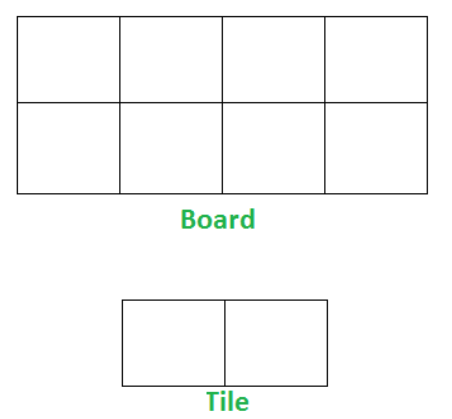
You have been given a board where there are '2' rows and 'N' columns. You have an infinite supply of 2x1 tiles, and you can place a tile in the following ways:
1. Horizontally as 1x2 tile
2. Vertically as 2x1 tile
Count the number of ways to tile the given board using the available tiles.
Note :
The number of ways might be large so output your answer modulo 10^9 + 7.
Here an example of tile and board for 'N' = 4 :
Problem approach
s1- I have done this problem earlier.
s2- so got the DP based approach during the test and this approach passed all the test cases.
2. Find K’th Character of Decrypted String
Moderate
33m average time
0/80
Asked in companies


You have been given an Encrypted String where repetitions of substrings are represented as substring followed by the count of substrings.
Example: String "aabbbcdcdcd" will be encrypted as "a2b3cd3".
You need to find the 'K'th character of Decrypted String. Decrypted String would have 1-based indexing.
Note :
Input string will always be lowercase characters without any spaces.

If the count of a substring is 1 then also it will be followed by Integer '1'.
Example: "aabcdee" will be Encrypted as "a2bcd1e2"
This means it's guaranteed that each substring is followed by some Integer.

Also, the frequency of encrypted substring can be of more than one digit. For example, in "ab12c3", ab is repeated 12 times. No leading 0 is present in the frequency of substring.

The frequency of a repeated substring can also be in parts.
Example: "aaaabbbb" can also have "a2a2b3b1" as Encrypted String.
Problem approach
s1- I simply decrypt the string by reading substring and their frequency.
s2- Append current substring to the decrypted string and after the end of traversal of given string our answer will be kth element of the decrypted string.
3. Buying Stocks
Easy
10m average time
90% success
0/40
Asked in company

You have made a New Year’s Resolution to make a lot of money, and based on the advice of your smart (Not really) friends, you decide to invest in the stock market.
There are ‘N’ different stocks currently available in the market, and you have a magical machine that can accurately predict how much profit you can make on each stock. Sometimes, this value can be negative, indicating that buying it leads to a loss.
You can purchase at most ‘K’ of these stocks (or none at all). Given an array of the profits on each stock, find the maximum profit you can make.
For example:
If there are 3 stocks and the profit on them is [1,3,-2], and you are allowed to buy at most 1 stock, you can buy the second one and make a profit of 3.
Problem approach
s1- first line contains an integer 't' which denotes the number of test cases or queries to be run.
s2- first line of each test case or query contains an integer 'N' representing the total number of days for which you have stock prices.
s3- I follow merge sort and traverse the string at 1 sec.
4. Minimum Cost Path
Moderate
25m average time
70% success
0/80
Asked in companies



You have been given a matrix of ‘N’ rows and ‘M’ columns filled up with integers. Find the minimum sum that can be obtained from a path which from cell (x,y) and ends at the top left corner (1,1).
From any cell in a row, we can move to the right, down or the down right diagonal cell. So from a particular cell (row, col), we can move to the following three cells:
Down: (row+1,col)
Right: (row, col+1)
Down right diagonal: (row+1, col+1)
Problem approach
s1- I had practiced enough of DP questions, so this one looked fairly easy. Since it was a standard DP question, the same approach worked here too.
s2- Apply 1-D matrix
s3- Traverse down the tree
5. Maximum Subarray Sum
Moderate
35m average time
81% success
0/80
Asked in companies



You are given an array 'arr' of length 'n', consisting of integers.
A subarray is a contiguous segment of an array. In other words, a subarray can be formed by removing 0 or more integers from the beginning and 0 or more integers from the end of an array.
Find the sum of the subarray (including empty subarray) having maximum sum among all subarrays.
The sum of an empty subarray is 0.
Example :
Input: 'arr' = [1, 2, 7, -4, 3, 2, -10, 9, 1]

Output: 11

Explanation: The subarray yielding the maximum sum is [1, 2, 7, -4, 3, 2].
Problem approach
s1- I used Kadane algorithm here to find subarray with maximum sum. It is a standard question for interview.
s2- Find subarray with 1-D array
s3- compare the largest number and print it
6. DBMS Questions
Which of the following is generally used for performing tasks like creating the structure of the relations, deleting relation?
DML(Data Manipulation Language)
Query
Relational Schema
DDL(Data Definition Language)
Problem approach
Tip 1 : Read Galvin for OS thoroughly.
Tip 2: Practice on DML,DCL
02
Round
Medium
HR Round
Duration15 min
Interview date21 Sep 2022
Coding problem1
- Morning time
- Environment was good.
- No
- Interviewer was good
1. Basic HR Questions
What do you know about our company?
How would you improve our current product or service?
How would your current manager describe you?
Where do you see yourself in five years?
What questions do you have for me?
Problem approach
Tip 1: Communication is the key.
Tip 2: Practice by mock interviews


Here's your problem of the day 
Solving this problem will increase your chance to get selected in this company
Skill covered: Programming
How do you remove whitespace from the start of a string?
Choose another skill to practice
Similar interview experiences
Senior Software Engineer
3 rounds | 21 problems
Interviewed by Quest Global Pvt. Services Ltd
 Selected
2101 views

1 comments

0 upvotes
Senior Software Engineer
3 rounds | 19 problems
Interviewed by Quest Global Pvt. Services Ltd
Selected 1536 views
0 comments
0 upvotes
Senior Software Engineer
3 rounds | 7 problems
Interviewed by Quest Global Pvt. Services Ltd
 Selected
 1802 views
0 comments
0 upvotes
QA Engineer
3 rounds | 6 problems
Interviewed by Quest Global Pvt. Services Ltd
 Selected
 1349 views
0 comments
0 upvotes
Companies with similar interview experiences

SDE - 1
2 rounds | 3 problems
Interviewed by BNY Mellon
 Selected
 6786 views
3 comments
0 upvotes
SDE - 1
3 rounds | 6 problems
Interviewed by BNY Mellon
 Selected
 0 views
0 comments
0 upvotes

SDE - 1
3 rounds | 5 problems
Interviewed by CIS - Cyber Infrastructure
Selected 2419 views
0 comments
0 upvotes