





Quest Global Pvt. Services Ltd interview experience Real time questions & tips from candidates to crack your interview
QA Engineer
Quest Global Pvt. Services Ltd


3 rounds | 6 Coding
problems

 Selected
 Interview preparation journey

Preparation
Duration: 3 months
Topics: Data Structures, Pointers, OOPS, System Design, Algorithms, Dynamic Programming

Tip 1 : Participate in live contests on websites like Codechef, Codeforces, etc as much as possible.
Tip 2 : Practice previous interview questions from LeetCode, GeeksForGeeks.
Tip 3 : Revise Computer Science subjects like DBMS, OOPS thoroughly.
Application process
Where: Campus
Eligibility: No criteria
Tip 1 : Only write those things in the resume which you are confident of and keep practicing.
Tip 2 : Have some projects on resume.

Interview rounds
01
Round
Medium
Online Coding Test
Duration60 minutes
Interview date15 Jun 2022
Coding problem2
- Morning time
- Environment was good.
- No
- Interviewer was good
1. Left View of Binary Tree
Moderate
30m average time
60% success

0/80
Asked in companies



You have been given a Binary Tree of 'n' nodes, where the nodes have integer values
Print the left view of the binary tree.
Example :
If the input tree is as depicted in the picture:
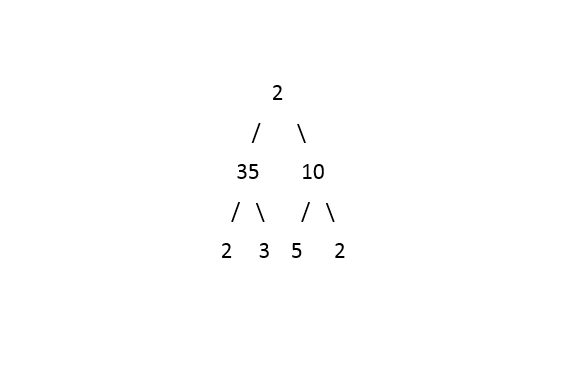
The Left View of the tree will be: 2 35 2
Problem approach
s1- his was again a very standard question and solved it using recursion.
s2- The root node of the tree is 1, left child of 1 = 3
2. House Robber
Moderate
26m average time
0/80
Asked in companies



A thief wants to loot houses. He knows the amount of money in each house. He cannot loot two consecutive houses. Find the maximum amount of money he can loot.
02
Round
Medium
Assignment
Duration60 minutes
Interview date15 Jun 2022
Coding problem1
1. Technical Questions
- Tell me the diference between Mutex and Semaphores with a real-life example.
- What is Normalization and why it is done?
- What is REST API?
- Write a shell script to parse a log file.
Problem approach
Tip 1 : Read Galvin and by Coding Ninja practice at least 100 questions.
Tip 2 : Practice coding by geeks for geeks
03
Round
Hard
Face to Face
Duration60 minutes
Interview date21 Jul 2022
Coding problem3
- Morning time
- Environment was good.
- No
- Interviewer was good
1. Colorful Knapsack
Hard
45m average time
0/120
Asked in companies

You are given 'N' stones labeled from 1 to 'N'. The 'i-th' stone has the weight W[i]. There are 'M' colors labeled by integers from 1 to 'M'. The 'i-th' stone has the color C[i] which is an integer between 1 to 'M', both inclusive.
You have been required to fill a Knapsack with these stones. The Knapsack can hold a total weight of 'X'.
You are required to select exactly 'M' stones; one of each color. The sum of the weights of the stones must not exceed 'X'. Since you paid a premium for a Knapsack with capacity 'X', you are required to fill the Knapsack as much as possible.
Write a program to calculate the best way to fill the Knapsack - that is, the unused capacity should be minimized.
Problem approach
s1 -This was solved by me through dynamic programming. Let dp[i][j] denote the maximum possible weight you can fill in the bag with a total capacity of j using exactly one stone of each color from 1 to i.
s2 - Now you can club all same-colored stones in a vector. Then this problem is same as the classical knapsack problem and I passed all test cases and selected for the next round.
2. Longest Increasing Subsequence
Moderate
30m average time
65% success
0/80
Asked in companies


For a given array with N elements, you need to find the length of the longest subsequence from the array such that all the elements of the subsequence are sorted in strictly increasing order.
Strictly Increasing Sequence is when each term in the sequence is larger than the preceding term.
For example:
[1, 2, 3, 4] is a strictly increasing array, while [2, 1, 4, 3] is not.
Problem approach
s1- Firstly I gave recursion approach but then the interviewer
s2- asked me to optimize that so I gave him a standard DP approach for the longest increasing subsequences by storing the result and use them for future calculations of bigger problem.
3. Merge Point Of Two Linked Lists
Moderate
0/80
Asked in companies


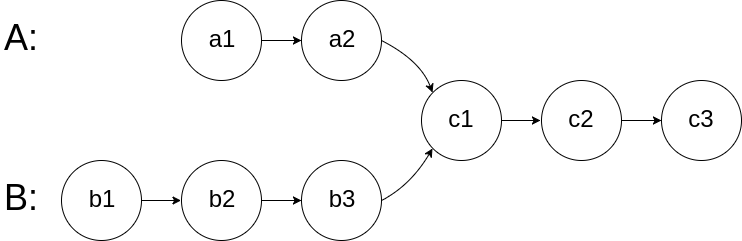
Given two singly linked lists, 'FIRST_HEAD' and 'SECOND_HEAD'. Your task is to find the 'MERGING POINT' i.e. the data of the node at which merging starts. If there is no merging, return -1.
For example:-
The given Linked Lists are merging at node c1.
In this case, c1 is 'MERGING POINT'.
Problem approach
s1- At first I gave the interviewer a complete brute force by considering each element of the first list and comparing it with each element of another list but that was inefficient.
s2- So I gave the interviewer optimal approach by finding difference of lengths of linked list and then traverse bigger linked list to difference. Now start traversing both linked lists till we find the common element. This solution impressed the interviewer.


Here's your problem of the day 
Solving this problem will increase your chance to get selected in this company
Skill covered: Programming
How do you remove whitespace from the start of a string?
Choose another skill to practice
Similar interview experiences
Software Testing Engineer
3 rounds | 19 problems
Interviewed by Quest Global Pvt. Services Ltd
 Selected
1384 views

0 comments

0 upvotes
Senior Software Engineer
3 rounds | 21 problems
Interviewed by Quest Global Pvt. Services Ltd
Selected 2101 views
1 comments
0 upvotes
Senior Software Engineer
3 rounds | 19 problems
Interviewed by Quest Global Pvt. Services Ltd
Selected 1536 views
0 comments
0 upvotes
Senior Software Engineer
3 rounds | 7 problems
Interviewed by Quest Global Pvt. Services Ltd
 Selected
 1802 views
0 comments
0 upvotes