





Razorpay interview experience Real time questions & tips from candidates to crack your interview
SDE - Intern
Razorpay


2 rounds | 6 Coding
problems

Rejected
Interview preparation journey

Journey
My journey into software development began during my early college days at MNNIT Allahabad, where I gradually developed an interest in problem-solving and core computer science concepts. I started by learning Data Structures and Algorithms and consistently practiced on online platforms, which helped me build strong logical thinking and discipline.
Alongside DSA, I also focused on development by working on backend projects such as a Job Finder platform and a URL shortener. These projects gave me hands-on experience with building and understanding real-world systems.
Application story
The opportunity came through an on-campus placement drive at MNNIT Allahabad. The company opened applications for multiple branches, including CSE, ECE, and EE. After submitting my resume through the college placement portal, I was shortlisted for the online assessment round based on my profile, which included my DSA practice, projects, and internship experience. The overall process was smooth and well-structured, starting from the initial screening round and progressing to further interview rounds.
Why selected/rejected for the role?
I was able to clear multiple rounds of the process by demonstrating strong problem-solving skills in DSA and having relevant backend development experience through my projects and internship. However, in the final stage, the competition was very strong, and I feel the decision came down to slight differences in system design depth and overall communication. In a few cases, I could have structured my answers more clearly and discussed trade-offs in more detail. Overall, it was a great learning experience and helped me identify areas to improve further.
Preparation
Duration: 13 months
Topics: Data Structures and Algorithms, Dynamic Programming, Graphs, Trees, Object-Oriented Programming, Operating Systems, DBMS, System Design (Basics), REST APIs, Backend Development (Node.js & Spring Boot)

Tip 1: Focus on consistency in DSA—solve problems daily and revise important patterns like DP, graphs, and trees regularly.
Tip 2: Don’t just code, practice explaining your approach clearly as communication plays a crucial role in interviews.
Tip 3: Build real-world projects and understand them deeply (APIs, database design, scalability) as interviewers often ask in-depth questions from your resume.
Application process
Where: Campus
Eligibility: 7 CGPA, (Stipend: 75k per month)
Tip 1: Ensure your resume highlights strong projects and internships with clear impact (use metrics like performance improvement or efficiency gains).
Tip 2: Be thorough with everything mentioned on your resume, as interviewers often ask deep questions from your projects and experience.

Interview rounds
01
Round
Medium
Online Coding Interview
Duration90 minutes
Interview date27 Sep 2025
Coding problem4
The online assessment was conducted on 27th September 2025 at around 6 PM in a proctored environment during the on-campus placement process at MNNIT Allahabad. The platform was smooth and the environment was well-structured. The round consisted of both MCQs and coding questions. The MCQs tested core CS fundamentals like OS, OOPS, DBMS, and basic data structures. After that, there were 3 coding questions with a higher level of difficulty, focusing on problem-solving ability and optimization. Overall, the round was moderately difficult and required strong DSA fundamentals along with good time management.
1. Single Source Shortest Path
Easy

0/40
Asked in companies


You are given an undirected graph with 'N' nodes and 'M' edges. The weight of each edge in the graph is one unit.
Given a source vertex 'src', you must return an array 'answer' of length 'N', where 'answer[i]' is the shortest path length between the source vertex 'src' and 'i'th vertex.
Note:
All the nodes are zero-based.
Example:
Input:
N=5, M=5, edges=[(0, 1), (1, 4), (2, 3), (2, 4), (3, 4)], src=1
Output: 1 0 2 2 1
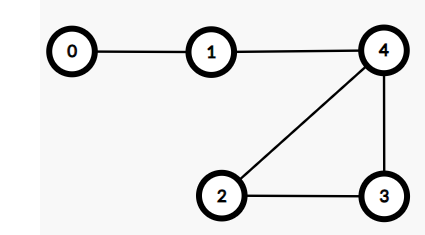
Explanation: The path from vertices are:-
(1->0) = 1 -> 0, path length is 1.
(1->1) = 1 -> 1, path length is 0.
(1->2) = 1 -> 4 -> 2, the path length is 2.
(1->3) = 1 -> 4 -> 3, path length is 2.
(1->4) = 1 -> 4, the path length is 1.
Hence we return [1, 0, 2, 2, 1]
Problem approach
Step 1: I identified this as a shortest path problem in a graph.
Step 2: Since all edges had equal weight, I used BFS instead of Dijkstra.
Step 3: Created an adjacency list to represent the graph.
Step 4: Used a queue to traverse nodes level by level and stored distances.
Step 5: Updated distances for each neighbour if not visited.
Step 6: Returned the final distance array.
2. No Repeated Digits
Moderate
20m average time
80% success
0/80
Asked in company
Elon is a kid who just started learning about numbers, but he always gets afraid when he sees a number with repeated digits, as it becomes hard for him to remember it as it has the same digits repeating again.
So his teacher, knowing of his fear, gave him ‘N’ tasks to cheer him up, for each task Elon have to count the numbers that have no repeated digits in a given range of [‘L’, ‘R’]. The tasks are given by a 2d array ‘TASKS’.
But Elon is again afraid that while counting he may encounter a number with repeated digits, being his friend he asked you to help him. Can you help Elon to find the count of numbers having no repeated digits in the given range for each task?.
NOTE: Both ‘L’ and ‘R’ are included in the range.
Example :
Input: ‘N’ = 1, ‘TASKS = [ [1, 20] ]

Output: 19
For the first task, the given range consists of 20 numbers present out of which ‘11’ is the only number that has repeated occurrences of ‘1’ in its decimal representation.
Problem approach
Step 1: Recognized it as a Digit DP problem due to constraints on digits.
Step 2: Converted the number into a string to process digit by digit.
Step 3: Used recursion with memoization (DP) with states like position, tight constraint, previous digit.
Step 4: At each step, tried all possible digits while maintaining constraints.
Step 5: Avoided choosing the same digit as the previous one.
Step 6: Stored intermediate results to optimize.
3. LRU Cache Implementation
Moderate
25m average time
65% success
0/80
Asked in companies



Design and implement a data structure for Least Recently Used (LRU) cache to support the following operations:
1. get(key) - Return the value of the key if the key exists in the cache, otherwise return -1.

2. put(key, value), Insert the value in the cache if the key is not already present or update the value of the given key if the key is already present. When the cache reaches its capacity, it should invalidate the least recently used item before inserting the new item.
You will be given ‘Q’ queries. Each query will belong to one of these two types:
Type 0: for get(key) operation.
Type 1: for put(key, value) operation.
Note :
1. The cache is initialized with a capacity (the maximum number of unique keys it can hold at a time).

2. Access to an item or key is defined as a get or a put operation on the key. The least recently used key is the one with the oldest access time.
Problem approach
Step 1: Understood that both operations need constant time.
Step 2: Used a combination of HashMap + Doubly Linked List.
Step 3: HashMap stores key → node reference.
Step 4: Doubly Linked List maintains order of usage (most recent at front).
Step 5: On get(): move node to front.
Step 6: On put(): insert/update node and move to front; if capacity exceeded, remove least recently used node (tail).
4. Operating System
Which scheduling algorithm may cause starvation?
a) FCFS
b) Round Robin
c) Priority Scheduling
d) FIFO
Answer: c) Priority Scheduling
Problem approach
Tip 1: Understand core OS concepts like process synchronization (semaphores, mutex), scheduling, and memory management clearly.
Tip 2: Focus on concepts rather than rote learning—questions are often conceptual and scenario-based.
Tip 3: Revise standard topics like paging, deadlocks, and CPU scheduling before interviews.
02
Round
Medium
Video Call
Duration45 minutes
Interview date8 Oct 2025
Coding problem2
It was around 9:30 AM in college, and it was a mix of technical and HR rounds.
1. Unique Paths
Moderate
25m average time
80% success
0/80
Asked in companies



You are present at point ‘A’ which is the top-left cell of an M X N matrix, your destination is point ‘B’, which is the bottom-right cell of the same matrix. Your task is to find the total number of unique paths from point ‘A’ to point ‘B’.In other words, you will be given the dimensions of the matrix as integers ‘M’ and ‘N’, your task is to find the total number of unique paths from the cell MATRIX[0][0] to MATRIX['M' - 1]['N' - 1].
To traverse in the matrix, you can either move Right or Down at each step. For example in a given point MATRIX[i] [j], you can move to either MATRIX[i + 1][j] or MATRIX[i][j + 1].
Problem approach
Step 1: I first identified this as a classic DP problem involving grid traversal with constraints on movement (right and down).
Step 2: I started with a recursive approach where from each cell I tried moving right and down, but it resulted in overlapping subproblems.
Step 3: To optimize, I used Dynamic Programming and created a 2D DP array where dp[i][j] represents the number of ways to reach cell (i, j).
Step 4: Initialized the first row and first column with 1, since there is only one way to reach those cells.
Step 5: For the rest of the cells, I used the relation:
dp[i][j] = dp[i-1][j] + dp[i][j-1]
Step 6: Finally, the answer is stored in dp[m-1][n-1].
Step 7: I also mentioned space optimization using a 1D array to reduce space complexity.
2. Project Discussion
There was a detailed discussion around my URL Shortener project, focusing on High-Level Design (HLD) and real-world scalability. The interviewer asked me to explain the system architecture, including how I generate unique short URLs, handle collisions, and design the database schema.
They also explored how the system would scale with increasing traffic, how redirection latency can be minimized, and how caching mechanisms can be used for optimization. Questions were asked around trade-offs in design decisions, such as choosing between different encoding techniques or database strategies.
Additionally, there was an HR discussion covering questions like:
Challenges faced during project development
Reasons for choosing this project
Key learnings and improvements
The discussion was interactive and focused on understanding both technical depth and clarity of thought.
Problem approach
Tip 1: Be thorough with your projects, especially system design aspects like scalability, database design, and API structure, as interviewers often ask in-depth questions from them.
Tip 2: Prepare to clearly explain your design decisions—why you chose a particular approach, tech stack, and how your system handles real-world challenges.
Tip 3: Practice common HR questions such as challenges faced, key learnings, and motivation behind choosing a project, and answer them in a structured and honest way.


Here's your problem of the day 
Solving this problem will increase your chance to get selected in this company
Skill covered: Programming
How do you remove whitespace from the start of a string?
Choose another skill to practice
Similar interview experiences
SDE - Intern
1 rounds | 3 problems
Interviewed by Razorpay

Rejected

1487 views

0 comments

0 upvotes
SDE - Intern
3 rounds | 5 problems
Interviewed by Razorpay

 Selected
 3102 views
0 comments
0 upvotes
SDE - Intern
2 rounds | 5 problems
Interviewed by Razorpay
 Selected
 1106 views
0 comments
0 upvotes
SDE - Intern
3 rounds | 8 problems
Interviewed by Razorpay
 Selected
 286 views
0 comments
0 upvotes
Companies with similar interview experiences

SDE - Intern
3 rounds | 6 problems
Interviewed by Amazon

Rejected
16212 views
4 comments
0 upvotes

SDE - Intern
4 rounds | 7 problems
Interviewed by Microsoft
Selected 16223 views
1 comments
0 upvotes
SDE - Intern
2 rounds | 4 problems
Interviewed by Amazon
Selected 10541 views
2 comments
0 upvotes