





redBus interview experience Real time questions & tips from candidates to crack your interview

SDE - 1
redBus


3 rounds | 6 Coding
problems

Rejected
Interview preparation journey

Journey
I came to know about this job from their official site. I applied for the job and got selected for the exam. Then, I took the exam and also got selected for the interview.
Application story
It was an on-campus drive, so the college placement cell shared a Google form for us to fill in our details. Students were shortlisted based on their CGPA and the number of offers they had in hand.
Why selected/rejected for the role?
I was not able to answer the optimal approach for a problem, that's why I think, I was rejected in the interview.
Preparation
Duration: 4 months
Topics: Data Structures, Pointers, OOPS, System Design, Algorithms, Dynamic Programming

"Tip 1: Graphs should be at your fingertips.
Tip 2: While explaining the solution to the interviewer, don't just hop onto the most optimal solution. Start with the brute force approach, discuss its cons, and then go step by step until you reach the optimal solution.
Tip 3: Improve your communication skills as well.
Application process
Where: Campus
Eligibility: Above 7 CGPA
Tip 1: Mention only what is required for your profile; for example, do not stress too much on your co-curricular activities. Rather, try explaining more of your technical skills that are relevant to the job.
Tip 2: Keep it limited to one page, and make sure it is a PDF and not an image.

Interview rounds
01
Round
Easy
Video Call
Duration60 minutes
Interview date11 Oct 2022
Coding problem2
The interviewer asked me two coding questions. First, I have given the brute force approach and optimized each approach.
1. Cycle Detection in a Singly Linked List
Moderate
15m average time
80% success

0/80
Asked in companies



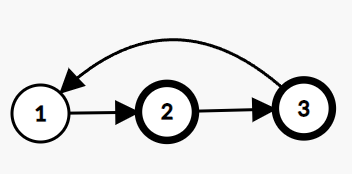
You are given a Singly Linked List of integers. Return true if it has a cycle, else return false.
A cycle occurs when a node's next points back to a previous node in the list.
Example:
In the given linked list, there is a cycle, hence we return true.
Problem approach
You are given a Singly Linked List of integers. Return true, if it has a cycle, else return false.
A cycle occurs when a node's next points back to a previous node in the list.
2. Maximum Subarray Sum
Moderate
25m average time
75% success
0/80
Asked in companies



Given an array of numbers, find the maximum sum of any contiguous subarray of the array.
For example, given the array [34, -50, 42, 14, -5, 86], the maximum sum would be 137, since we would take elements 42, 14, -5, and 86.
Given the array [-5, -1, -8, -9], the maximum sum would be -1.
Follow up: Do this in O(N) time.
Problem approach
You are given an array 'arr' of length 'n', consisting of integers.
A subarray is a contiguous segment of an array. In other words, a subarray can be formed by removing 0 or more integers from the beginning and 0 or more integers from the end of an array.
Find the sum of the subarray (including empty subarray) having maximum sum among all subarrays.
The sum of an empty subarray is 0.
02
Round
Easy
Video Call
Duration60 Minutes
Interview date13 Oct 2022
Coding problem2
1. Intersection of Two Linked Lists
Easy
25m average time
73% success
0/40
Asked in companies


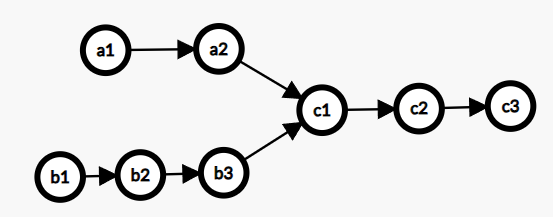
You are given two Singly Linked Lists of integers, which may have an intersection point.
Your task is to return the first intersection node. If there is no intersection, return NULL.
Example:-
The Linked Lists, where a1, a2, c1, c2, c3 is the first linked list and b1, b2, b3, c1, c2, c3 is the second linked list, merging at node c1.
Problem approach
First, I suggested the brute force approach in which we check each element of the first linked list with each element of another linked list and then moved on to the better-optimized solution using linked list traversal based on the difference of lengths of both linked lists.
2. Convert Number To Words
Hard
40m average time
75% success
0/120
Asked in companies



You are given an Integer ‘N’ you have to convert the integer to words.
For example you are given integer N = 2234 then you have to return the string “two thousand two hundred and thirty four”.
Problem approach
The solution involved concepts like Hash Maps & arrays. I was asked to write down the complete code after discussing the approach with the interviewer. She read the complete code, ran through a test case and it worked on pen and paper.
03
Round
Easy
Video Call
Duration60 minutes
Interview date19 Oct 2022
Coding problem2
1. Pair Sum
Easy
15m average time
90% success
0/40
Asked in companies



You are given an integer array 'ARR' of size 'N' and an integer 'S'. Your task is to return the list of all pairs of elements such that each sum of elements of each pair equals 'S'.
Note:
Each pair should be sorted i.e the first value should be less than or equals to the second value.

Return the list of pairs sorted in non-decreasing order of their first value. In case if two pairs have the same first value, the pair with a smaller second value should come first.
Problem approach
The basic approach to solve this problem is by nested traversal.
Traverse the array using a loop
For each element:
Check if there exists another in the array with sum as x
Return true if yes, else continue
If no such pair is found, return false
2. Valid Perfect Square
Easy
10m average time
90% success
0/40
Asked in companies



You have been given an integer ‘N’. You are supposed to find if the given integer ‘N’ is a perfect square or not. A perfect square is an integer that is the square of an integer.
Problem approach
We can simply take square root of ‘a’ and square root of ‘b’ and count the perfect squares between them using
floor(sqrt(b)) - ceil(sqrt(a)) + 1
We take floor of sqrt(b) because we need to consider
numbers before b.
We take ceil of sqrt(a) because we need to consider
numbers after a.
For example, let b = 24, a = 8. floor(sqrt(b)) = 4,
ceil(sqrt(a)) = 3. And number of squares is 4 - 3 + 1
= 2. The two numbers are 9 and 16.


Here's your problem of the day 
Solving this problem will increase your chance to get selected in this company
Skill covered: Programming
How do you remove whitespace from the start of a string?
Choose another skill to practice
Similar interview experiences
SDE - 1
4 rounds | 4 problems
Interviewed by redBus

 Selected
1801 views

0 comments

0 upvotes
SDE - 1
3 rounds | 6 problems
Interviewed by redBus
Rejected
1737 views
0 comments
0 upvotes
SDE - 1
3 rounds | 5 problems
Interviewed by redBus
Rejected
1057 views
0 comments
0 upvotes
SDE - 1
3 rounds | 10 problems
Interviewed by redBus
Rejected
985 views
0 comments
0 upvotes
Companies with similar interview experiences

SDE - 1
5 rounds | 12 problems
Interviewed by Amazon
 Selected
 117552 views
24 comments
0 upvotes

SDE - 1
4 rounds | 5 problems
Interviewed by Microsoft
Selected 60143 views
5 comments
0 upvotes
SDE - 1
3 rounds | 7 problems
Interviewed by Amazon
 Selected
 36138 views
7 comments
0 upvotes