





Salesforce interview experience Real time questions & tips from candidates to crack your interview

Software Developer
Salesforce


2 rounds | 4 Coding
problems

Rejected
Interview preparation journey

Journey
I was admitted to DTU College in the computer science stream. My seniors advised me to practice DSA from the start of B.Tech., but I did not take it seriously. I regretted not following their advice, so in my third year, I started coding and had to increase my practice hours because I began late.
Application story
I applied for the post through the campus drive. After applying, I practiced hard for it and the hardwork paid off at the last.
Why selected/rejected for the role?
I think I was on point with my coding solutions to the questions asked in the interviews. I was not able to provide the optimal solutions, and I gave incorrect explanations to some theory questions asked.
Preparation
Duration: 3 months
Topics: Data Structures, Pointers, OOPS, System Design, Algorithms, Dynamic Programming

Tip 1: Even if you are stuck on a problem, keep trying. The interviewer will help you.
Tip 2: Prepare well in Data Structures and Algorithms. They primarily assess your problem-solving ability to find solutions to real-world problems.
Tip 3: Be confident; don't be nervous. Include at least two projects on your resume.
Application process
Where: Campus
Eligibility: Above 7 CGPA
Tip 1 : Mention at least 2 projects.
Tip 2 : Mention your skills in which you are perfect.
Tip 3 : It should not be too long or too short

Interview rounds
01
Round
Easy
Video Call
Duration60 mins
Interview date21 Oct 2022
Coding problem2
1. Puzzle
You have three mislabeled jars. The first jar contains apples, the second contains oranges, and the third contains a mix of apples and oranges. You need to label the jars. You can pick as many fruits as you want from each jar. What is the minimum number of fruits you have to pick from each jar to label them correctly?
2. Evaluate Division
Moderate
15m average time
85% success

0/80
Asked in companies


You are given an array of pairs of strings 'EQUATIONS', and an array of real numbers 'VALUES'. Each element of the 'EQUATIONS' array denotes a fraction where the first string denotes the numerator variable and the second string denotes the denominator variable, and the corresponding element in 'VALUES' denotes the value this fraction is equal to.
You are given ‘Q’ queries, and each query consists of two strings representing the numerator and the denominator of a fraction. You have to return the value of the given fraction for each query. Return -1 if the value cannot be determined.
Example :
'EQUATIONS' = { {“a”, ”s”} , {“s”, “r”} }
'VALUES' = { 1.5, 2 }
queries = { {“a”, “r” } }

For the above example (a / s) = 1.5 and (s / r) = 2 therefore (a / r) = 1.5 * 2 = 3.
Problem approach
You are given an array of pairs of strings, 'EQUATIONS', and an array of real numbers, 'VALUES'. Each element of the 'EQUATIONS' array denotes a fraction where the first string represents the numerator variable and the second string represents the denominator variable, and the corresponding element in 'VALUES' denotes the value to which this fraction is equal.
02
Round
Easy
Video Call
Duration60 minutes
Interview date21 Oct 2022
Coding problem2
1. Shuffle Two Strings
Hard
50m average time
50% success
0/120
Asked in companies


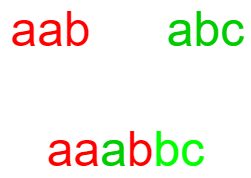
You are given three strings “A”, “B” and “C”. Your task is to check whether “C” is formed by an interleaving of A and B. C is said to be interleaving “A” and “B”, if the length of “C” is equal to the sum of the length of A and length of B, all the characters of “A” and “B” are present in “C”, and the order of all these characters remains the same in all three strings.
For Example:
If A = “aab”, B = “abc”, C = “aaabbc”
Here C is an interleaving string of A and B. Because C contains all the characters of A and B and the order of all these characters is also the same in all three strings.
If A = “abc”, B = “def”, C = “abcdefg”
Here C is not an interleaving string of A and B as neither A nor B contains the character ‘g’.
Problem approach
You are given three strings, 'A,' 'B,' and 'C.' Your task is to check whether 'C' is formed by an interleaving of 'A' and 'B.' 'C' is said to be an interleaving of 'A' and 'B' if the length of 'C' is equal to the sum of the lengths of 'A' and 'B,' all the characters of 'A' and 'B' are present in 'C,' and the order of these characters remains the same in all three strings.
2. Row with Maximum 1's
Easy
10m average time
90% success
0/40
Asked in companies



You have been given a non-empty grid ‘mat’ with 'n' rows and 'm' columns consisting of only 0s and 1s. All the rows are sorted in ascending order.
Your task is to find the index of the row with the maximum number of ones.
Note: If two rows have the same number of ones, consider the one with a smaller index. If there's no row with at least 1 zero, return -1.
Example:
Input: 'n' = 3, 'm' = 3, 'mat' = [[1, 1, 1], [0, 0, 1], [0, 0, 0]]

Output: 0

Explanation: The row with the maximum number of ones is 0 (0 - indexed).
Problem approach
You have been given a non-empty grid ‘mat’ with 'n' rows and 'm' columns, consisting only of 0s and 1s. All the rows are sorted in ascending order.


Here's your problem of the day 
Solving this problem will increase your chance to get selected in this company
Skill covered: Programming
What does dict.keys() return?
Choose another skill to practice
Similar interview experiences
SDE - 1
4 rounds | 7 problems
Interviewed by Salesforce
 Selected
3755 views

0 comments

0 upvotes
Software Developer
2 rounds | 4 problems
Interviewed by Salesforce
Rejected
1502 views
0 comments
0 upvotes
SDE - 1
2 rounds | 4 problems
Interviewed by Salesforce
Rejected
1335 views
0 comments
0 upvotes
SDE - 1
3 rounds | 9 problems
Interviewed by Salesforce
 Selected
 4575 views
0 comments
0 upvotes
Companies with similar interview experiences
Software Developer
5 rounds | 14 problems
Interviewed by Microsoft
 Selected
 4410 views
1 comments
0 upvotes

Software Developer
6 rounds | 12 problems
Interviewed by SAP Labs
Selected 3279 views
0 comments
0 upvotes

Software Developer
3 rounds | 3 problems
Interviewed by Amazon
 Selected
 1729 views
0 comments
0 upvotes