





Samsung interview experience Real time questions & tips from candidates to crack your interview

Software Engineer
Samsung


2 rounds | 3 Coding
problems

 Selected
 Interview preparation journey

Journey
My journey is not very special as I got my job offer through campus placements, but there are some things that I found out were very important during the placement process, like that number one, you should be well versed in DSA, as every company will have a screening test based on DSA followed by a technical interview, which 90% of the time will also be DSA-based, so your concepts related to DSA should be good. Very rarely did I find any company staring away from this path. Once you have command over your DSA, the next thing to go for is OOPS and development, because once you have command over your DSA, OOPS and development start to show their benefits in your interviews. These are the two things that I found missing in most of the candidates who were not able to crack interviews during placement seasons. In my opinion, even just mastery of one of these things can get you a job offer, but the caveat is that you should be well versed in it.
Application story
I had applied through campus placements by sharing my resume, and then I received a mail saying that my resume was shortlisted for the interview.
Why selected/rejected for the role?
The main reason I got selected was because of my DSA and OOPs. During the interview process, the whole thing revolved around DSA and OOPs, which were my strong topics and greatly helped me in getting the job offer.
Preparation
Duration: 4 months
Topics: DSA , OOPS, ALGORITHMS, DP, System Design, web development

Tip 1 : Prepare DSA first
Tip 2 : never forget tip 1
Tip 3 : now work on OOPS and development
Application process
Where: Campus
Eligibility: 7 cgpa.
Tip 1: Keep it simple(resume should only have things that you know and are relevant to the job you are applying to)
Tip 2: Less is good
Tip 3: Try to research the company to which you are applying by looking at their hiring history to find out what skills they are looking for, and then try to tune your resume according to their needs.

Interview rounds
01
Round
Easy
Face to Face
Duration35 minutes
Interview date11 Jan 2022
Coding problem2
This is a technical round.
The timing will be 30 to 40ish minutes.
The panel includes a technical manager and a HR manager.
The interview will only be conducted by the technical manager.
The environment will be calm. The interviewer will help you get calm and try to make you comfortable before starting with the questions.
The interviewer will help you get to the answers and will help you in any way possible in getting to the answers.
1. OOPs Question
Even though I don't remember the problems, I can give you the gist of them.
So the interviewer had already asked me which language I preferred, to which my answer was Java, so the interview revolved around oops in Java and a little bit of DSA.
I was given a problem and asked to demonstrate the oops concepts by coding in the notepad.
Problems revolved around mainly inheritance and polymormishm. I was given a situation, and then I had to code it, following which the interviewer would tinker with the solution and ask why I wrote something, and then ask me what would be the output if he changed a line of code with something else.
Problem approach
Tip 1: ask the interviewer the problem statement clearly and try to clarify all the doubts you have with the problem statement. having a good grasp over oops helped
Tip 2: having practically implemented the oops concepts also helped me.
Tip 3: always remember that interviewer is there to help you
2. Missing Number
Moderate
30m average time
70% success

0/80
Asked in companies


You are given an array/list ‘BINARYNUMS’ that consists of ‘N’ distinct strings which represent all integers from 0 to N in binary representation except one integer. This integer between 0 to ‘N’ whose binary representation is not present in list ‘BINARYNUMS’ is called ‘Missing Integer’.
Your task is to find the binary representation of that ‘Missing Integer’. You should return a string that represents this ‘Missing Integer’ in binary without leading zeros.
Note
1. There will be no leading zeros in any string in the list ‘BINARYNUMS’.
Example:
Consider N = 5 and the list ‘binaryNums’= [“0”, “01”, “010”, “100”, “101”]. This list consists of the binary representation of numbers [0, 1, 2, 4, 5]. Clearly, the missing number is 3 and its binary representation will be “11”. So you should return string “11”.
Problem approach
This problem was an easy DSA-based question, which was quite easy, and the interviewer also realised instantly that I already had the answer, so without wasting any time, he asked me to just tell him the time complexity of the best solution I had, and after hearing my answer, he was quite impressed. To my knowledge, the question was about finding the missing number in a sequence of unordered numbers, and my answer was based on Gauss's theorem.
** The funny thing about this question was that I helped the interviewer frame the question, as the interviewer had forgotten key details of this question.
02
Round
Medium
Online Coding Test
Duration240 minutes
Interview date12 Mar 2022
Coding problem1
This will be an on-site DSA-based coding test that will be conducted in the Samsung SDS office.
The duration will be 4 hours.
There will only be one question, and the languages permitted are Java, C++, and C.
This test is conducted in the Samsung office every Saturday. You have to take all the tests until the first instance of you clearing the test, following which you will get the full-time job offer.
The test will be conducted on the Samsung internal test platform.
1. Cycle Detection In Undirected Graph
Moderate
0/80
Asked in companies


You have been given an undirected graph with 'N' vertices and 'M' edges. The vertices are labelled from 1 to 'N'.
Your task is to find if the graph contains a cycle or not.
A path that starts from a given vertex and ends at the same vertex traversing the edges only once is called a cycle.
Example :
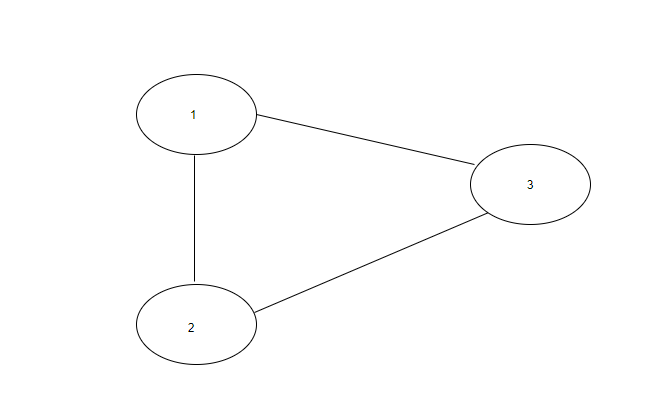
In the below graph, there exists a cycle between vertex 1, 2 and 3.
Note:
1. There are no parallel edges between two vertices.

2. There are no self-loops(an edge connecting the vertex to itself) in the graph.

3. The graph can be disconnected.
For Example :
Input: N = 3 , Edges =  [[1, 2], [2, 3], [1, 3]].
Output: Yes

Explanation : There are a total of 3 vertices in the graph. There is an edge between vertex 1 and 2, vertex 2 and 3 and vertex 1 and 3. So, there exists a cycle in the graph.
Problem approach
I had a simple solution that involved using a 2D array to make an adjacency list and then finding the cycle.


Here's your problem of the day 
Solving this problem will increase your chance to get selected in this company
Skill covered: Programming
How do you remove whitespace from the start of a string?
Choose another skill to practice
Similar interview experiences
Software Engineer
3 rounds | 4 problems
Interviewed by Samsung
Selected 
2936 views

0 comments

0 upvotes
Software Engineer
2 rounds | 2 problems
Interviewed by Samsung
Rejected
1596 views
1 comments
0 upvotes
Software Engineer
3 rounds | 5 problems
Interviewed by Samsung
Selected 2173 views
1 comments
0 upvotes
Software Engineer
3 rounds | 5 problems
Interviewed by Samsung
 Selected
 2279 views
1 comments
0 upvotes
Companies with similar interview experiences

Software Engineer
3 rounds | 7 problems
Interviewed by Optum
 Selected
 7977 views
1 comments
0 upvotes

Software Engineer
5 rounds | 5 problems
Interviewed by Microsoft
 Selected
 10148 views
1 comments
0 upvotes
Software Engineer
2 rounds | 4 problems
Interviewed by Amazon
Selected 4448 views
1 comments
0 upvotes